



Caring for offspring is unequal between the sexes in many animal species and a new study suggests evolution is the culprit.

Making babies is one of the fundamental conflicts of interest between the sexes. Care by either partner is beneficial to both partners as it increases the health and survival prospects of the common young, while providing care is costly only to the caring individual. As a result, each partner does best in a situation where most of the care is provided by the other partner--an outcome that is clearly impossible.
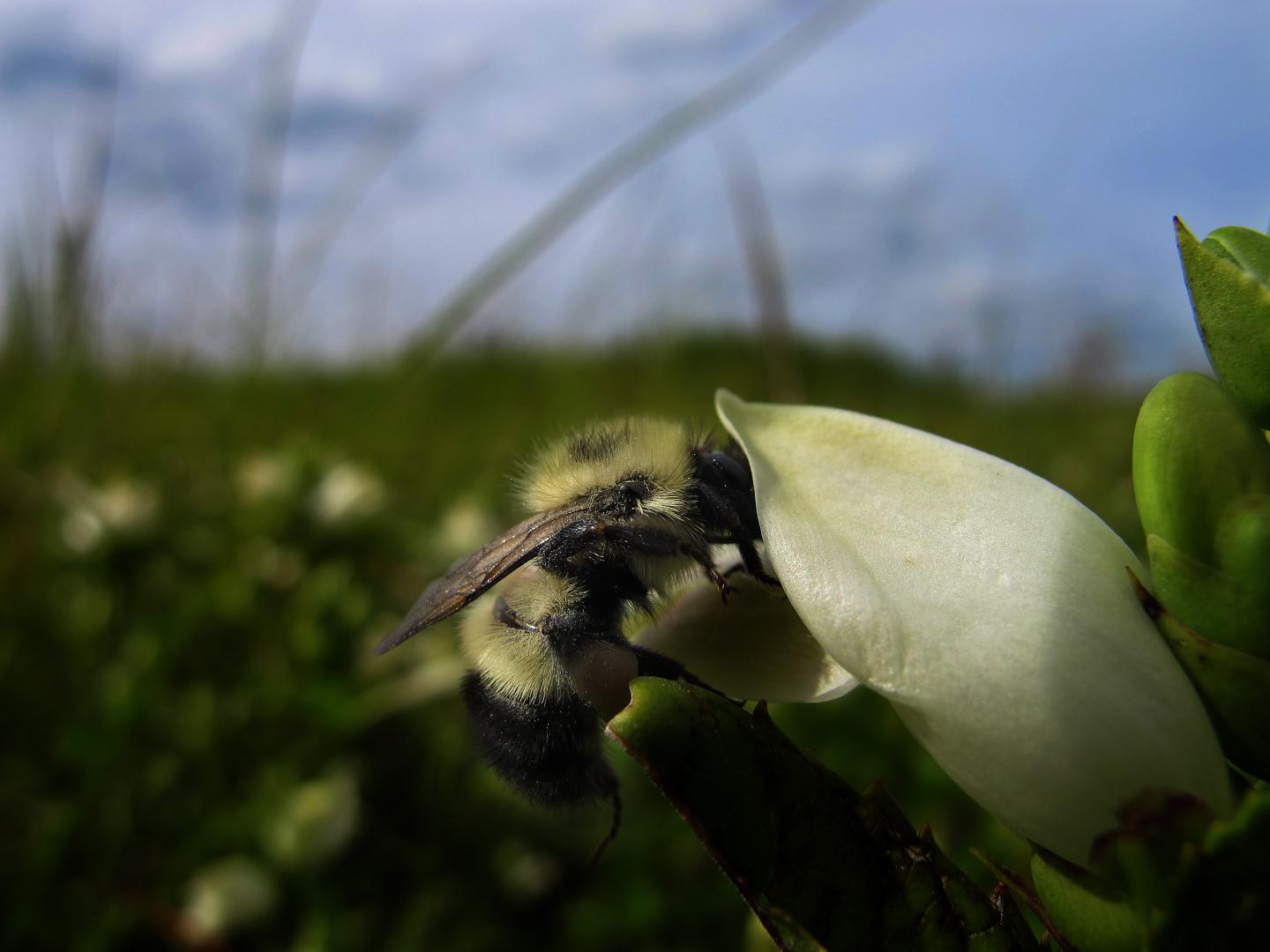
In 2006, there was a large die-off in bees and though their numbers quickly rebounded and have continued upward since, scientists have been looking for ways to make the periodic collapses that occur less dramatic. 

The cause the last time it happened was the same plague that bees have endured for as long as science has been able to study them; parasites. But a new study shows that "nature's medicine cabinet" may be able to smooth out those natural booms and busts.
Scientifically engineered tissues intended to repair or regenerate damaged or diseased human tissues require three-dimensional tissue constructs that are densely packed with living cells.

The Bio-P3, an innovative instrument able to pick up, transport, and assemble multi-cellular microtissues to form larger tissue constructs is described in an article in Tissue Engineering, Part C: Methods.
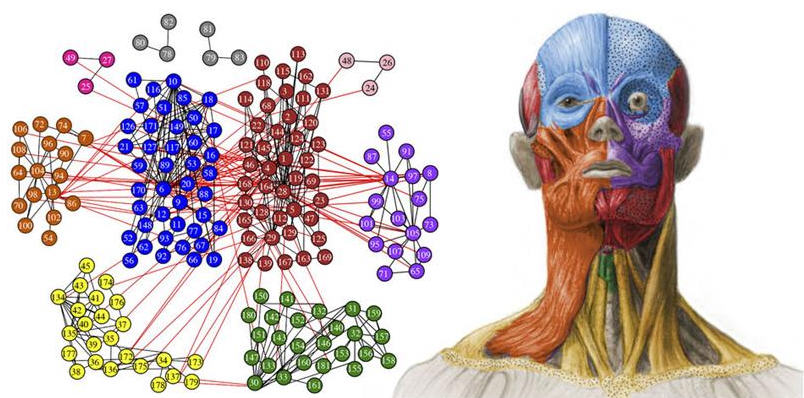
A new mathematical analysis tool can numerically describe the skull as an extended network structured in ten modules. 

Anatomical Network Analysis (AnNA) is based on network analysis mathematical tools for studying anatomy and has led to several studies of both the human skeleton and of the rest of terrestrial vertebrates, especially in regard to the development and evolution of the skull.

Attacks on institutions that keep records of global temperatures, such as NASA, the US National Oceanic and Atmospheric Administration, the UK Met Office, and Australia’s Bureau of Meteorology, continue to appear in the press.

 Alamy

By Leigh Cooper, Inside Science

(Inside Science) – Two bottles of whole milk sit side-by-side in a supermarket refrigerator. One costs $3.46 per gallon while the other costs $7.08 per gallon.

The difference? The second bottle of milk is labeled organic.


Early hominids didn’t have a lot of time to whip up coconut flour pancakes. Credit: United Artists

Reconstructions of human evolution are prone to simple, overly-tidy scenarios. Our ancestors, for example, stood on two legs to look over tall grass, or began to speak because, well, they finally had something to say. Like much of our understanding of early hominid behavior, the imagined diet of our ancestors has also been over-simplified.

Over the long term, a high-fat diet is bad for heart attack risk. Yet a new study finds that if you are going to have a heart attack, you are likely to get through it better if you ate a high-fat diet before it happened. Mice fed a high-fat diet for one day to two weeks days before a heart attack had heart attack reduced by about 50 percent. If the results could be translated to humans, that would mean piling on cheeseburgers and ice cream for a month to a year, not a winning strategy for lots of other reasons.

It's another example of the obesity paradox, an unexplained phenomenon where obese patients who do have a heart attack live longer than thin ones.

Researchers at the Medical College of Wisconsin (MCW), in collaboration with other colleagues of the Genetic Epidemiology of Lung Cancer Consortium (GELCC), have identified a gene that is associated with lung cancer.

The findings are published in American Journal of Human Genetics. Through whole exome sequencing, researchers identified a link between a mutation in PARK2, a gene associated with early-onset Parkinson's disease, and familial lung cancer.

The researchers sequenced the exomes (protein coding region of the genome) of individuals from a family with multiple cases of lung cancer. They then studied the PARK2 gene in additional families affected by lung cancer.


