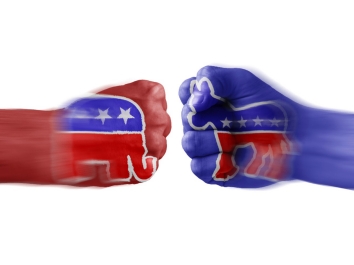




What happens when people in one political party in America are presented with science that doesn't align with their political views? The same thing that happens in the other party. They rationalize why it isn't valid science.

Despite claims by liberals that they hold some special acceptance of science - the same thing conservatives claimed until the 2000s - a new study has found it isn't the case when the science issue is political. It's no secret that conservatives are less likely to accept evolution and climate change science, science media has talked about it for over a decade. Yet science media doesn't note that anti-agriculture, anti-medicine and anti-energy views correspond to liberal voting, even though the public recognizes it. 
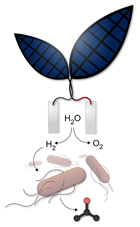
Harvesting sunlight is old technology for plants but it's a level of efficiency in solar energy we would love to be within a billion years of - artificial photosynthesis is needed if we want to go beyond the energy density of things like combustion engines. 
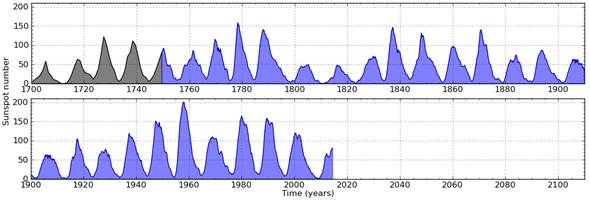
Some people believe we are in a new Enlightenment, with science making food plentiful and likely to make energy cheap enough to be unnoticeable in the next few decades as well. We share one other thing in common with the 18th century - solar activity.

Scientists have been counting sunspots with small telescopes since 1610 so it was quickly learned that the Sun’s activity increases every eleven years, according to the interval in the growth of the number of darker and colder spots in comparison with the rest of its surface. The more spots that appear, the more luminous the surrounding areas are, and our star shines brighter. 

Personal information taken from social media, blogs, page views and so on are used to detect disease outbreaks, however, does this violate our privacy and trust if people do not consent to it?


By:  Karin Heineman, Inside Science

(Inside Science TV) – Shelley Tworoger, an epidemiologist at Brigham and Women's Hospital located in Boston, Massachusetts studied ovarian cancer.

"This is one of the largest and oldest cohort studies in the world. We followed over 230,000 women over several decades and every two years they answered questionnaires about their lifestyle and health, in particular we asked them every 4 years to report back to us the kinds of foods that they eat. We used this information to look at what women ate and we followed them up to see who got ovarian cancer and who didn't," said Tworoger.   


Don't look so worried Cromwell, she's just asleep. BBC/Company Productions Ltd

By Derek Gatherer, Lecturer at Lancaster University.

In the first episode of BBC historical drama Wolf Hall, based on Hilary Mantel’s novel of the same name, Thomas Cromwell returns home to find his wife and two daughters have all died during the night, victims of a pestilence – the “sweating sickness” – that is scything through the Tudor world.

Magicians have delighted audiences for centuries with magic tricks. What is little known is that they subtly influence decisions. A master like Apollo Robbins can even tell you what he is going to do and you still won't know he is doing it.

Yet there has been little systematic study of the psychological factors that make magic tricks work. A team of Canadian researchers has combined magic and psychology to demonstrate how certain contextual factors can sway the decisions people make, even though they may feel that they are choosing freely.

Vast ranges of volcanoes hidden under the oceans are presumed by scientists to be the gentle giants of the planet, oozing lava at slow, steady rates along mid-ocean ridges. But a new study shows that they flare up on strikingly regular cycles, ranging from two weeks to 100,000 years--and, that they erupt almost exclusively during the first six months of each year.

The pulses--apparently tied to short- and long-term changes in earth's orbit, and to sea levels--may help trigger natural climate swings. Scientists have already speculated that volcanic cycles on land emitting large amounts of carbon dioxide might influence climate; but up to now there was no evidence from submarine volcanoes.

To help people with hormone deficiencies, scientists have developed a potential new therapy based on an unlikely model: immune molecules from cows. Their research, published recently in the journal Proceedings of the National Academy of Sciences, shows that human hormones and antibodies can be fused together--mimicking long, stalk-like cow antibodies.

The new study, whose senior authors were Peter Schultz, the Scripps Family Chair Professor at at The Scripps Research Institute (TSRI), and Feng Wang, a principal investigator at the California Institute for Biomedical Research (Calibr), could also provide the foundation for treatments for a range of other diseases.

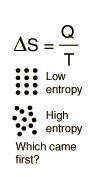
Don't like the second law of thermodynamics - that heat transfer has limits when trying to do work? Maybe you can just use a different one.

Rather than being an immutable fundamental law, researchers from University College London and the Universities of Gdansk, Singapore, and Delft write in Proceedings of the National Academy of Sciences that they have uncovered additional second laws of thermodynamics which complement the ordinary second law of thermodynamics, they are just not noticeable except on very small scales.

