




Flu On A CPU

Flu On A CPU

Feb 10 2015 | comment(s)

By combining experimental data from X-ray crystallography, NMR spectroscopy, cryoelectron microscopy and lipidomics (the study of cellular lipid networks), researchers at the University of Oxford have built a complete model of the outer envelope of an influenza A virion for the first time. The approach, known as a coarse-grained molecular dynamics simulation, has allowed them to generate trajectories at different temperatures and lipid compositions - revealing various characteristics about the membrane components that may help scientists better understand how the virus survives in the wild or find new ways to combat it.

James Hudziak, M.D., a pediatric neuropsychiatrist and director of the Vermont Center for Children, Youth and Families at the University of Vermont (UVM) College of Medicine, and UVM colleagues Matthew Albaugh, Ph.D., Catherine Orr, Ph.D., and Richard Watts, Ph.D., have published a study in the February issue of The Journal of Pediatrics that shows a relationship between concussions sustained by young ice hockey players and subtle changes in the cortex, the outer layer of the brain that controls higher-level reasoning and behavior.


Government elites want parents to rush to turn their progeny into units of human capital as quickly as possible. It risks 'damaged goods'. Shutterstock

By Pam Jarvis, Leeds Trinity University

Do electronic cigarettes help people quit smoking? As the debate continues on that point, a new University of Rochester study suggests that e-cigarettes are likely a toxic replacement for tobacco products.

Emissions from e-cigarette aerosols and flavorings damage lung cells by creating harmful free radicals and inflammation in lung tissue, according to the UR study published in the journal PLOS ONE. Irfan Rahman, Ph.D., professor of Environmental Medicine at the UR School of Medicine and Dentistry, led the research, which adds to a growing body of scientific data that points to dangers of e-cigarettes and vaping.

Indian swords don't get a lot of cultural respect compared to the works of Spain or Japan but a new study used two different approaches to analyze a shamsheer, a 75-centimeter-long sword from the Wallace Collection in London, and found that it was master craftsmanship 

The study, led by Eliza Barzagli of the Institute for Complex Systems and the University of Florence in Italy, used metallography and neutron diffraction to test the differences and complementarities of the two techniques. The shamsheer was made in India in the late eighteenth or early nineteenth century and is of Persian origin. The base design spread across Asia and eventually gave rise to the family of similar weapons called scimitars that were forged in various Southeast Asian countries.
Treatment with creatine monohydrate for at least 5 years for patients with early and treated Parkinson disease failed to slow clinical progression of the disease, compared with placebo, according to a study in the February 10 issue of JAMA.

Psoriatic arthritis is a common form of inflammatory form of arthritis causing pain and stiffness in joints and tendons that can lead to joint damage. Nearly all patients with psoriatic arthritis also have skin psoriasis and, in many cases, the skin disease is present before the arthritis develops. However, only one third of patients with psoriasis will go on to develop psoriatic arthritis.

Anti-vaccine beliefs are going bipartisan, what was once the province of kooky progressives in California and Oregon is now also being embraced by American libertarians, and public service announcements are unlikely to help. Washington State University researchers say that people may be influenced more by online comments than by credible PSAs.

Writing in the Journal of Advertising, WSU marketing researchers Ioannis Kareklas, Darrel Muehling and TJ Weber are the first to investigate how Internet comments from individuals whose expertise is unknown impact the way people feel about vaccines.

Log on to Twitter, Facebook or other social media and you will find that much of the content shared with you comes in the form of images, not just words. Those images can convey a lot more than a sentence might, and will often provoke emotions in the viewer.

Jiebo Luo, professor of computer science at the University of Rochester, in collaboration with researchers at Adobe Research has come up with a more accurate way than currently possible to train computers to be able to digest data that comes in the form of images.

In a paper presented last week at the American Association for Artificial Intelligence (AAAI) conference in Austin, Texas, they describe what they refer to as a progressive training deep convolutional neural network (CNN).

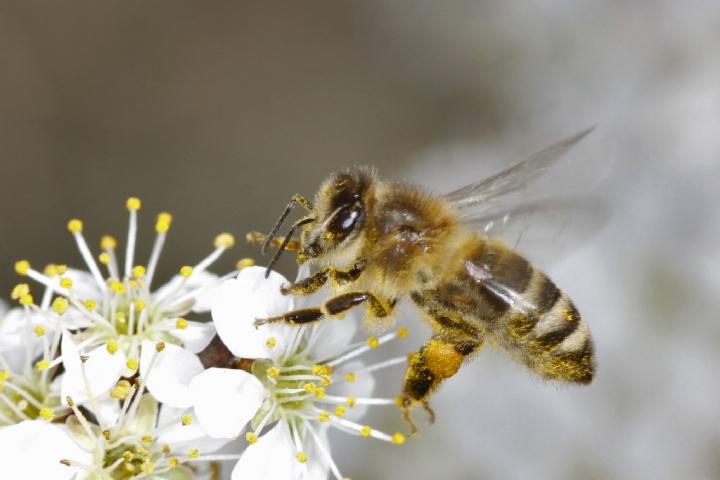
A few years ago, another colony collapse occurred. Though it has happened more times than recorded history has been able to log, the concern was that new pesticides, which replaced the old pesticides blamed for the last colony collapse, might be the cause.

Since then, bees have rebounded nicely. The collapse was limited to one geography, rather than everywhere the newer pesticides - neonicotinoids - were used, so researchers have been scrambling to find out why it happened and therefore make it predictable. 

A new study says it could just be stress - young bees are sometimes pressured to grow up too fast. 


Credit: QMUL

