



After the joint analysis by Planck, BICEP2 and Keck Array has been made public (arXiv:1502.00612) invalidating the March 2014 announcement by BICEP2 (arXiv:1403.3985v1), a Forbes contributor writes « When Science Gets It Wrong: Gravitational Waves ». Obviously, scientific institutions should be more careful before launching or supporting certain kinds of propaganda.
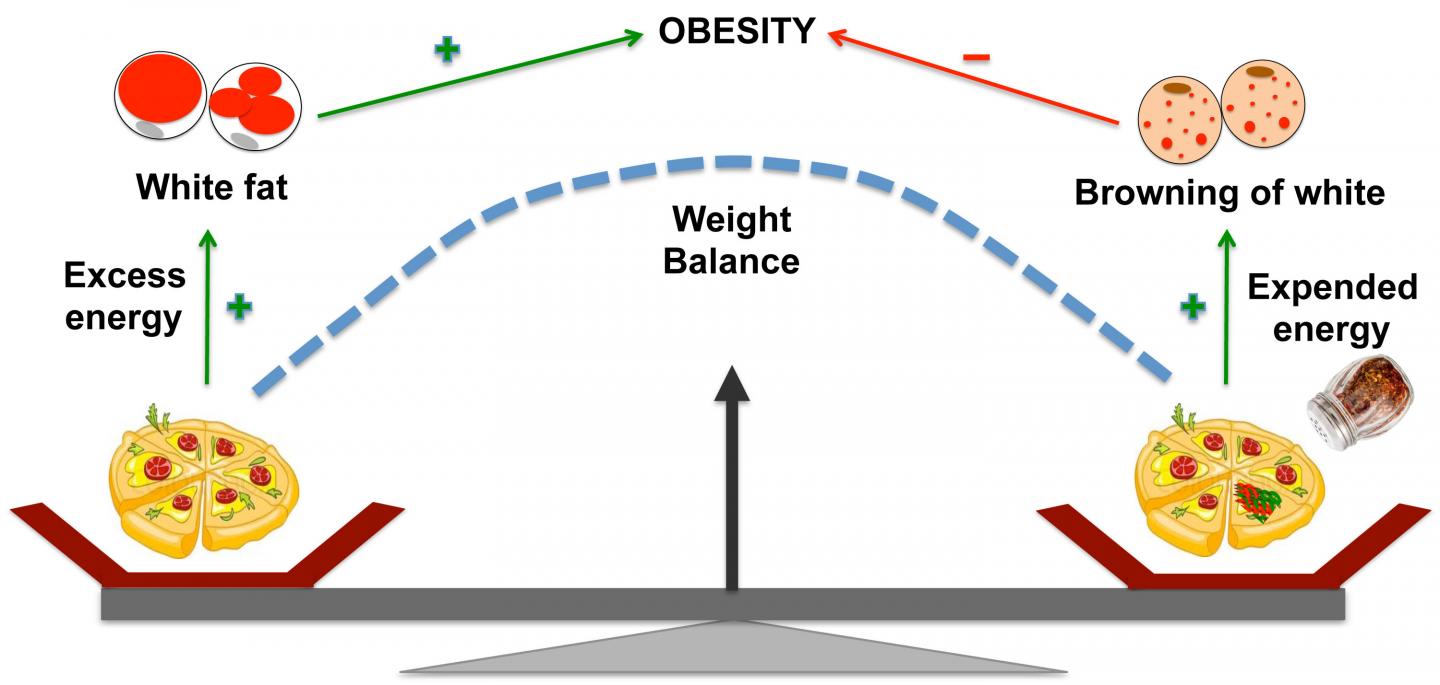
A recent finding about capsaicin from chili peppers curbing obesity in mice may be why nutritionists and diet marketing groups latch onto it in 2015. The world doesn't need another gimmick diet but clearly people need to eat less. Fully one third of the world is overweight, by World Health Organization estimates. Now a group at the University of Wyoming has found promise in the potential of capsaicin -- the chief ingredient in chili peppers -- as a diet-based supplement.

Small magnetic whirls may revolutionize future data storage and information processing if they can be moved rapidly and reliably in small structures. A team of scientists of Johannes Gutenberg University Mainz (JGU) and TU Berlin, together with colleagues from the Netherlands and Switzerland, has now been able to investigate the dynamics of these whirls experimentally. The skyrmions, as these tiny whirls are called after the British nuclear physicist Tony Skyrme, follow a complex trajectory and even continue to move after the external excitation is switched off. This effect will be especially important when one wants to move a skyrmion to a selected position as necessary in a future memory device.

Kalorama Information expects the market for plasma collection to grow, and to outpace overall blood collection through 2018. The primary market driver will be plasma-derived immunoglobulins (Ig) used to produce intravenous immunoglobulin (IVIG) therapies. The growth of mature markets associated with the collection, processing and therapeutic use of whole blood and derived products are by and large endangered without the robustness of the global plasma market. This is the finding of Kalorama Information's recent Blood: The Worldwide Market for Blood Products, Blood Testing, Blood Equipment, and Synthetic Blood Products.

A new study has shown an unprecedented degree of connectivity reorganization in newly-generated hippocampal neurons in response to experience, suggesting their direct contribution to the processing of complex information in the adult brain.

The hippocampus is an anatomical area of the brain classically involved in memory formation and modulation of emotional behavior. It is also one of the very few regions in the adult brain where resident neural stem cells generate new neurons life-long, thus providing the hippocampal circuitry with an almost unique renewal mechanism important for information processing and mood regulation.

Bariatric surgery improves life expectancy for many obese diabetic patients, but it may cut life expectancy for patients who are super obese with very high body mass indexes, according to a University of Cincinnati researcher.

"For most patients with diabetes and a BMI (body mass index) greater than 35, bariatric surgery increases life expectancy," says Daniel Schauer, MD, assistant professor in the Division of General Internal Medicine at UC. "However, the benefit of surgery decreases as BMI increases. The patients with a BMI over 62 likely don't gain any life expectancy with surgery."

The findings were published recently online in the Annals of Surgery.

Resveratrol found in common foods such as red grapes and peanuts may help prevent age-related decline in memory, according to a new paper.

Ashok K. Shetty, Ph.D., a professor in the Department of Molecular and Cellular Medicine and Director of Neurosciences at the Institute for Regenerative Medicine, has been studying the potential benefits of resveratrol, a controversial antioxidant that is found in the skin of red grapes, as well as in red wine, peanuts and some berries. Resveratrol has been promoted for its potential to prevent heart disease, but Shetty and colleagues believe it also has positive effects on the hippocampus, an area of the brain that is critical to functions such as memory, learning and mood.


Bronks/Wikimedia Commons

By Mark Beeson, Professor of International Politics at University of Western Australia

Of the many things academics obsess about, few rank more highly than citation counts. We all like to think our work is at least read by our peers, even if it doesn’t actually change the world. Google Scholar has become one of the more important indicators of our relative standing, although it can be a rather humbling one at times. The simple fact is that most of us simply don’t make it into what we might call the intellectual Premier League.

With snow comes shoveling, and with shoveling can come heart attacks. Shutterstock

By Jack Goodman, Professor, Kinesiology and Physical Education, Adjunct Scientist, Division of Cardiology, Mt. Sinai Hospital at University of Toronto

Men on lower incomes are more likely to help their partners with housework than higher-earners, although women are still by far doing the most around the home, no matter how many hours they work or how much they are paid.

While the burden of keeping the home clean is starting to be shared more equally between couples, signs of a class divide are beginning to emerge, a researcher from the University of Warwick has found.

"There's a stark difference in couples' attitudes towards gender equality depending on how much they are earning," explained Dr Clare Lyonette, from the Institute for Employment Research, who led the study.

