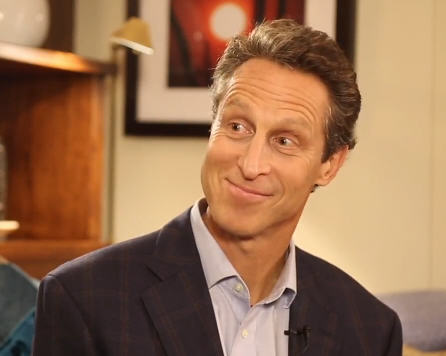


Pudgy and recovering from heart surgery, Bill Clinton needed someone to optimize his health. Hillary Clinton knew just the man for the job, and in 2005 introduced him to Dr. Mark Hyman, whose expertise they credit for Mr. Clinton’s current svelte physique.
By Joel N. Shurkin, Inside Science -- Let's pretend it is 56 B.C. and you have been fortunate enough to be invited to a party at the home of Lucius Calpurnius Piso Caesoninus, a great social coup. Piso, after all, was Julius Caesar's father-in-law and a consul of Rome.

What's for dinner?

There are concerns about climate emissions because of resistance to clean technologies like nuclear power that have led to increased use of coal. Solar power will be the best solution in the future, if it does not fall victim to too much hype and subsidies now. 

There is also a water problem. Only slightly more than one percent of the world's water is potable, making clean water a priority - but one that is easily solved by energy. 
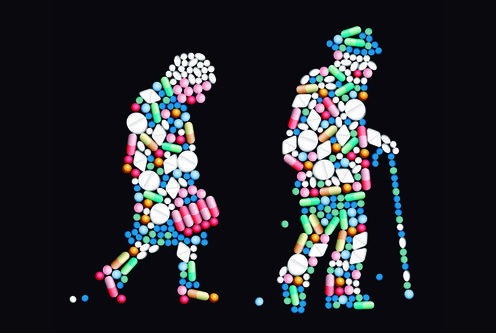
Apple and Facebook have an odd perquisite for their employees - they will pay for their employees to place oocytes in frozen storage — social freezing, also known as cryopreservation and egg freezing.

Companies may have a mercenary desire to do so, even if it comes across as altruism. By eliminating a biological clock for women, they can keep employees working longer hours, which will close that pay gap between men and women and make them look like noble while they reduce turnover. 

Image: Peter Hermes Furian

In 1971 Richard Nixon declared “War on Cancer” with the signing of the National Cancer Act. Significant progress has been made in the intervening 44 years – and Europe has been at the forefront of many of the advances.

But on February 4, World Cancer Day, it is worth asking whether we are winning the war on a disease which affects more than 22m people annually?

First, the good news – more people are surviving cancer than are dying of the disease. The recent European Cancer Registry shows that in Europe there were almost 16m cancer survivors in 2012.

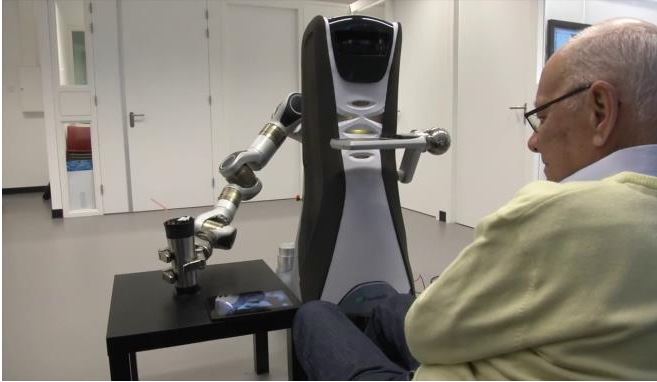
A prototype of a social robot has been developed with an eye toward supporting independent living for the elderly, in partnership with their relatives or carers.

It's based on the art service platform called Care-O-bot® 3 and works within a smart-home environment. Dr. Farshid Amirabdollahian, a senior lecturer in Adaptive Systems at the University of Hertfordshire, led a team of nine partner institutions from across five European countries as part of the ACCOMPANY (Acceptable Robotics Companions for Ageing Years) project.
Vast ranges of volcanoes hidden under the oceans ooze lava at slow, steady rates along mid-ocean ridges.

A new study shows that they flare up on strikingly regular cycles, ranging from two weeks to 100,000 years, and, that they erupt almost exclusively during the first six months of each year because they are apparently tied to short- and long-term changes in earth's orbit and to sea levels. And so they may be helping trigger natural climate swings. 
An app called Alicia, which has been adapted to iPhone, iPad and Android, is able to help patients over 65 years with multiple pathologies to administer their own medication at home. The Alicia app has been tested on 99 patients from Alicante and was able to reduce medication mistakes in up to 41, 2% of cases.

The most frequent causes of mishaps in drug self-administration, according to the team’s data are: 36% forgetfulness, 21% lack of medicines at home, 20% natural products are used without informing the doctor and 16% choose to drop medication without telling the doctor.

During the control tests, carried out over several months, the researchers also proved that 94% of users who tested the application considered it easy to use.

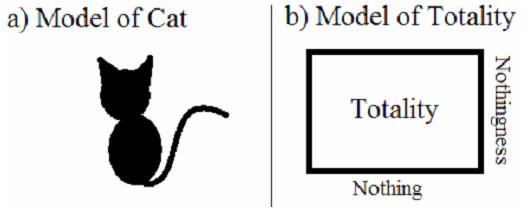
A common misconception is that all good scientific theory must be based on empirical science and provide ingredients where the theory can be potentially falsified (Karl Popper).

This dogma demands that a hypothesized theory should include something falsifiable, something that could be *possibly observed* and would then refute the theory (here in the words of Lee Smolin).

A worldwide study of the DNA of 100,000 women has discovered two new genetic variants associated with an increased risk of breast cancer.

The genetic variants are specifically linked to the most common form of breast cancer, oestrogen receptor positive, and provide important insights into how the disease develops.

Scientists believe screening women for all the genetic variants so far identified could eventually pick out those at highest risk of breast cancer and improve strategies for preventing the disease.

The study was led by scientists at The Institute of Cancer Research, London, and is published today (Thursday) in Human Molecular Genetics.