

Seafloor sediment cores reveal abrupt, extensive loss of oxygen in the ocean when ice sheets melted roughly 10,000-17,000 years ago, according to a study from the University of California, Davis. The findings provide insight into similar changes observed in the ocean today.

In the study, published in the journal PLOS ONE, researchers analyzed marine sediment cores from different world regions to document the extent to which low oxygen zones in the ocean have expanded in the past, due to climate change.

From the subarctic Pacific to the Chilean margins, they found evidence of extreme oxygen loss stretching from the upper ocean to about 3,000 meters deep. In some oceanic regions, such loss took place over a time period of 100 years or less.

Some babies seem to have a genetic predisposition to a higher risk of being born too soon, according to a paper being presented Thursday at the Society for Maternal-Fetal Medicine's annual meeting in San Diego.

The study Birth found that variants in the fetus's DNA - not the mother's - may be what triggers some early births. 
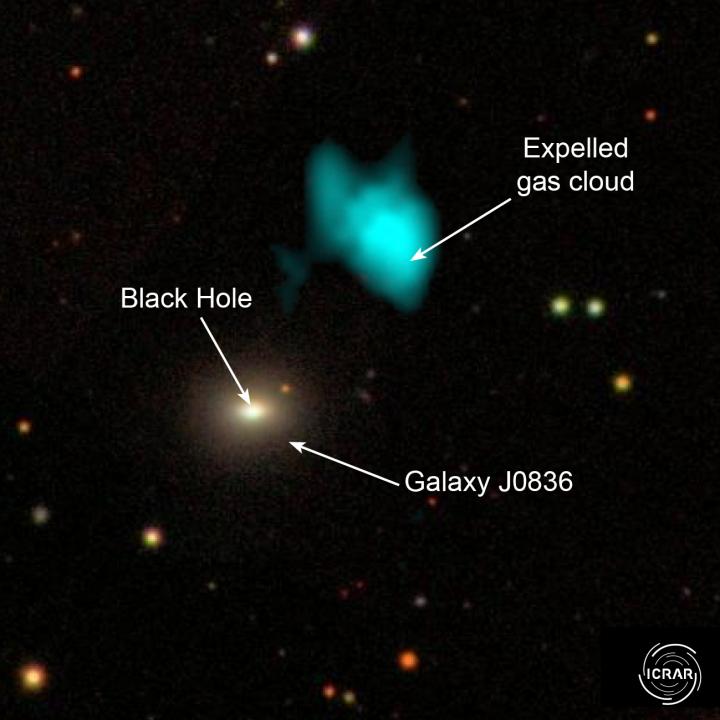
Red galaxies may be 'dying' young because they have prematurely ejected the gas they need to make new stars.  There are two main types of galaxies; 'blue' galaxies that are still actively making new stars and 'red' galaxies that have stopped growing. Most galaxies transition slowly as they run out of raw materials needed for growth over billions of years but a pilot study looking at galaxies that die young has found some might shoot out this gas early on, causing them to redden and kick the bucket prematurely.

Swedish studies show that mice that receive a supplement of the "appetite hormone" ghrelin increase their sexual activity. Whether the hormone has the same impact on humans is unknown - but if it does, the researchers may have found the key to future treatments for sex abuse.

Ghrelin is a gastrointestinal hormone that is released from the stomach, and is involved in the stimulation of our appetite by activating the brain's reward system.

Since the brain's reward system also motivates us to seek a partner and to have sex, a group of researchers at the Sahlgrenska Academy decided to investigate whether ghrelin may also affect sexual behaviors.

Confirmed effect

The answer is: yes, at least in mice.

Globe Conservation Horizon Scanning, which involves collaboration of the worldwide conservation community, focuses on identifying potential environmental problems across the planet that have not yet been noticed by society as a whole. This scanning of the environmental horizons has been conducted every year since 2010.

Although scientific findings and reports are issued - in English - based on these global scans, the limited proportion of the worldwide populace that has advanced English reading skills limits the readership of these materials. Less than one fifth of the world population speaks English; even less can read English.

For most of us, switching to a vegetarian diet might be a matter of a New Year's resolution and a fair amount of willpower, but for an entire species, it's a much more involved process -- one that evolutionary biologists have struggled to understand for a long time.

Researchers at the University of Arizona have taken a peek behind the curtain of evolution to find out what happens when an insect species dramatically changes its way of life. The processes they discovered involve never-seen-before remodeling of genes, behaviors and diet. The results, published in the Proceedings of the National Academy of Science, or PNAS, are likely to make you ponder evolutionary questions next time you find a fruit fly floating in your glass of wine.

One of nature's fascinating questions is how zebras got their stripes.

A team of life scientists led by UCLA's Brenda Larison has found at least part of the answer: The amount and intensity of striping can be best predicted by the temperature of the environment in which zebras live.

In the January cover story of the Royal Society's online journal, Open Science, the researchers make the case that the association between striping and temperature likely points to multiple benefits -- including controlling zebras' body temperature and protecting them from diseases carried by biting flies.

Newly discovered genetic variations linked to autism spectrum disorder (ASD) disrupt the function of the dopamine transporter, suggesting that altered dopamine signaling contributes to this common developmental condition.

Two different inherited genetic variations in two different families of children with ASD "converged" to produce the same changes in nerve function and behavior, the researchers report in EBioMedicine. This is the first report of two different ASD-associated variations producing the same neural and behavioral changes in a Drosophila (fruit fly) model, said Aurelio Galli, Ph.D., professor of Molecular Physiology and Biophysics and of Psychiatry, and corresponding author with Kevin Erreger, Ph.D., and Heinrich J.G. Matthies, Ph.D.

People who use cochlear implants for profound hearing loss do respond to certain aspects of music, contrary to common beliefs based on limited scientific research. Writing in Hearing Research, a team says exposure to the beat in music, such as drums, can improve the emotional and social quality-of-life of cochlear implant users and may even help improve their understanding and use of spoken language.

Previous research has shown that cochlear implants, which bypass the outer and inner ears to directly stimulate fibers of the auditory nerve, are deficient in transmitting the pitch and tone quality of music; users report hearing noise when music is played. Consequently, they may receive little training in music or musical movement.

Research on how science works - the science of science - can benefit from studying the digital traces generated during the research process, such as peer-reviewed publications. This type of research is crucial for the future of science and that of scientists, according to Frank Schweitzer, Chair of Systems Design at ETH Zurich, in Switzerland. Indeed, quantitative measures of scientific output and success in science already impact the evaluation of researchers and the funding of proposals. He shares his views in an Editorial spearheading a thematic series of articles entitled "Scientific networks and success in science", published in EPJ Data Science.


