My wife bought me a “selfie-stick” (sometimes called Wand of Narcissus), which is ironic since I so rarely actually take selfies. But, once I took a look at its simplicity of design, I couldn’t leave well enough alone and decided to create the “Super Selfie-Stick.”

At first I tried attaching a camera mount on the end of a golf ball retriever.

By Joel N. Shurkin, Inside Science

(Inside Science) - In nature — the rule goes — everything is connected to everything else, so it is possible that when you combine two methods of preventing a deadly disease, bad things can happen.

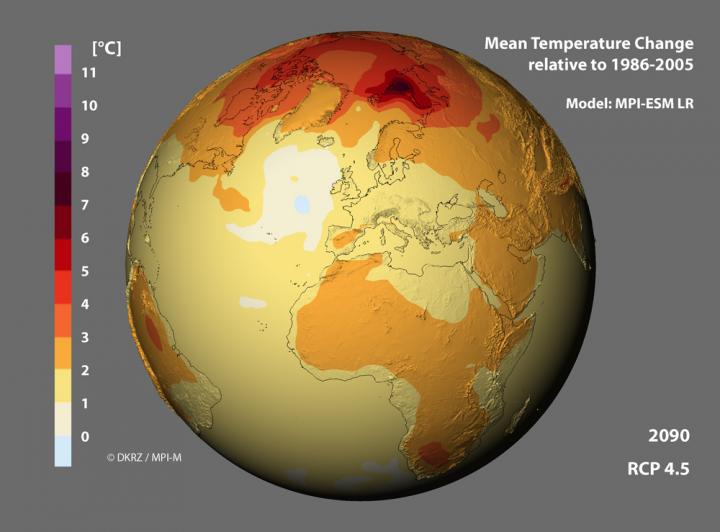
The rate of global warming that had been predicted in the 1990s did not come to pass. In the 21st century, warming has been significantly slower than all the models had predicted, leading to claims that the models contained systematic errors.

Not so, according to a new analysis, it is just random variation. Jochem Marotzke, Director at the Max Planck Institute for Meteorology in Hamburg, and Piers M. Forster, a professor at the University of Leeds in the UK, did a statistical analysis and found that the models do not generally overestimate man-made climate change and so global warming is still highly likely to reach critical proportions by the end of the century if CO2 emissions are not reduced. 
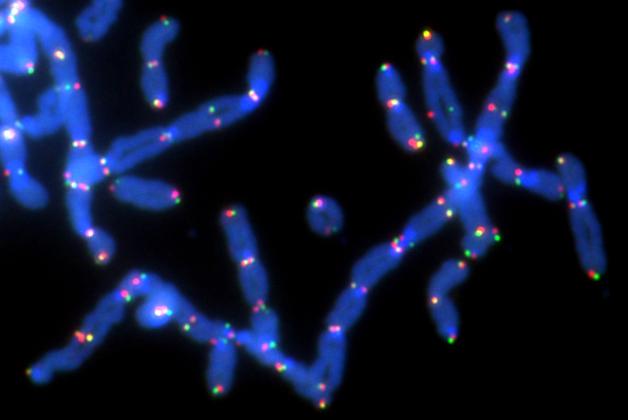
Inhibiting the action of a particular enzyme called polymerase theta, or PolQ, dramatically slows the growth of tumor cells tied to BRCA1 and BRCA2 genetic mutations which, in turn, are closely tied to breast and ovarian cancers, according to a new paper. 
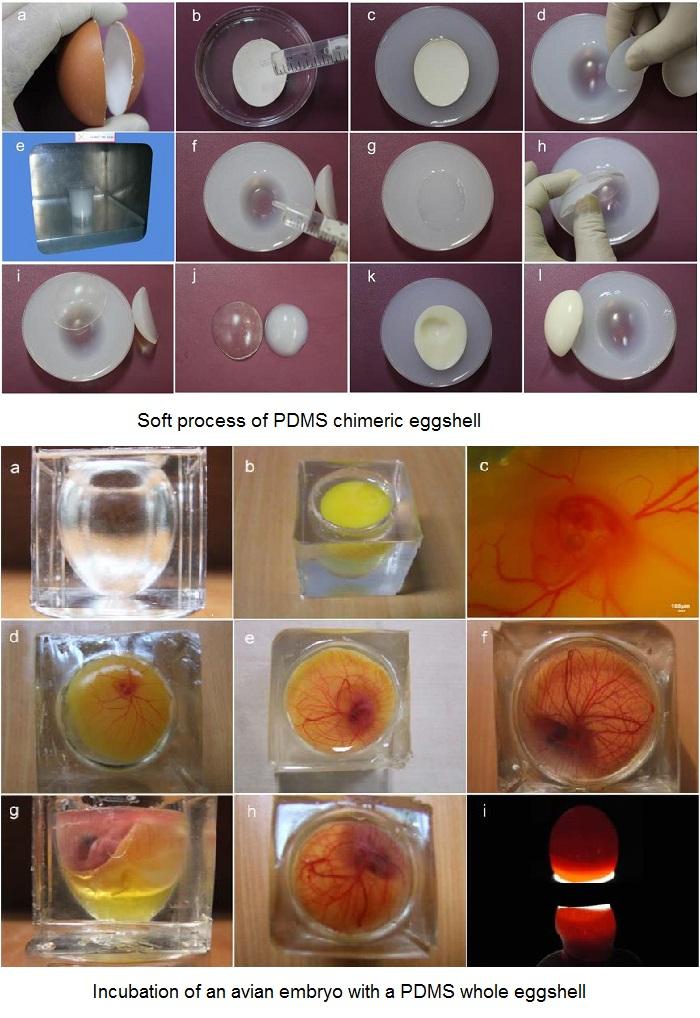
In the two decades existence of lab-on-a-chip (LOC), there have been lots of individual systems developed, ranging from lung-on-a-chip and heart-on-a-chip to the liver-on-a-chip and kidney-on-a-chip - but an ideal embryo-on-a-chip has eluded science because of the challenges in condensing so many life factors inside a conventional LOC. 

But now two scientists have developed a PDMS (polydimethylsiloxane) "soft" process method to fabricate a transparent shell matching the shape and curvature of a real eggshell.

The most important feature of a conventional "Lab-on-a-chip" is its chemically based character, or its scaling down chemical tests into a miniature-size device.

Naturally occurring arsenic in private wells threatens people in many U.S. states and parts of Canada, according to a package of a dozen scientific papers to be published next week. The studies, focused mainly on New England but applicable elsewhere, say private wells present continuing risks due to almost nonexistent regulation in most states, homeowner inaction and inadequate mitigation measures. The reports also shed new light on the geologic mechanisms behind the contamination. The studies come amid new evidence that even low doses of arsenic may reduce IQ in children, in addition to well documented risks of heart disease, cancer and reduced lung function. The reports comprise a special section in the journal Science of the Total Environment.

New research could lead to a better understanding of how the brain works in people with autism. Little is known about the cognitive processes involved.

Researchers from Monash University and Deakin University looked at new hypotheses of autism that focused on the way in which the brain combines new information from its senses with prior knowledge about the environment. Using the 'rubber-hand' illusion, the researchers examined how adults with autism experienced 'ownership' of a fake prosthetic hand.

In the 'rubber-hand' illusion, one of the subject's hands is placed out of sight, while a rubber hand sits in front of them. By stroking the fake hand at the same time as the visible real one, the subject can be convinced the fake hand is theirs.

The discovery of the first gene causing familial scoliosis was announced by an international France-Canada research team today. "Mystery surrounds the cause of scoliosis, which is a three dimensional deformation of the vertebral column. Many researchers have been attempting to uncover the origins of this disease, particularly from a genetic point of view," explained leading co-author Dr Florina Moldovan of the University of Montreal and the CHU Sainte Justine research hospital. "To date, many genes have been suspected of causing scoliosis amongst different populations, but the gene that causes the familial form of the disease remained unknown.

James D. Bjorken, also known as "BJ" by colleagues and physicists around the world, has been awarded the prestigious 2015 Wolf prize in Physics together with cosmologist Robert Kirshner. Bjorken deserves a lot of credit for his contribution to subnuclear physics: the official motivation is 

"For predicting scaling in deep inelastic scattering, leading to identification of nucleon's pointlike constituents "