
A new study of marine organisms that make up the 'biofouling community' - tiny creatures that attach themselves to ships' hulls and rocks in the ocean around the world - shows how they adapt to changing ocean acidification. Reporting in the journal Global Change Biology, the authors examine how these communities may respond to future change.

Almost 2,500 women of child-bearing age in the UK are at risk of transmitting mitochondrial disease to their children, according to the most recent estimates published today in the New England Journal of Medicine.

The research offers the most recent evidence yet of how many families could potentially be helped by new IVF techniques to prevent mitochondrial disease, which would be permitted by new regulations on which a vote in parliament is imminent.

Mitochondrial diseases are caused by inherited mutations in the DNA contained in mitochondria - tiny structures present in every cell that generate energy. Mitochondrial diseases can be devastating and particularly affect tissues that have high energy demands - brain, muscle (including heart), liver and kidney.

The most comprehensive analysis to date of research on the effect of negative stereotypes on older people's abilities has concluded that these stereotypes create a significant problem for that demographic.

A research team at the University of Kent's School of Psychology carried out a review and meta-analysis of Aged-Based Stereotype Threat (ABST).

They statistically analyzed international evidence from 37 research studies, both published and unpublished. They concluded that older adults' memory and cognitive performance is negatively affected in situations that signal or remind them of negative age stereotypes. These effects affect both men and women.

Seattle Seahawks cornerback Richard Sherman gets called a lot of things. He calls himself the greatest cornerback in the NFL (and Seattle fans tend to agree). Sportswriters and some other players call him a loudmouth and a showboater. Fans of other teams call him a lot of things that shouldn’t see print (even on the Internet). One thing you’re not likely to hear anyone on ESPN call Sherman, though, is “scientist.”

And yet, an elite professional athlete like Richard Sherman is, in fact, extremely adept at doing science. Not the white-lab-coat, equations-on-a-blackboard sort of science, but the far older and universal process of observing, making and testing models of the universe.

fter 200 million gallons of crude oil spilled into the Gulf of Mexico in April 2010, the government and BP cleanup crews mysteriously had trouble locating all of it.

Now, a new study led by Florida State University Professor of Oceanography Jeff Chanton finds that some 6 million to 10 million gallons are buried in the sediment on the Gulf floor, about 62 miles southeast of the Mississippi Delta.

"This is going to affect the Gulf for years to come," Chanton said. "Fish will likely ingest contaminants because worms ingest the sediment, and fish eat the worms. It's a conduit for contamination into the food web."


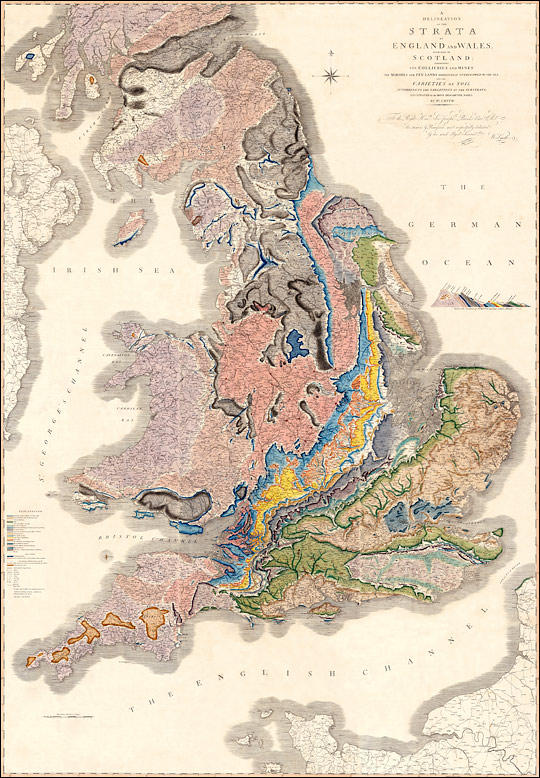
Published in 1815, Smith’s Geological Map of England and Wales and Part of Scotland was the first geologic map to cover such a large area in such fine detail. William Smith, British Geological Survey

By John Howell, Professor, Chair in Geology and Petroleum Geology at University of Aberdeen.

When donating blood, plasma, human tissue or any other bodily sample for medical research, most people might not think about how it's being used. But if you were told, would you care?

A new Michigan State University study, published in the Journal of the American Medical Association, indicates that most people are willing to donate just knowing that their contribution is going toward research. But, when specific scenarios are brought into the equation, that willingness changes.

Many co-products from the corn processing industry may be used in diets fed to pigs. Much attention over the last 10 years has been on co-products produced from the biofuels industry, including distillers dried grains and high-protein distillers grains. However, the wet milling industry also produces many different co-products that may be used in pig diets.

Because little information about co-products produced from the wet milling industry has been reported, research from the University of Illinois is helping to determine the nutritional value of four of these co-products so that producers and companies can incorporate these ingredients into swine diets, said Hans H. Stein, a U of I animal science researcher.

It's no surprise that pain shows up in brain scans but a new study finds distinct, consistent patterns of brain activity in response to needles used in vaccinations.

The researchers performed elecroencephalography (EEG) in 15 healthy babies receiving routine vaccinations. A noninvasive and painless procedure, EEG is done to measure electrical activity in the brain, using electrodes placed in specific locations on the scalp.

12 infants were tested during vaccinations at age one to two months, and five at age 12 months.

Bitcoin is the digital world's most popular "virtual currency", with millions in circulation. Fraudulent schemes have scammed at least $11 million in these virtual deposits from customers over the past four years, according to new cyber-security research from Southern Methodist University.

In the first empirical study of its kind, the authors found that four different types of schemes using authentic-looking web-based investment and banking outlets lured customers so deposits could be stolen.

As with real money, Bitcoin people were duped with the promise of "get rich quick" schemes, coupled with the inability to judge the legitimacy of web services to decide which financial sites are good or bad.


