Electric cars are fine for people who have another car as a back-up or who only make short trips or who are not afraid of a little charge rage in the office parking lot.
For everyone else, electric cars only work if they are heavily subsidized.
To become mainstream, and not just toys for elites like a Tesla, batteries need to get battery or they need to be leased. Otherwise, they remain in the realm of well-connected CEOs who get gigantic government subsidies to set up shop - like Tesla.
Cancer uses a little-understood element of cell signaling to hijack the communication process and spread, according to Rice University researchers.
A new computational study by researchers at the Rice-based Center for Theoretical Biological Physics shows how cancer cells take advantage of the system by which cells communicate with their neighbors as they pass messages to "be like me" or "be not like me."
Despite enormous progress in cancer therapy, many patients still relapse because their treatment addresses the symptoms of the disease rather than the cause, the so-called stem cells. Work in the group of Veronika Sexl at the University of Veterinary Medicine, Vienna has given a tantalizing clue to a solution. In the current issue of Blood, the scientists report that the cell-cycle kinase CDK6 is required for activation of the stem cells responsible for causing leukemia.
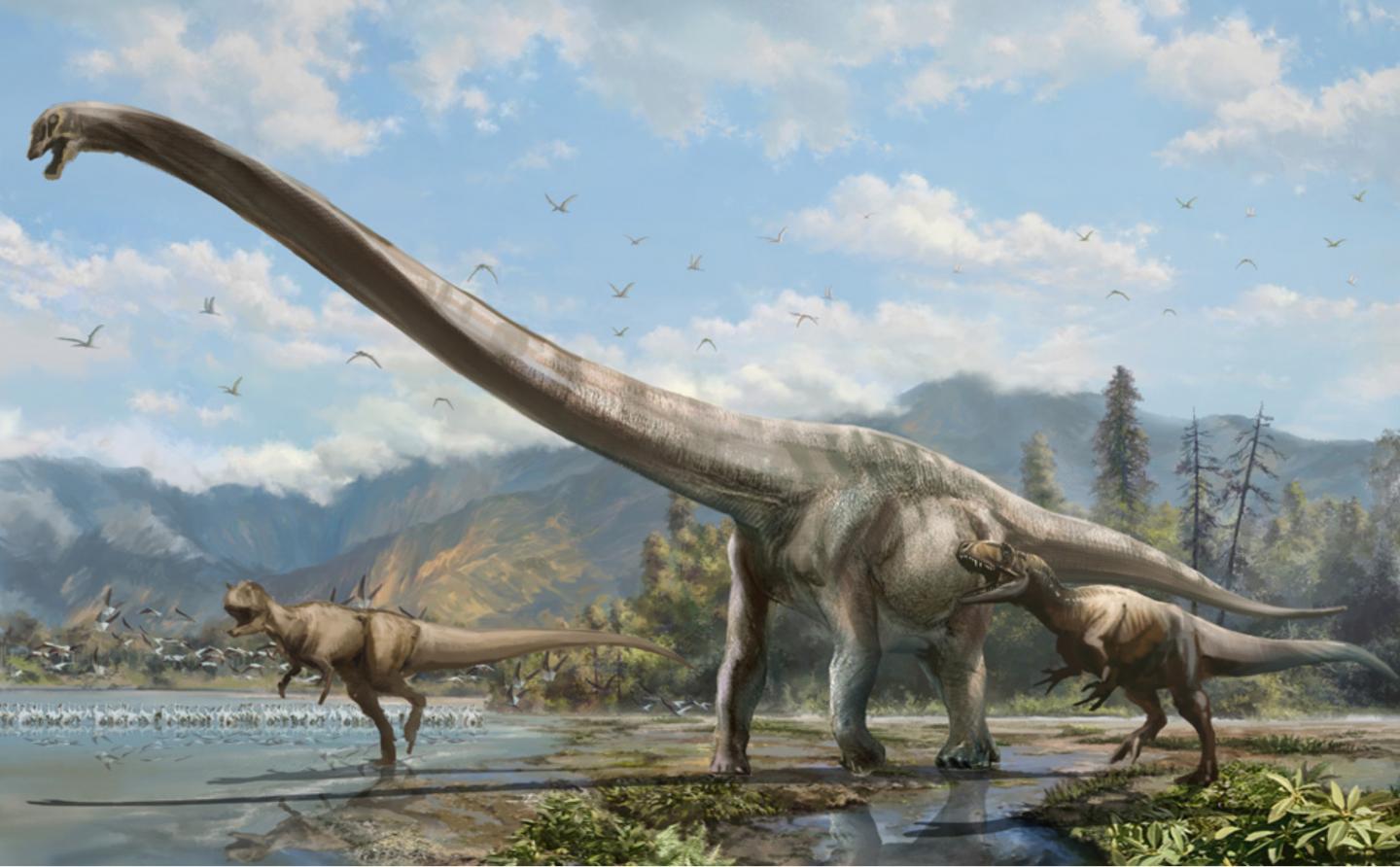
Paleontologists have discovered a new species of a long-necked dinosaur.
Qijianglong (pronounced "CHI-jyang-lon") was about 45 feet long and lived about 160 million years ago in the Late Jurassic. The name means "dragon of Qijiang," for its discovery near Qijiang City, close to Chongqing, and the fossil site was found by construction workers in 2006. The dig eventually came upon a series of large neck vertebrae stretched out in the ground - with the head of the dinosaur was still attached.
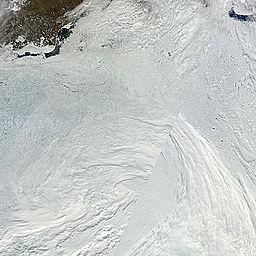
Arctic sea ice extent plunged 2001 to 2007 but then rebounded between 2007 and 2013. Warming world or not, periods of no change - and rapid change - at the world's northern reaches are the new normal. And perhaps the old normal as well.
Natural ups and downs of temperature, wind and other factors mean that even as sea ice slowly melts, random weather can mask or enhance the long-term trend. For example, even in a warming world, there's still a one-in-three chance that any seven-year period would see no sea ice loss, such as in 2007-2013, a new analysis shows. And the chaotic nature of weather can also occasionally produce sea ice loss as rapid as that seen in 2001-2007, even though the long-term trend is slower.
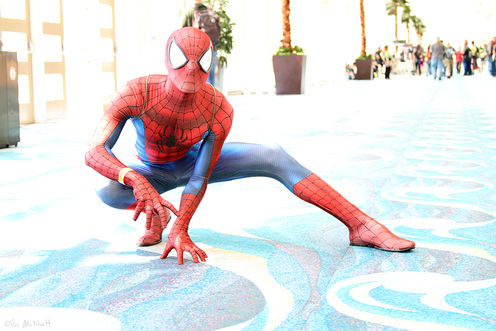
Spider-Man's breakfasts must be unreal levels of eggs.
warriorpoetBy Mark Lorch, University of Hull
While stuck in a hotel room I got sucked into watching the 2002 "Spider-Man" movie. And it struck me that Peter Parker must have an enormously high-protein diet to generate all that spider silk he goes through. So being the geek that I am, I wondered what his protein consumption has to be to sustain his villain-beating lifestyle.
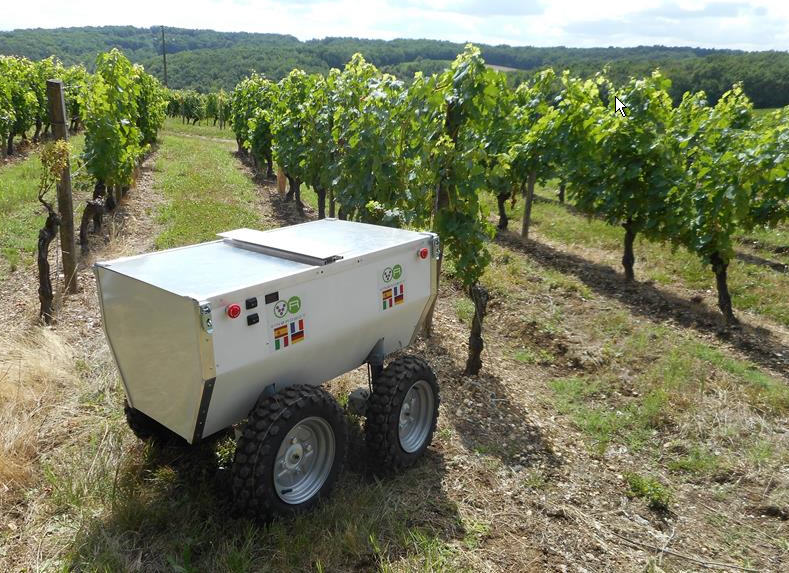
A European consortium is developing an unmanned robot equipped with non-invasive advanced sensors and artificial intelligence systems which will help manage vineyards.
The robot will be able to provide reliable, fast and objective information on the state of the vineyards to growers, such as vegetative development, water status, production and grape composition.
VineRobot, whose partners met recently at the Universitat Politècnica de València (UPV), is led by the Universidad de La Rioja. Completing the consortium are the Spanish company Avanzare, the French FORCE-A and Wall-YE, and the Italian Sivis, together with Les Vignerons de Buzet, a wine cellar cooperative near Bordeaux; and the Hochschule Geisenheim University in Germany.
Can big data analytics predict population-level societal events such as civil unrest or disease outbreaks?
That is the subject of a two-year analysis of the
Early Model Based Event Recognition using Surrogates (EMBERS)
system. The usefulness of this predictive artificial intelligence system for population-level events could be important. If existing models, which successfully predict the past, were good enough no one would ever lose money in the stock market.
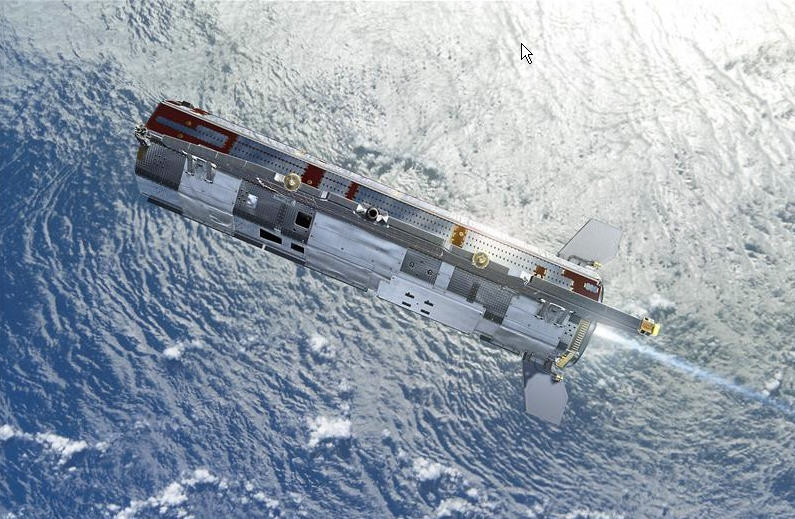 GOCE gravity satellite. ESA
We might like to think of the earth as fixed and unmoving but that is not the case. Things are always shifting, even if we may not have noticed in the past.
More than 2 million years of life have been saved by solid-organ transplants since 1987, according to a new report in JAMA Surgery.