







Mental illness has been under a lot of criticism in the last few years. The public feels like the psychology field over-medicates people based on subjective symptoms and recent high-profile violent acts all involved people on psychiatric medications.

But there is still recognition that some mental illness is exculpatory and not just bad behavior. That is less so with drug addicts. While addictions are called a disease, and everyone gives lip service to that idea, when it comes to public policy the truth comes out. The public doesn't support insurance, housing, or employment policies that benefit drug addicts, a new Johns Hopkins Bloomberg School of Public Health survey finds.

Americans love their dogs, and most people clean up after their pets when they are out on a walk, but some do not: people who claim they wouldn't pour toxic chemicals or medicines onto the ground because they recognize it gets into waterways delude themselves into believing dog excrement is "natural" and will be okay in waterways.

But it isn't. Bacteria and anti-bacterial strains from dogs can make people sick from dogs just like it does humans, and we recognize that humans should not go to the bathroom on the ground near a lake.

In 1908 the famously plump Venus of Willendorf, thought to be a symbol of fecundity, was discovered during an excavation near the Austrian town of Melk. It has been dated to 30,000 years ago and is one of the world’s earliest examples of figurative art.

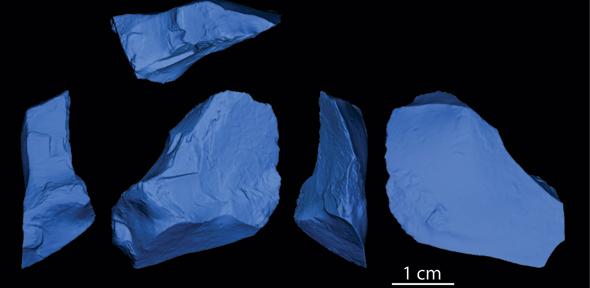
Now, a team of archaeologists have dated a number of stone tools excavated recently from the same site to 43,500 years ago. Results show they were part of the Aurignacian culture, which is generally accepted as indicative of modern human presence. It is agreed that modern humans dispersed into Europe, and began to replace Neanderthals, at least 40,000 years ago. The new research pushes this date back to a potentially much earlier time when temperatures north of the Alps were cool.

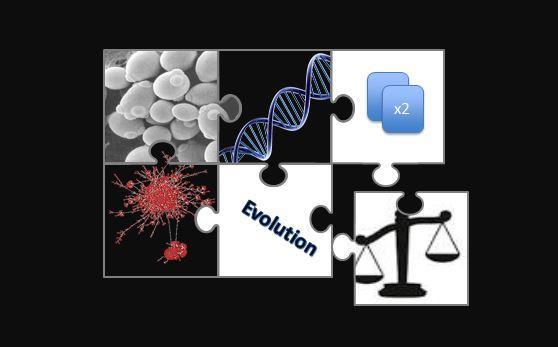
Geneticists have found a mechanism sought for more than four decades that explains how gene duplication leads to novel functions in individuals. 

Gene duplication is a biological phenomenon that leads to the sudden emergence of new genetic material. 'Sister' genes – the products of gene duplication – can survive across long evolutionary timescales, and allow organisms to tolerate otherwise lethal mutations. 

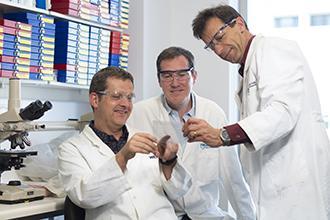
The public may be critical of the War On Cancer and its hundreds of billions of government money, but pharmaceutical companies have continue to make progress. A new study finds that 80 percent of bowel cancers could be treated with existing JAK inhibitors.

The risk of getting colorectal cancer increases with age, more than 90% of cases occur in people 50 years old or older, and it is the second leading cause of cancer death in the US. But there is a genetic commonality in 80 percent of those, and that is where JAK inhibitors come into play. 


Patterns of emergence are all around us. Credit: Feliciano Guimarães/Flickr, CC BY

By Andy Martin, University of Melbourne and Kristian Helmerson, Monash University

From the fractal patterns of snowflakes to cellular lifeforms, our universe is full of complex phenomena – but how does this complexity arise?

Valium (Diazepam) and similar medicines degrade naturally in the environment but it takes time, and until it happens there is concern about the freshwater environment.

Bacterial breakdown may give it a boost, a team of researchers has said.

Diazepam, used to treat anxiety and other similar conditions, has been detected in rivers across the UK and Europe. At the levels recorded, there is concern it may have the potential to produce harmful ecological effects in surface waters, including changing the behavior of fish shoals and their ability to sense danger from predators.


How many freebies can you carry? Credit: Nottingham Trent University, CC BY-NC-ND

By Kira Shaw, University of Sheffield

Transcranial magnetic stimulation (TMS) of the left dorsolateral prefrontal cortex can treat symptoms of depression in humans by placing a relatively small device on a person's scalp and stimulating brain circuits, yet little is known about how TMS produces these beneficial effects.

Some studies have suggested that TMS may modulate atypical interactions between two large-scale neuronal networks, the frontoparietal central executive network (CEN) and the medial prefrontal-medial parietal default mode network (DMN). These two functional networks play important roles in emotion regulation and cognition.

Breast cancer is the second leading cause of cancer death in women, which is why so many medical professionals encourage women to get mammograms. But the tests are not very accurate: only a minority of suspicious mammograms actually leads to a cancer diagnosis.

Bad results lead to needless worry for women and their families—not to mention the time, discomfort and expense of additional tests, including ultrasounds and biopsies.

