







Look at a fan rotating its blades. Now look somewhat to the side of it. It seems to rotate slower now. Now shift your gaze slowly back toward the center of the fan. The fan seems to pick up speed. There are not just two appearances of its speed, one fast if I stare at it, and one slow if it is in the periphery of my visual field, but instead the fan seems to pick up speed gradually!


Phytosaur: still got it. Credit: BFS Man, CC BY

By Stephanie Drumheller, University of Tennessee; Michelle Stocker, Virginia Tech, and Sterling Nesbitt, Virginia Tech


Oh no – not that mistake again. Credit: Flickr/Alex Proimos, CC BY-NC

By Will J Grant, Australian National University and Rod Lamberts, Australian National University


TNL1

Call it cathartic but one modern way people in a bad mood feel better is to go on social media like Facebook and find friends doing even worse.

A new paper says that generally people use social media to connect with people who are posting positive and success-oriented updates. No one wants to hang out with downers - unless they are in a bad mood. Then people want to read about less attractive, less successful and more miserable people. The authors believe the
findings give more context to recent papers stating that found people who spend a lot of time on Facebook tend to be more frustrated, angry and lonely – presumably because of all the happy updates from friends that make them feel inadequate. 

A new study has found that lungs become more inflammatory with age and that ibuprofen can lower that inflammation - and the difference can be dramatic.

Immune cells from old mouse lungs, after lung inflammation was reduced by ibuprofen, fought tuberculosis bacteria as effectively as cells from young mice. The ibuprofen had no effect on the immune response to TB in young mice. The researchers already knew that old mice had a harder time clearing TB from the lungs than young mice, but had not investigated the role of lung inflammation in that response. 

The idea of evolutionary imbalance when it comes to invasive species is not new, Charles Darwin articulated it. 

The concept is that species from regions with deep and diverse evolutionary histories are more likely to become successful invaders in regions with less deep, less diverse evolutionary histories. Darwin's original insight was that the more challenges a region's species have faced in their evolution, the more robust they'll be in new environments.

To predict the probability of invasiveness, ecologists
Dov Sax of Brown University and Jason Fridley of Syracuse University

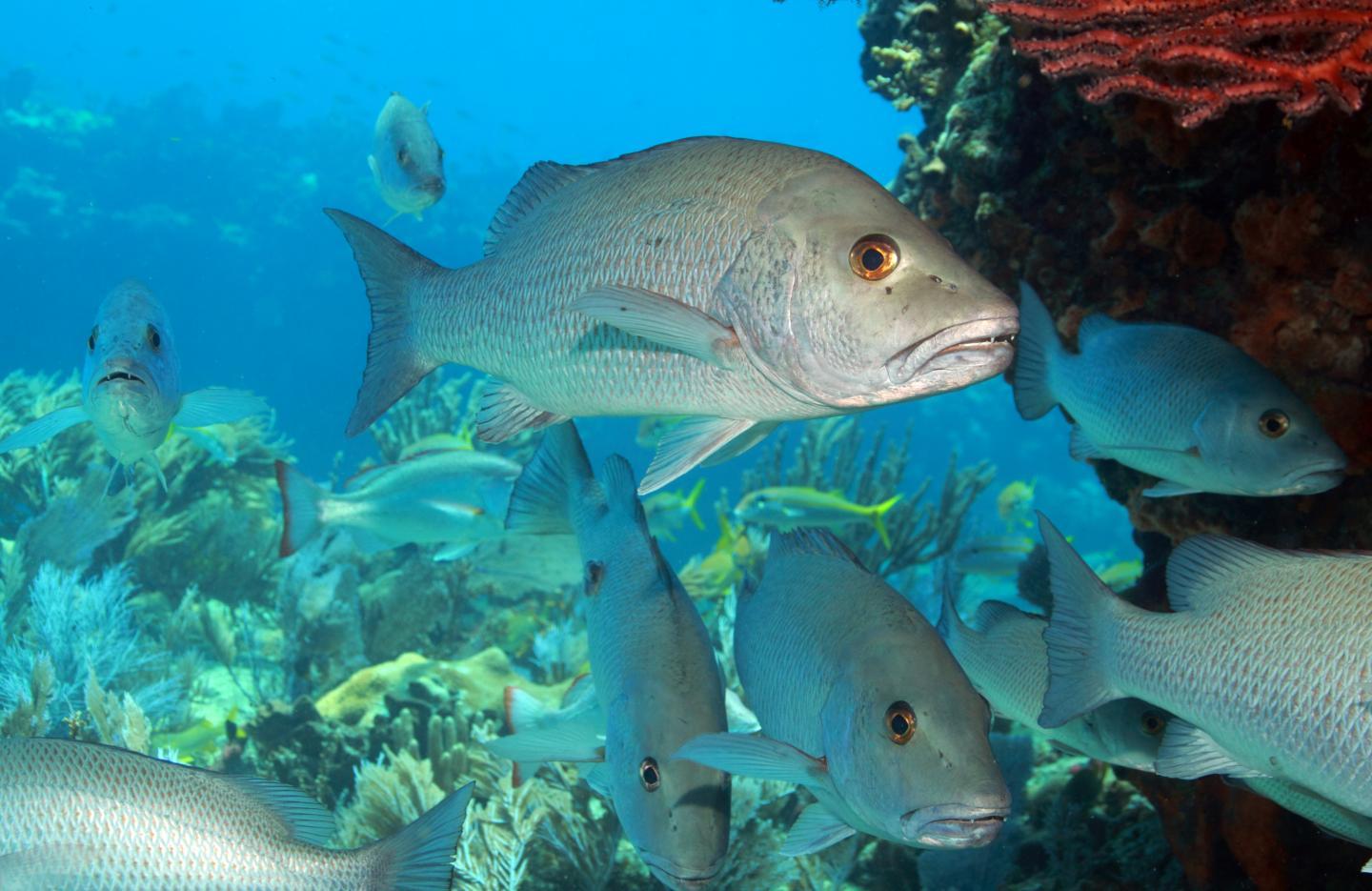
Researchers recently used audio and video recording tools to record larval orientation behavior in the pelagic environment. 

In their field experiment, the scientists put the recording devices i a drifting in situ chamber called DISC  near Fowey Rocks lighthouse in the northern Florida Keys. In total 58 deployments were conducted, 27 during the day and 31 at night. The team also recorded sounds in a laboratory setting to confirm that the sounds observed in the field were from gray snapper larvae. The researchers also referred to the public sound archive at the Macaulay Library to compare the larval sounds to those produced by adult L. griseus.

Fibromyalgia is a symptom-based disorder that manifests itself as chronic pain. Its underlying causes are unknown.

The results of a new study compares brain activity in individuals with and without fibromyalgia and indicate that decreased connectivity between pain-related and sensorimotor brain areas could contribute to deficient pain regulation in fibromyalgia, according to an article published in Brain Connectivity.

In the new study by Pär Flodin and coauthors from Karolinska Institutet in Sweden, they add on to previous findings from other fibromyalgia papers that used brain imaging and found abnormal neuronal activity in the brain associated with poor pain inhibition.

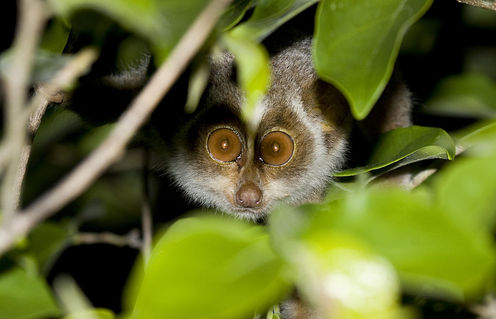
Going, going, gone: wildlife like the loris are disappearing. Credit: N. A. Naseer, CC BY-NC-ND

By Paul Jepson, University of Oxford

