New research from Queen Mary University of London has discovered 11 new DNA sequence variants in genes influencing high blood pressure and heart disease.

Identifying the new genes contributes to our growing understanding of the biology of blood pressure and, researchers believe, will eventually influence the development of new treatments. More immediately the study highlights opportunities to investigate the use of existing drugs for cardiovascular diseases.

Research led by a team at Women & Infants Hospital of Rhode Island and The Warren Alpert Medical School of Brown University has been published in the February 10, 2014 online edition of Pediatrics, the official journal of the American Academy of Pediatrics. The research indicates that premature babies benefit from being exposed to adult talk as early as possible.

SEATTLE – Pancreas cancer is notoriously impervious to treatment and resists both chemotherapy and radiotherapy. It has also been thought to provide few targets for immune cells, allowing tumors to grow unchecked. But new research from Fred Hutchinson Cancer Research Center shows that pancreas cancer "veils" itself from the immune system by recruiting specialized immune suppressor cells. The research team also found that removing these cells quickly triggers a spontaneous anti-tumor immune response.

The findings, published Feb. 20 in Gut, give hope for future immunotherapy strategies against this deadly and aggressive cancer.

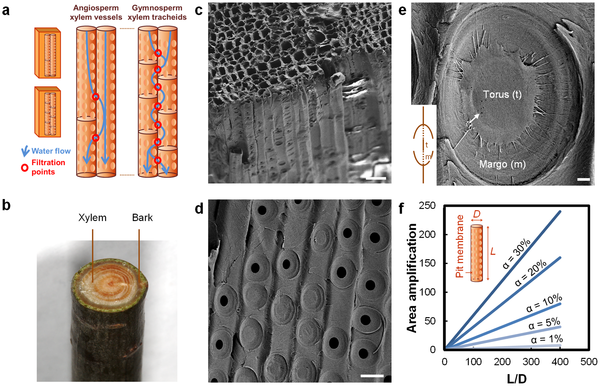
Boy scouts know this, and now we'll let you in on a secret too: if you've run out of drinking water during a lakeside camping trip, there's a simple solution. Break off a branch from the nearest pine tree, peel away the bark, and slowly pour lake water through the stick. This improvised filter will trap any bacteria, producing fresh, uncontaminated water. 

An MIT team has discovered that this low-tech filtration system can produce up to four liters of drinking water a day — enough to quench the thirst of a typical person. 

Passive smoking is linked to a significantly increased risk of miscarriage, stillbirth and ectopic pregnancy, finds a large observational study, published online in Tobacco Control.

The risk appears to be cumulative, with risk heightened in parallel with the length of time exposed to second hand smoke, the findings indicate.

It is well known that smoking during pregnancy significantly increases the risks of miscarriage and birth complications. What is less clear is whether passive smoking exerts similar effects, and if there are particularly critical periods of exposure to second hand smoke.

Two spotted seals orphaned as pups in the Arctic are now thriving at UC Santa Cruz's Long Marine Laboratory, giving scientists a rare opportunity to learn about how these seals perceive their environment. In a comprehensive study of the hearing abilities of spotted seals, UCSC researchers found that the seals have remarkably sensitive hearing in both air and water.

Picture a single cloud large enough to span the solar system from the sun to beyond Pluto's orbit. Now imagine many such clouds orbiting in a vast ring at the heart of a distant galaxy, occasionally dimming the X-ray light produced by the galaxy's monster black hole.

Using data from NASA's Rossi X-ray Timing Explorer (RXTE) satellite, an international team has uncovered a dozen instances where X-ray signals from active galaxies dimmed as a result of a cloud of gas moving across our line of sight. The new study triples the number of cloud events previously identified in the 16-year archive.

For the first time, an international team of astrophysicists, including Lawrence Livermore National Laboratory scientists, have unraveled how stars blow up in supernova explosions.

Using NASA's Nuclear Spectroscopic Telescope Array (NuSTAR) – a high-energy X-ray observatory - the international collaboration created the first-ever map of radioactive material in a supernova remnant, named Cassiopeia A, or Cas A for short. The findings reveal how shock waves likely rip apart massive dying stars, and ultimately end their lives.

A reduced risk of cervical lesions among Danish girls and women at the population level is associated with use of a quadrivalent HPV vaccine after only six years, according to a new study published February 19 in the Journal of the National Cancer Institute.

The synthetic chemicals used in the packaging, storage, and processing of foodstuffs might be harmful to human health over the long term, warn environmental scientists in a commentary in the Journal of Epidemiology and Community Health.

This is because most of these substances are not inert and can leach into the foods we eat, they say.

Despite the fact that some of these chemicals are regulated, people who eat packaged or processed foods are likely to be chronically exposed to low levels of these substances throughout their lives, say the authors.

And far too little is known about their long term impact, including at crucial stages of human development, such as in the womb, which is "surely not justified on scientific grounds," the authors claim.


