


Recently scientifically 2.0 so topical Schrödinger's cat jumped into being in the 1935 three-part article (in German) in Die Naturwissenschaften, just at the end of part one:
Man kann auch ganz burleske Fälle konstruieren. Eine Katze wird in eine Stahlkammer gesperrt, zusammen mit folgender Höllenmaschine …
In a display of nonchalance that should teach us a thing or two, the ATLAS collaboration has put an end to the Easter Higgs Rumour (EHR), which brought the blogosphere in an excited state for at least a week, and experimentalists and theorists for even more time. They did so by publishing a very narrow-focused document, totaling less than five pages, where they discuss the backgrounds to Higgs boson decays in the diphoton final state.

Leukotriene receptor antagonists (LTRAs)are easier to use and just as effective as conventional treatment with inhalers, according to a new study led by the University of East Anglia (UEA). 

Asthma is an increasing problem affecting around 300 million people worldwide and can significantly impact on a person's quality of life. It is a chronic condition characterized by inflammation of the airways causing wheezing, coughing, chest tightness and shortness of breath.   

I missed a cool paper last year on the effects of squid ink on angiogenesis--the growth of new blood vessels. And therefore I also missed the chance to run the sensationalist headline SQUID INK BLOTS OUT CANCER, or something equally punny and misleading.

Growing new blood vessels seems like a good thing, and indeed it often is. But, as the Angiogenesis Foundation points out:
Abnormal blood vessel growth, either excessive or insufficient, is now recognized as a “common denominator” underlying many deadly and debilitating conditions, including cancer, skin diseases, age-related blindness, diabetic ulcers, cardiovascular disease, stroke, and many others.
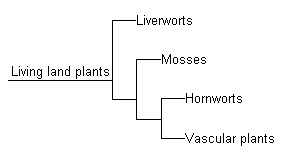
As a teenager, in the early 1960s, I developed an interest in botany, and in particular ferns and the so-called “fern-allies”.  So, living in the drier South-East of England, I welcomed trips to places where these plants about, such as Wales, mountainous Scotland, and Cornwall.
 
 But today I am travelling through time, showing how our knowledge of this branch of the Plant Kingdom has expanded over the last 200 years or so.
 
In science, you need a theory, an approach, and a way to measure the results.  In politics, you only need an opinion and a microphone.  Therefore, it is interesting that a major Green advocate -- promoting sensible environmental solutions -- took the stand to criticize past Green efforts.

George Monbiot (winner of a UN Global award, among others) recently scribed Let's Face it, none of our environmental fixes break the planet-wrecking problem.  There was immediate outcry and, as usual, the pundits somehow claiming this is proof that Green=Bad are missing the point on this.
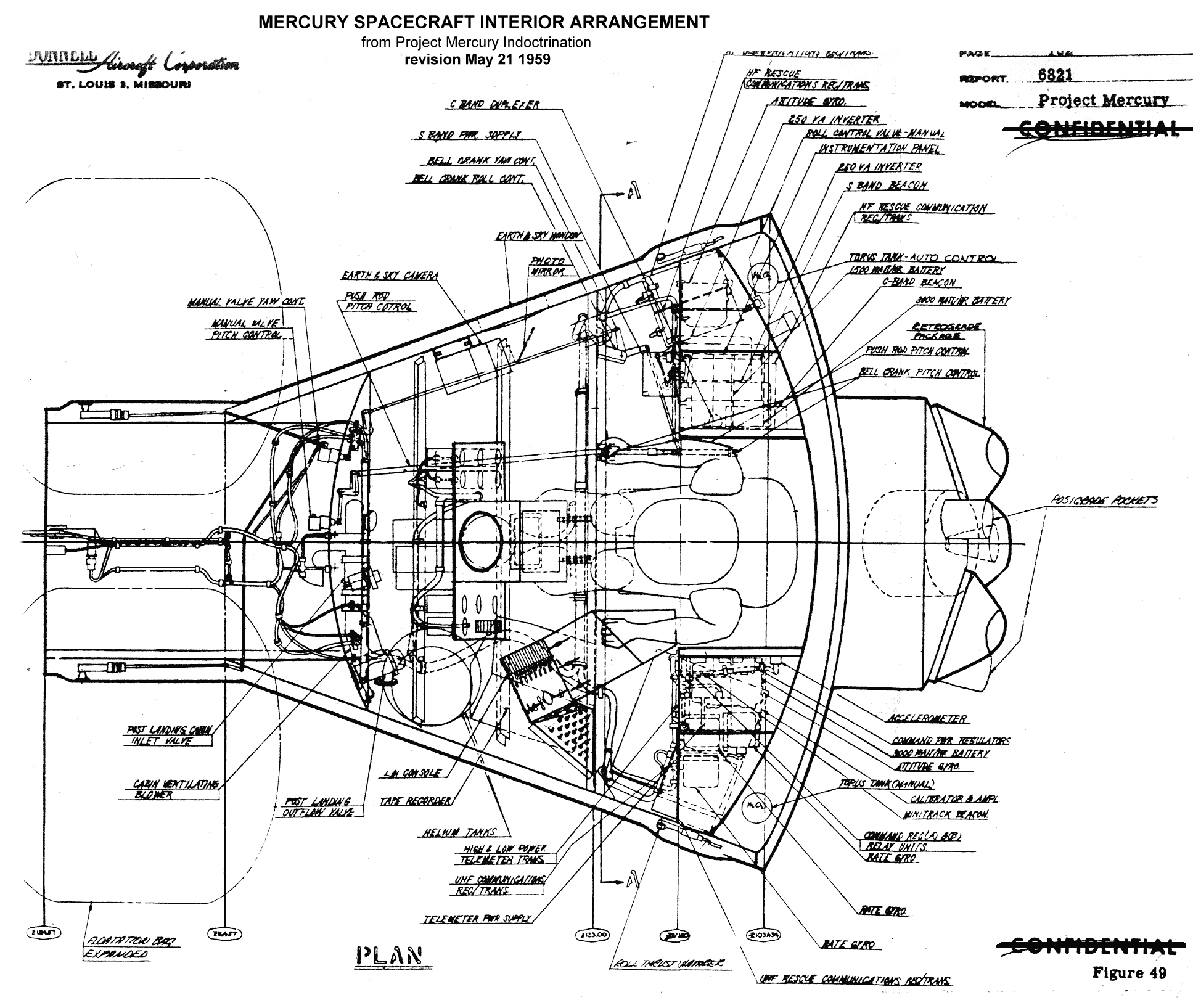
50 years ago today Alan Shepard became the first American into space, launching at just after 9AM from the Space Coast of Florida and finishing just over 15 minutes and 117 miles up later. 

The most famous book (and movie) about the early days of NASA is "The Right Stuff" and it is surprisingly faithful in its telling.   Alan Shepard did pee in his suit and then say, after three hours of being immobilized in a tiny capsule, "Why don't you just fix your little problem and light this candle?"   but he was also a guy who said, "You know, being a test pilot isn't always the healthiest business in the world" so he understood the risks.   96% chance of survival was acceptable risk.
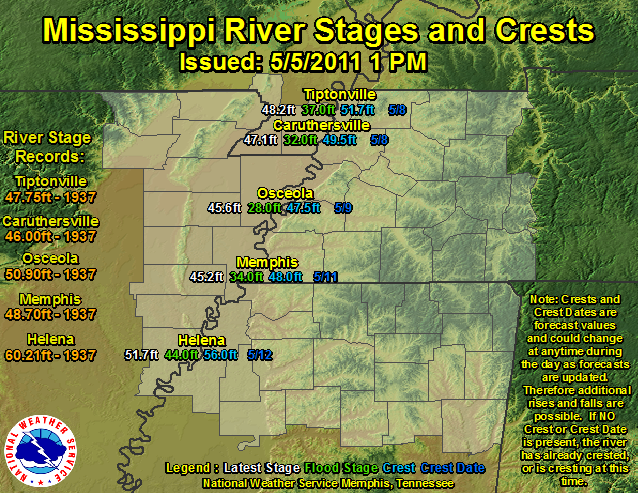
The Mississippi Floods

Over 100 million years ago, late Mesozoic forests were chock full of a diverse group of plants of the class Equisetopsida, though only one genus, Equisetum, commonly called scouring rush or horsetail, still exists today.  

It is unclear about the evolutionary beginnings of the genus Equisetum - molecular dating places the divergence of the 15 extant species of the genus around 65 million years ago but the fossil record had it earlier than that, around 136 million years ago.
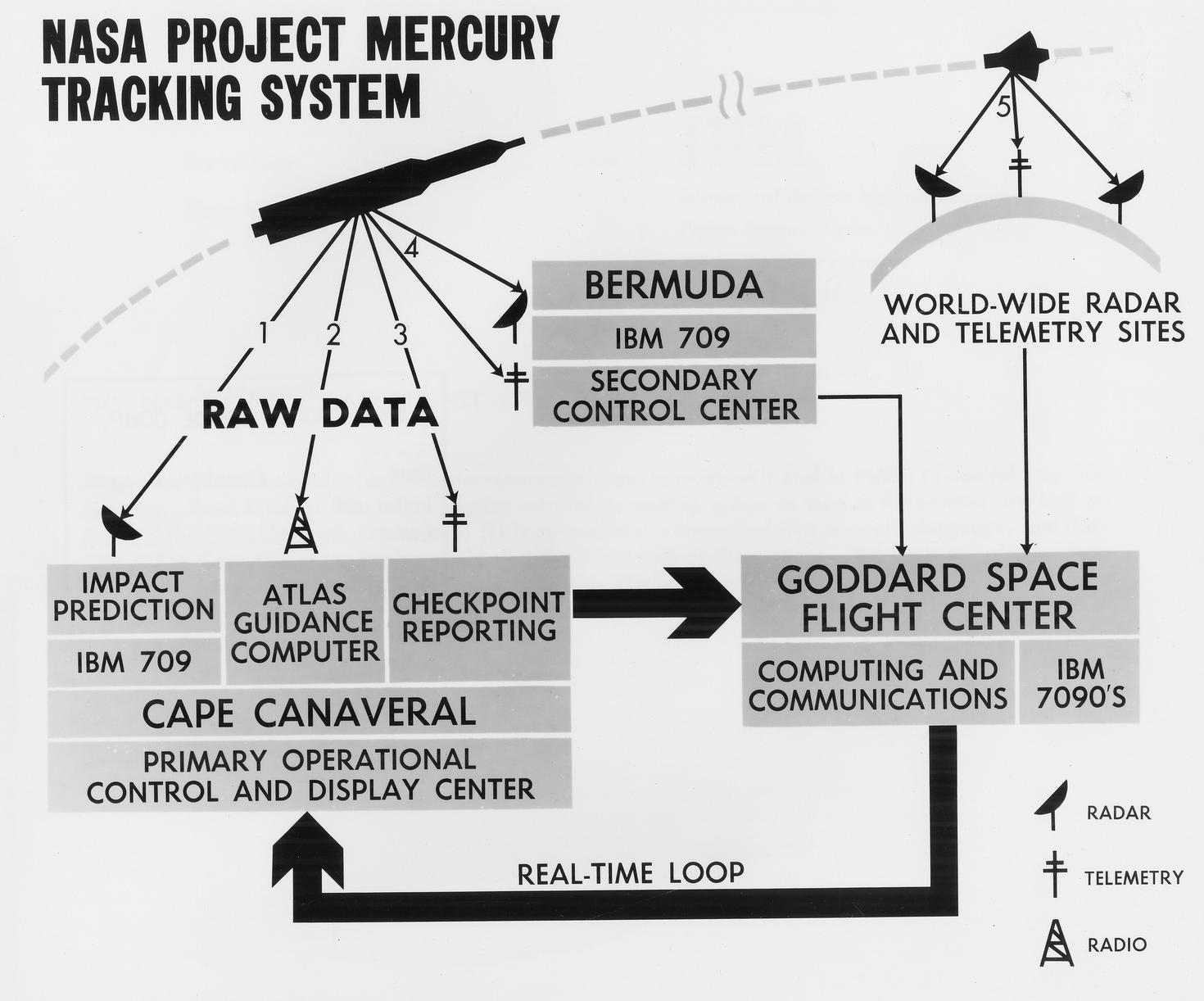
Here, I present for you a snippet from the Western Electric document Introduction to Project Mercury and Site Handbook on one of the most important aspects of a space program that barely existed; ground control and monitoring.   You know, the part where they actually know what the astronaut and his capsule are doing and decide whether or to send him into space and bring him back down, a wholly unnatural act.

a.  Direct the entire flight in respect to the mission;
b.  Monitor the flight in respect to aeromedical and capsule systems;
c.  Keep the astronaut and range stations informed of mission progress;


