

Physicists at Ohio University and the University of Hamburg in Germany have captured  the first images of atomic spin in action. 

The research indicates that scientists can observe and perhaps manipulate spin, a finding that may impact future development of nanoscale magnetic storage, quantum computers and spintronic devices.

The images have been published in a new Nature Nanotechnology study.
Researchers have discovered a new species of monitor lizard, a close relative of the Komodo dragon, on the Moluccan islands of east Indonesia. The lizard was discovered just last spring  and belongs to the mangrove monitor, V. indicus group. The discovery was reported in Zootaxa this week.

Varanus obor, popularly referred to as Torch monitor and Sago monitor, has a bright orange head with a glossy black body. It is a close relative of the fruit-eating monitor lizard recently reported from the Philippines. The Torch monitor can grow to nearly four feet in length, and thrives on a diet of small animals and carrion.
Last Monday Stephen Hawking gave a lecture at the George Washington University for the 50th anniversary of NASA. There he discussed the chance of a contact between our civilization and an extraterrestrial one. And he warned about the risks we may be facing.
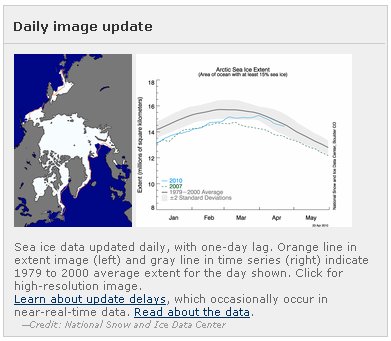
Interpreting Arctic Satellite Images And Data


Science writers and media reporters owe a duty of care to their readers: a duty to present facts undistorted by personal opinion or agenda.
That duty of care extends not just to what is written, but to what is portrayed in graphs and images.

A graphic produced for a specific science-oriented context can be as misleading if taken out of context as any cherry-picked data or quoted words.
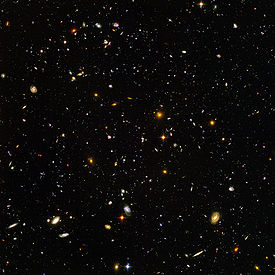
Hip, hip, hooray. The Hubble has reached its twentieth anniversary* and is  still alive and kicking. Congratulations go to NASA and ESA. And to the Hubble itself. Long live the Hubble!

Chances are, that by now you will be able to read more than a few blogs hailing the two decades of the Hubble as mankind's supreme window to the universe. And indeed, the Hubble has provided us with some spectacular pictures of the universe.

I get asked a lot about Science 2.0® and why I chose to start something like ScientificBlogging.com, because science is such a niche.   Is it?  65 million people respond to surveys that they are interested in science. Since there are just over 300 million people in the US and 10% of those can't read due to age or infirmity, that means almost 25% of America alone considers themselves science fans.
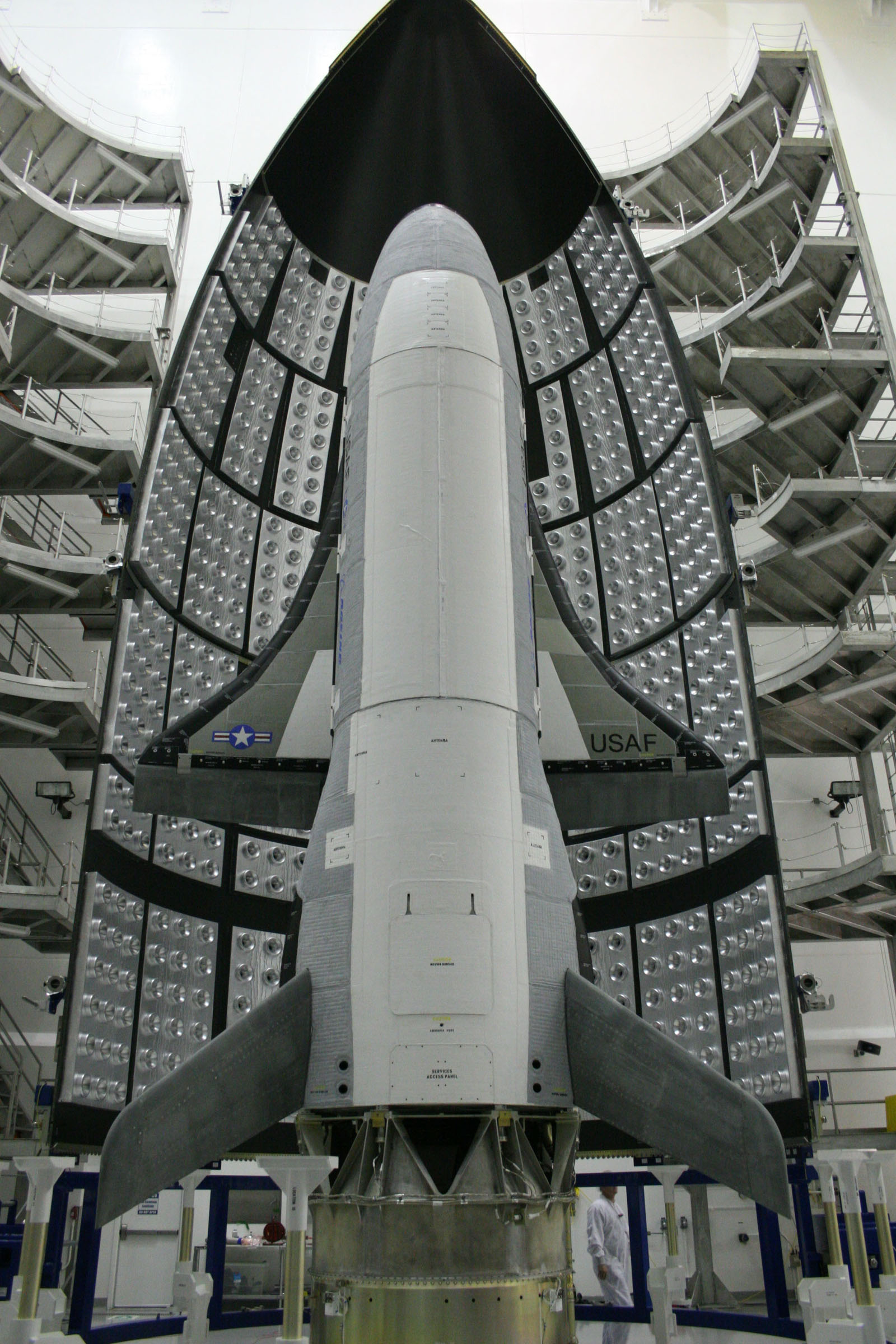
After a decade of development, the Air Force has launched the the X-37B Orbital Test Vehicle from Cape Canaveral Air Force Station, Fla., on an Atlas V expendable launch vehicle, and the Internet is abuzz with speculation about what it means because it is the first craft to have autonomous space re-entry.  Star Wars 2010?   
How often do you hear a song featuring Bill Nye? Well, often-- it's part of his shtick.  But to hear him remixed with 3 other science populist greats, that's a treat.  It's "We Are All Connected (feat. Sagan, Feynman, deGrasse Tyson and Bill Nye)  from Symphony of Science (one of several original music vids there).  Excellent work with adding reverb, echo and autotune to make a nice bit of electronica.  Falters a little at the 2 minute mark, but ends strong.  Thanks to my friend Danny O'Neill for pointing this Earth Day treat!
The word "inclusion" sounds simple. In fact, though, it can mean many things to many people - which is part of the reason it's so tough to implement.   For example...

There's "partial inclusion," wherein a child with autism is included for brief periods of time or in selected settings. In school, partial inclusion could mean "inclusion only in math," or "inclusion only in music," etc.

There's "full inclusion with support," in which the child with autism is physically in a setting with typically developing children, but expectations are modified and supports (such as an aide) are put in place. Sometimes this works; just as often the child with autism is physically present but emotionally and intellectually absent.

The primary structure of a protein also sometimes referred to as a polypeptide, is decided by sequences of amino acids. The amino acids are sequenced in a linear polypeptide chain which folds as it is being produced. it is this three - dimensional folded structure that decides the proteins biological activity.

