



What's the relationship between soy consumption and breast cancer? Some major news from JAMA:
    It’s all true! He was right! He was totally, hopelessly wrong about selfish genes, but he was right about memes. Well…he was a little bit right. He was wrong to equate the evolution of memes to the evolution of organisms, meme evolution being Lamarckian in character. But he was right to point out the potential capacity for memes (i.e cultural concepts) to prevent logical thought in the minds of their hosts. To ‘colonise’ those minds as Fred Phillips puts it. Dawkins likes to use religion to illustrate this point, but I prefer his own pet theory of   selfish genes.

The Big Dipper has a secret, invisible to the unaided eye, according to a new paper published in The Astrophysical Journal, which says that one of the stars that makes the bend in the ladle's handle, Alcor, has a smaller red dwarf companion.

Newly discovered Alcor B orbits its larger sibling and was caught in the act with an innovative technique called "common parallactic motion" by members of Project 1640, an international collaborative team that includes astrophysicists at the American Museum of Natural History, the University of Cambridge's Institute of Astronomy, the California Institute of Technology, and
NASA's Jet Propulsion Laboratory.

The holidays are challenging for most everyone's midsection but are they a factor in actual obesity rather than seasonal weight gain?   And are weekends just as detrimental?

Researchers at the University of Pittsburgh and Quinnipiac University say yes to both.  Even weekend eating patterns can have a significant impact.

J. Jeffrey Inman, a University of Pittsburgh professor of marketing and associate dean for research in the Joseph M. Katz Graduate School of Business, and coauthor Adwait Khare, Quinnipiac University professor of marketing, studied two years' worth of data on consumers' eating behavior and found that the quantity and quality of foods eaten during a meal and over the course of the day differs considerably on weekends and holidays.

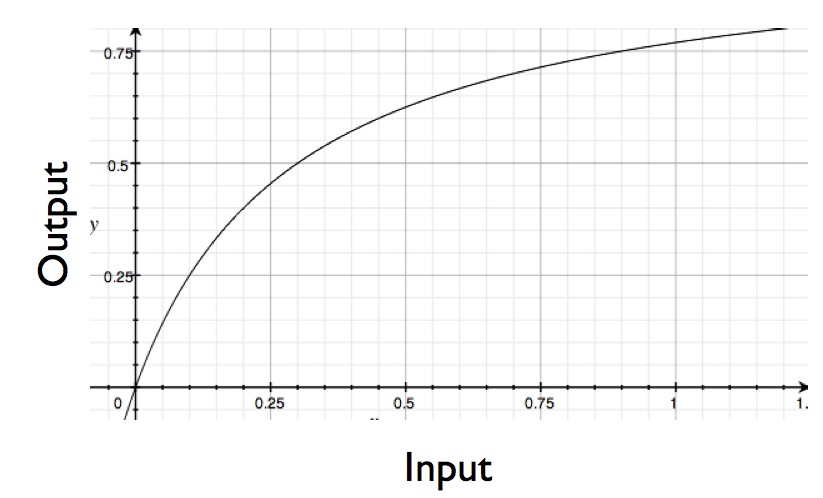
Why is the Fourier Transform so useful both in theoretical and applied science and engineering?  In short, often it is more convenient to solve a problem in Fourier space than the space of the problem's original formulation.


Molecular biologists and mathematical models frequently don't mix well, especially when the molecular biologists in question were trained before the rise of genomics, back when most labs only needed a computer for designing new vector sequences, writing papers, and checking email. Behind this skepticism is the intuition that biology is extremely messy (true), and difficult to quantify (also true). Also contributing is the long history of the cell as a molecular black box; for a long time, we had no idea what was going on inside the cell in molecular terms (somewhat analogous to doing chemistry without knowing about atoms), and in fact we still don't know the molecular role of a good chunk of the protein-coding genes in the human genome.
Mickey Mouse
Dear Mickey - How is life? Life is tough, says my friend. Do you agree? I wanted to write to you for a number of reasons. Believe it or not, people still remember that you turned 80 last year: Happy Eighties to you, M-I-C-K-E-Y!
 
Virgin Galactic officially debuts SpaceShipTwo, named the VSS Enterprise, fast on the heels of their earlier ready for liftoff announcement in Wired.  From the Wired article, they noted
A meeting of the San Diego Software Industry Council. The subject: What will Web 3.0 look like?

“Why don’t we know?” asked one venture capitalist. “Are we idiots?”

The VC was pandering to an in-group audience. The implied answer was, No, we’re not idiots, we are successful, sophisticated investors, entrepreneurs, and scholars of the web!

But y’know what? The truth is, yes, we are idiots. We are idiots because of technology colonization, and we fall for it every time.

Fifteen years ago the World Wide Web came along, and what did we do with it? We used it for push-publishing, for banner ads, and to sell stuff from web storefronts. In other words, we treated the WWW like an electronic magazine, or another television channel.

