In 1989, the Russian chess champion Garry Kasparov easily defeated the computer Deep Thought (name drawn from the Douglas Adams book). In 1997 Deep Blue kicked his ass, spawning accusations of cheating (which IBM denied). In a million-dollar rematch in 2003, Kasparov fought Deep Junior to a draw.
If, as Marcel Duchamp said, chess has “all the beauty of art and more,” do Kasparov’s break-even results mean that computers have drawn abreast of human creation, soon to overtake our brain’s ability to interpret, create and learn?
Researchers and developers of Artificial Intelligence say yes—yes, it does. Soon, they say, humans will be at best slaves and more likely relegated to distant, digitally archived memory (for better or for worse).
Not only is cardiovascular health good for children physically, it turns out that it may also promote intelligence. In a study published this week in PNAS, researchers say they have demonstrated a clear positive association between adolescent fitness and adult cognitive performance.
The results of the study also show the importance of getting healthier between the ages of 15 and 18 while the brain is still changing.
Despite the considerable amount of concern generated by the H1N1 outbreak earlier this year, the authors of a new study featured in PLoS Medicine believe it's impact will be relatively mild this flu season, with the number of hospitalizations and deaths related to the virus likely to remain much lower than anticipated.
"As more detailed data have become available, we have been able to improve our estimates of how severe this disease is. Early on, it was difficult to measure the flu's impact and it was crucial to plan for the full range of possible outcomes. Fortunately, the virus now appears to be near the milder end," said Marc Lipsitch, professor of epidemiology at HSPH and the study's senior author.
Astronomers at the Max Planck Institute for Astronomy have discovered and directly imaged a faint celestial body that orbits the star GJ 758. Its mass is estimated to be between 10 and 40 Jupiter masses.
Accordingly, it is either a giant planet or a brown dwarf, a would-be sun. One thing is certain: with a temperature of around 330 degrees Celsius, GJ 758 B is the coldest companion of a Sun-like star ever to be directly imaged. The discovery is detailed in Astrophysical Journal Letters
Social isolation and stress are two environmental mechanisms likely to contribute to breast cancer susceptibility, researchers from the University of Chicago said this week.
Their study, published in PNAS, found that isolation led to higher production of a stress hormone, corticosterone, among rats that were kept alone and subjected to the disturbances of colony life as well as stressful situations, such as the smell of a predator or being briefly constrained. Additionally, the isolated rats took longer to recover from a stressful situation than rats that lived together in small groups.
A study appearing in Nature Geoscience this week claims that Earth's temperature may be 30-50% more sensitive to atmospheric carbon dioxide than previous estimates suggest, and the effects of this increased sensitivity could make climate change an even bigger threat than it already is.
The results of the study show that the models currently used to forecast climate change often neglect components of the Earth's climate system that vary over long timescales and have an important effect on temperature sensitivity--such as land-ice and vegetation.
The next time you have a little too much to drink and need to sober up, researchers say you should avoid caffeine because it doesn't counter the effects of alcohol intoxication and may lead to some less than brilliant choices, like driving.
The reason? People who consume caffeine and alcohol are likely to feel awake and competent and may have a harder time recognizing that they're drunk as a result.
One of the cool things I have learned to do, through years of experience in data analysis at particle colliders, is to visualize the complex kinematics of a signal process in a multi-dimensional space, and imagine ways to separate it from backgrounds by selecting in the hyperspace the signal-rich region. I came across a very simple example of the above rather abstract statement yesterday, and I wish to share it with you.
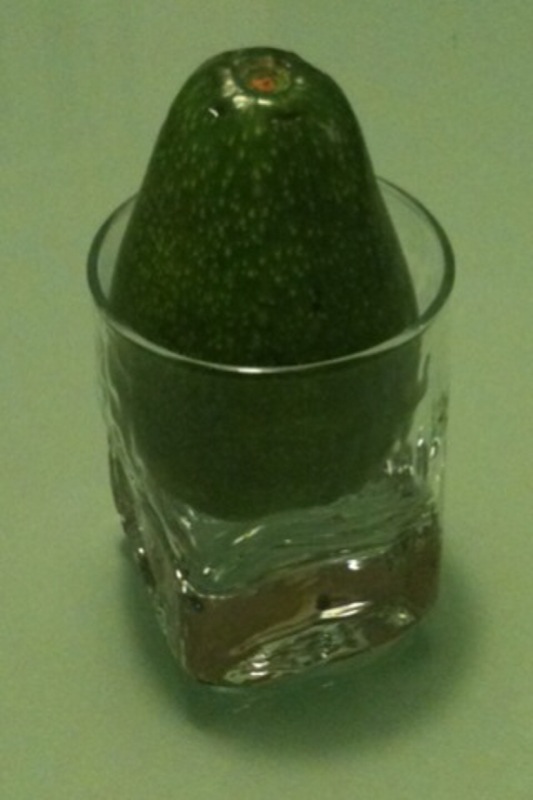
To help you visualize what I am going to discuss, here is the example: an avocado in a square tumbler. The avocado is top pair production, and the glass is Z plus b-antib production.
... Confused ? Let me explain.
As a freelance scientist, I find my Friday to-do lists are particularly eclectic. A little backstory: I work as a freelance a) science writer and b) programmer in order to support A) my family and B) my hobbies.
As long as, from a cash perspective,
$a+$b > $A+$B
and, from a time perspective,
dt(a)+dt(b)< dt(A)+dt(B)
... then I'm happy.
For type 2 diabetics, the choices are invariably slim: take medications and hew to a strict diet, or don’t take medications and hew to an impossibly strict—and largely unpalatable—diet. Such are the current options for maintaining the strict control of blood sugar needed to fight off the worst effects of the disease and its almost inevitable consequences of hypertension and heart disease.