As the world's oceans warm, they are absorbing less carbon dioxide, a new study in the November 25 issue of Geophysical Research Letters has found. With the oceans currently absorbing over 40 percent of the CO2 emitted by human activity, this could quicken the pace of climate change.
University of Minnesota researchers have developed a new computer model called the Virtual StreamLab, designed to help restore real streams to a healthier state. The Virtual StreamLab demonstrates the physics of natural water flows at an unprecedented level of detail and realism and was unveiled for the first time this week at the 2009 American Physical Society Division of Fluid Dynamics meeting in Minneapolis.
An international team of researchers probing the nerve-insulating myelin sheath have uncovered how mutations affect the structure of myelin, a focal point of research in multiple sclerosis and other neurological disorders.
The findings were central to the group's broader conclusion that a set of protein processes required in the early-stage conversion of glucose into fatty acids are critical to the proper formation and layering of myelin membrane. The researchers report their in the Proceedings of the National Academy of Sciences.
It's well known that young girls are very self-conscious about their bodies, but it may not be because of the unrealistically thin Disney characters they see on TV, as is often assumed.
A new study featured in the British Journal of Developmental Psychology suggests that while the media's portrayal of beauty does influence how young girls see themselves, they aren't likely to suffer short-term consequences from watching Cinderella, a conclusion in sharp contrast to earlier studies which suggest that the self-esteem of older girls and women suffers after short-term exposure to thin, beautiful models on television and in the movies.
The recent financial meltdown was perhaps the biggest economic crisis since the great depression, and a team of economists says that current macroeconomic models used to diagnose and treat the causes of the ongoing recession are woefully inadequate.
Their study, appearing in the November issue of Strategic Organization, argues that macroeconomics is not equipped to offer full solutions to this crisis. Its basic assumption is that factors of production, firms, and industries in the economy are homogeneous and interchangeable. Research in strategic management has consistently shown that the assumption that the economy is made up of homogeneous or interchangeable factors of production is incorrect.
The first large black holes in the universe likely grew deep inside gigantic, starlike cocoons that smothered their powerful x-ray radiation and prevented surrounding gases from being blown away, says a new study published in Monthly Notices of the Royal Astronomical Society.
EMBARGOED until: 24 November 2009 00:01 GMT
‘COSMIC SLOT MACHINE’ MATCHES GALAXY COLLISIONS
A new website will give everyone the chance to contribute to science by playing a ‘cosmic slot machine’ and compare images of colliding galaxies with millions of simulated images of galactic pile-ups.
These collisions, which astronomers call ‘galactic mergers’, could be the key to finding out why the Universe contains the mix of galaxies it does -- some with trailing spiral arms, others more like compact ‘balls’ of stars.
My blog is not a place for hot-off-the-press news - in it you are more likely to find discussions on material well digested and thought over. Nevertheless, I do not have the guts to sit on today's news. The Large Hadron Collider at CERN has produced its first high-energy proton-proton collisions, in the core of the experiments instrumenting its underground caverns.
It has been a long way since the first design of this extraordinary machine. I was reminded of just how much effort the construction and commissioning took by a slide shown by Ives Sirois at a workshop in Turin today: it is a schedule of the construction of the LHC dated 1989!

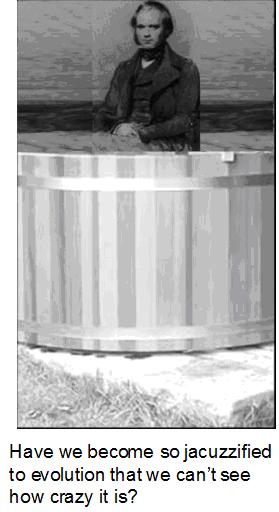
“Come on into the hot tub,” I told my three year old boy. But he wouldn’t budge. No way was he joining his older sister in there. “It’s warm, and it feels nice!” I urged, “There’s nothing to be afraid of.” But it was only when I turned off the jets that I could eventually coax him in.
Being a graduate student in particle physics is a tough, stressful job. I know it because I once was one, and I still remember the burden of giving exams, carrying on single-handedly a difficult analysis, and desperately struggling to learn the job of particle physicist, all the while trying to prove my worth to my colleagues. On the personal side, further trouble compounds the situation: one is usually fighting with tight money, stranded away from her family and boyfriend, and finds herself in the company of people whose similar priorities make the otherwise natural impulse of "having fun whenever possible" the last of their thoughts.