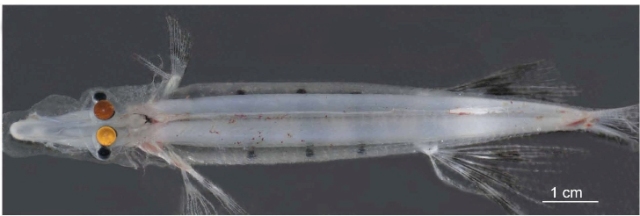
The eyes of deep-ocean dwelling creatures are always fascinating - in the near darkness of thousands of feet underwater, a very dim flash of light can mean an organism has found its meal for the month (or has become a meal for another fish). Detecting these flashes of light is difficult for a biological system, simply because of the extremely low energy of the light source. Some deep-sea creatures have abandoned eyesight altogether, relying instead on other sensory systems to find food. In the case of the spookfish, a creature that inhabits the murky depths 3000 feet below the surface of the south Pacific ocean, evolution has provided a novel and completely unique method for detecting light - a mirror.
New research into the effects of antipsychotic drugs commonly prescribed to Alzheimer's patients concludes that the medication nearly doubles risk of death over three years. The study, funded by the Alzheimer's Research Trust, was led by Prof Clive Ballard's King's College London team and is published in Lancet Neurology on 9 January.
The study involved 165 Alzheimer's patients in UK care homes who were being prescribed antipsychotics. 83 continued treatment and the remaining 82 had it withdrawn and were instead given oral placebos.
Southerners die from stroke more than in any other U.S. region, but exactly why that happens is unknown. A new report by researchers at the University of Alabama at Birmingham (UAB) and the University of Vermont underscores that geographic and racial differences are not the sole reasons behind the South's higher stroke death rate.
The data is from UAB's Reasons for Geographic and Racial Differences in Stroke (REGARDS) study, which has enrolled more than 30,200 U.S. participants. The study confirms a greater-than 40 percent higher stroke death rate in eight southeastern states known as the Stroke Belt – Alabama, Arkansas, Georgia, Louisiana, Mississippi, North and South Carolina and Tennessee.
New cells are born every day in the brain's hippocampus, but what controls this birth has remained a mystery. Reporting in Science, neuroscientists at the Johns Hopkins University School of Medicine have discovered that the birth of new cells depends on a protein that is involved in changing epigenetic marks in the cell's genetic material.
If global warming projections turn out to be accurate, a rapidly warming climate would seriously alter crop yields in the tropics and subtropics by the end of this century and could leave half the world's population facing serious food shortages, according to new research.
Compounding matters, the population of this equatorial belt – from about 35 degrees north latitude to 35 degrees south latitude – is among the poorest on Earth and is growing faster than anywhere else.
The first people to arrive in America traveled as at least two separate groups to arrive in their new home at about the same time, according to new genetic evidence published Current Biology.
Everyday, all over the world, people assemble peacefully into crowds at places such as shopping malls, sporting events, concerts and tourist sites--but crowds can shift from peaceful to unruly, even riotous, in just a few minutes given the right conditions.
The factors that cause a "charged" crowd to reach a "tipping point" and erupt into violence are not well understood by scientists because crowd behavior is so difficult to study. No one wants to incite a riot for the sake of science and surveys of individuals about their behavior as part of a crowd have not been that reliable.
On Monday, Jan. 5, NASA issued a request for proposal for the Ares V rocket that will perform heavy lift and cargo functions as part of the next generation of spacecraft that will return humans to the moon. The request is for Phase I concept definition and requirements development for the Ares V rocket. Proposals are due to NASA's Marshall Space Flight Center in Huntsville, Ala., no later than 1 p.m. CDT on Feb. 9.
The lowest ever levels of oxygen in humans have been reported in climbers on an expedition led by UCL (University College London) doctors. The world-first measurements of blood oxygen levels in climbers near the top of Mount Everest, published in this week's New England Journal of Medicine (NEJM), could eventually help critical care doctors to re-evaluate treatment strategies in some long-term patients with similarly low levels of blood oxygen.
Many objects in the universe emit radio waves. In 1931, American physicist Karl Jansky first detected radio static from our own Milky Way galaxy. Similar emission from other galaxies creates a background hiss of radio noise.
Now a team led by Alan Kogut of NASA's Goddard Space Flight Center in Greenbelt, Md., today announced the discovery of cosmic radio noise that booms six times louder than expected.
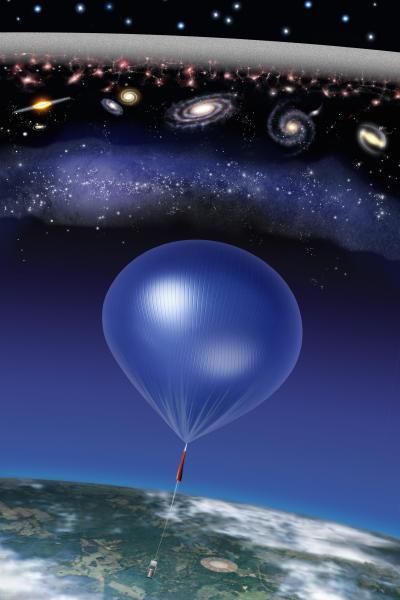
The finding comes from a balloon-borne instrument named ARCADE, which stands for the Absolute Radiometer for Cosmology, Astrophysics, and Diffuse Emission. In July 2006, the instrument launched from NASA's Columbia Scientific Balloon Facility in Palestine, Texas, and flew to an altitude of 120,000 feet, where the atmosphere thins into the vacuum of space.