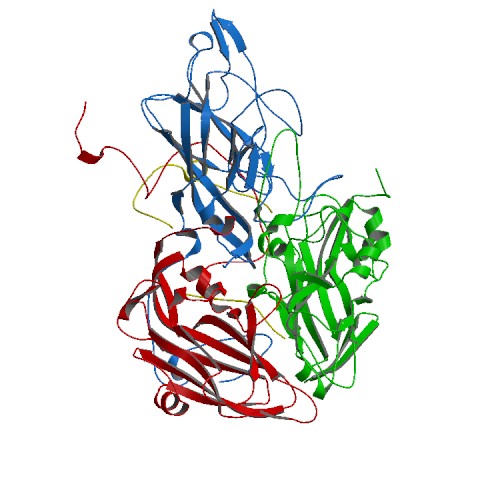







The Senecavirus is a "new" virus, discovered several years ago by Neotropix Inc., a biotech company in Malvern, Pennsylvania. It was at first thought to be a laboratory contaminant, but researchers found it was a pathogen, now believed to originate from cows or pigs. Further investigation found that the virus was harmless to normal human cells, but could infect certain solid tumors, such as small cell lung cancer, the most common form of lung cancer.

Scientists at Neotrophix say that, in laboratory and animal studies, the virus demonstrates cancer-killing specificity that is 10,000 times higher than that seen in traditional chemotherapeutics, with no overt toxicity. The company has developed the "oncolytic" virus as an anti-cancer agent and is already conducting early phase clinical trials in patients with lung cancer.

Proteins found in sperm are central to understanding male infertility and could be used to determine new diagnostic methods and fertility treatments according to a paper published by the journal Molecular and Cellular Proteomics (MCP). The article demonstrates how proteomics, a relatively new field focusing on the function of proteins in a cell, can be successfully applied to infertility, helping identify which proteins in sperm cells are dysfunctional.

"Up to 50 percent of male-factor infertility cases in the clinic have no known cause, and therefore no direct treatment. In-depth study of the molecular basis of infertility has great potential to inform the development of sensitive diagnostic tools and effective therapies," write co-authors Diana Chu, assistant professor of biology at San Francisco State University and Tammy Wu, post-doctoral fellow at SF State. The study is included in a special Oct. 10 issue of MCP dedicated to the clinical application of proteomics.

Researchers from Ohio State say that wetlands in tropical areas are able to absorb and hold onto about 80 percent more carbon than wetlands in temperate zones.

The scientists extracted soil cores from wetlands in Costa Rica and in Ohio and analyzed the contents of the sediment from the past 40 years. Based on their analysis, they estimated that the tropical wetland accumulated a little over 1 ton of carbon per acre per year, and the temperate wetland accumulated .6 tons of carbon per acre per year.

The temperate Ohio wetland in the study covers almost 140 acres, meaning it sequesters 80 tons of carbon per year. The tropical wetland covers nearly 290 acres and stores 300 tons of carbon each year.

Superconductors are materials that conduct current with negligible resistance and reduced energy waste so research has always generated enormous interest.

Magne Runde and Niklas Magnusson at SINTEF Energy Research are testing superconductors in the huge induction heaters utilized by the aluminium industry. Currently, companies have to preheat huge aluminium cylinders, known as billets, in induction heaters with copper conductors. When the temperature reaches 500 °C, the billet is extruded to profiles.

“This heating process leads to large losses in energy,” says Runde. “Only half the energy supplied is used to heat the billet. The remaining 50 percent is waste energy. This is something super conductors can improve.”

Edward O. Wilson is a Pulitzer Prize winning author and Harvard research professor emeritus and has pioneered seminal works in evolution of social behavior and organization; and a commitment to conservation that has shaped the face of science, philosophy, ethics and activism for more than a half century.

Who does he admire? Charles Darwin, whose audacious ideas on natural selection, evolution, and the nature of human origins turned a Victorian public and scientific establishment on its collective ear.

On Nov. 4, Wilson will kick off Arizona State University’s Darwinfest, a series of events and speakers that will tap into what Darwin set in motion when he stepped outside of the box 150 years ago to publish “On the Origin of Species.” Wilson will speak about “Darwin and the Future of Science” at 7 p.m. at the Tempe Center for the Arts.

A research team at Singapore A*STAR's Data Storage Institute (DSI) has invented a new phase change material that has the potential to change the design of future memory storage devices.

Phase change materials are substances that are capable of changing their structure between amorphous and crystalline at high speed. Currently, these materials are used to make Phase change memory (PCM), the most promising alternative to replace FLASH memory.

This research advance was given special mention in Nature's Asia Materials journal. In the August issue of Nature Photonics journal, the creation of a needle of longitudinally polarized light in vacuum using binary optics was featured.

The Royal Swedish Academy of Sciences has decided to award the Nobel Prize in Chemistry for 2008 jointly to Japanese citizen Osamu Shimomura, of Marine Biological Laboratory (MBL), Woods Hole, MA, and Boston University Medical School along with Americans Martin Chalfie, Columbia University, New York and Roger Y. Tsien, University of California, San Diego, La Jolla, "for the discovery and development of the green fluorescent protein, GFP".

Glowing proteins – a guiding star for biochemistry

The remarkable brightly glowing green fluorescent protein, GFP, was first observed in the beautiful jellyfish, Aequorea victoria in 1962. Since then, this protein has become one of the most important tools used in contemporary bioscience. With the aid of GFP, researchers have developed ways to watch processes that were previously invisible, such as the development of nerve cells in the brain or how cancer cells spread.

With increasing consumer pressure on both farmers and supermarkets to minimize the use of chemical pesticides in fruit and vegetables, a new study funded by the Economic and Social Research Council (ESRC) looks at why there is currently little use of biological alternatives in the UK.

The research suggests that consumer concerns about toxic residues could undermine the recommended ‘five a day’ target for the consumption of fresh fruit and vegetables. Supermarkets have responded to consumer pressure by banning some approved pesticides, but have been slow to embrace biopesticides.

Biopesticides, can play a significant role in a more sustainable food chain as chemical pesticides are withdrawn due to resistance problems or because they are no longer commercially viable, according to the research. Chemicals also endanger workers’ health and can contaminate groundwater.

Honey may reduce healing times in patients suffering mild to moderate burn wounds., according to a systematic review by Cochrane Library Researchers who concluded that honey might be useful as an alternative to traditional wound dressings in treating burns.

Honey has been used in wound treatment since ancient times. The mechanism of action is unclear. While honey may help the body remove dead tissue and provide a favourable environment for the growth of new, healthy tissue, current interest in medicinal honey focuses largely on its antibacterial effects.

Recent studies indicate that infusing hearts with stem cells taken from bone marrow could improve cardiac function after myocardial infarction - tissue damage that results from a heart attack. But in a recent systematic review, Cochrane Researchers concluded that more clinical trials are needed to assess the effectiveness of stem cell therapies for heart patients, as well as studies to establish how these treatments work.

In a heart attack, blocked arteries can cut off the blood supply to areas of heart tissue. This leads to myocardial infarction - severe tissue damage caused by lack of oxygen, which is transported in the blood.

