







Smell is one of the most complex and least-understood senses. Humans have a vast olfactory system that includes close to 400 functional genes, more than are dedicated to any other function. Animals such as dogs and mice have around 1,000 functional olfactory receptor genes.

MIT biological engineers have found a way to mass-produce smell receptors in the laboratory, an advance that paves the way for "artificial noses" to be created and used in a variety of settings. The work could also allow scientists to unlock the mystery of how the sense of smell can recognize a seemingly infinite range of odors.

Artificial noses could one day replace drug- and explosive-sniffing dogs, and could have numerous medical applications, according to Zhang and his colleagues. DARPA recently approved funding for the team's MIT (microfluidic-integrated transduction) RealNose project.

Applications for Templeton-Cambridge Journalism Fellowships In Science And Religion are now open.

The fellowship enables ten print, broadcast or online journalists to pursue an intensive two-month course of study in issues of science and religion. The program includes three weeks of seminars at the university of Cambridge featuring eminent, well-known authorities in the field. Fellows are paid a stipend in addition to travel expenses to Cambridge.

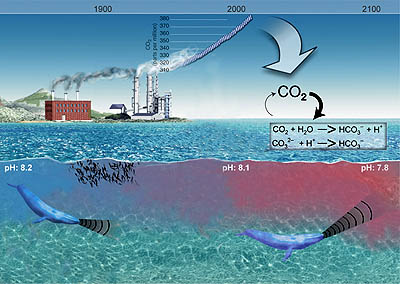
As more and more greenhouse gases are released into the atmosphere and the oceans warm, their chemistry also changes — seawater becomes more acidic as carbon dioxide from the atmosphere dissolves.

According to a paper to be published this week by marine chemists at the Monterey Bay Aquarium Research Institute, these changes in ocean temperature and chemistry will have an unexpected side effect— sounds will travel farther underwater.

Researchers in Italy report that an ancient Chinese herbal remedy known as "horny goat weed" shows potential in lab studies as source for new future drugs to treat erectile dysfunction (ED), an issue commonly treated with drugs like Viagra. The study says they provide scientific evidence supporting the herb's use as a natural aphrodisiac.

In the new study, Mario Dell'Agli and colleagues point out that Viagra (sildenafil) and several other prescription drugs are now available for ED, or male impotence. ED affects an estimated 18 million men in the United States alone. Studies show, however, that these drugs may cause side effects such as headache, facial flushing, stomach upset, and visual disturbances.

In research conducted at the University of Calgary, climate change scientist David Keith and a team of researchers showed it is possible to reduce carbon dioxide (CO2), the main greenhouse gas that contributes to global warming, using a relatively simple machine that can capture the trace amount of CO2 present in the air at any place on the planet.

The research is significant because air capture technology is the only way to capture CO2 emissions from transportation sources such as vehicles and airplanes. These so-called diffuse sources represent more than half of the greenhouse gases emitted on Earth.

Researchers in Pennsylvania report results of laboratory tests and road tests verifying that a simple, inexpensive device attached to a car engine's fuel injector can boost gas mileage by up to 20 percent. That translates into several more miles per gallon, they say, and publish their study in the November 19 issue of Energy & Fuels.

In the study, Rongjia Tao and colleagues describe development and testing of a new fuel economy booster. The small device consists of an electrically charged tube that can be attached to the fuel line of a car's engine near the fuel injector. The device creates an electric field that thins fuel, or reduces its viscosity, so that smaller droplets are injected into the engine. That leads to more efficient and cleaner combustion than a standard fuel injector, the researchers say.

Researchers are reporting that new insights into the composition of human breast milk may lead to new ways to prevent and treat stomach illnesses and other diseases in babies and adults, according to an article in the Sept. 29 issue of Chemical & Engineering News.

In the story, Jyllian Kemsley notes that human breast milk is a complex fluid composed of several key components, including lactose, a sugar that provides energy for the infant, and lipids, which are thought to provide healthy fats to infants. But scientists are just now beginning to understand the composition and function of many of the components of human breast milk.

Although the industrial compounds known as polychlorinated biphenols or PCBs have been found in previous air samples collected in the city of Chicago, a University of Iowa researcher says that a new study of Chicago air sampled between November 2006 and November 2007 found PCB11, a byproduct of the manufacture of paint pigments and a potentially toxic substance, present throughout the city.

"To the best of our knowledge, this is the first published report of PCB11 in ambient air," said Keri Hornbuckle, UI professor of civil and environmental engineering, in the Sept. 24 online issue of the journal Environmental Science & Technology.

Shape is the most important factor affecting Christmas tree selection, followed by needle retention, species, and price, according to M. Elizabeth Rutledge, a graduate student in the Department of Forestry and Environmental Resources at North Carolina State University.

How many of you out there remember your father negotiating over tree shape? None of us either. But Rutledge says that is the case so we'll let it go and assume everyone picks the best tree and then looks at the price tag, rather than the other way around.

Traditionally, Americans have also preferred dense trees, she writes, whereas Europeans have preferred more natural, or "open" trees. Open trees have more space to hang ornaments, holding up to two-thirds more decorations than heavily sheared trees, and tend to weigh less than dense trees, providing advantages for growers and consumers alike.

It used to be that being buried under a pile of large, sweaty men was the worst thing that could happen to you playing Rugby - but then it turned out a herpes virus can cause a skin disease called "scrumpox" and it spreads through physical contact.

Researchers have discovered that a new strain could be even more pathogenic - and it's now also found among sumo wrestlers in Japan.

"Scrumpox", or herpes gladiatorum, is a skin infection caused by the herpes virus, which can cause coldsores. It is spread through direct skin-to-skin contact so it is common among rugby players. Symptoms can start with a sore throat and swollen glands and the telltale blisters appear on the face, neck, arms or legs. The disease is highly infectious, so players who are infected are often taken out of competition to stop the virus from spreading.

