





The Captain can't freeze smelly fish that's past its best - and Icelandic scientists can now help him out by detecting the levels of stench-making bacteria faster than ever before.

The research in the Royal Society of Chemistry's Journal of Environmental Monitoring reports a new method to detect bacteria that break down dead fish and produce the distasteful smell of rotting fish. It opens the door to a standard of quality control even higher and speedier than the finely-tuned nose of the bushy-bearded Birdseye.

Using a technique based on the polymerase chain reaction (PCR), Eyjófur Reynisson and colleagues from Matis-Icelandic Food Research, Reykjavik, can assess the levels of Pseudomonas bacteria in fish in just five hours. This is four times faster than the current quickest method, which involves traditional cultivation of the bacteria Pseudomonas, the root cause of stinking fish.

There's a lot of truth in the old proverb "experience is the best teacher," and apparently it even applies to 10-month-old infants.

Researchers have found that infants who had an opportunity to use a plastic cane to get an out-of-reach toy were better able to understand the goal of another person's use of a similar tool than were infants who had previously only watched an adult use a cane to retrieve a toy.

According to findings from the October issue of the American Sociological Review, money does matter in education, but not in a way lobbyists want you to believe.

The research, which looked at the mathematical literacy scores of thousands of 15-year-old immigrants to 13 Western nations from 35 different native countries, indicates that economic development and political conditions in an immigrant's home country impact the child's academic success in his or her destination country.

Despite claims that education quality is solely a funding issue, the results say that immigrant children from countries with lower levels of economic development have better scholastic performance than comparable children who emigrate from countries with higher levels of economic development.

With one of the most aggressive submarine cable builds in the world now complete, the first phase of the Trans-Pacific Express submarine cable system directly connecting Mainland China, the United States, South Korea and Taiwan is ready for service. The 18,000 kilometer (more than 11,000 mile) fiber-optic undersea cable will play a significant role in driving new development for international telecommunications in the Asia-Pacific region.

Originally announced as a 5.12 terabit system in December 2006, the cable system has increased in capacity, and when fully deployed when phase two is completed, TPE will be a 6 terabit submarine cable system.

The six international telecommunications carriers initially investing in the Trans-Pacific Express Submarine Cable Consortium -- China NetCom, China Telecom, China Unicom, Chunghwa Telecom, Korea Telecom and Verizon Business -- knew a monumental task was ahead when they set out to build and make ready for service within two years the most advanced submarine cable in the Pacific Ocean.

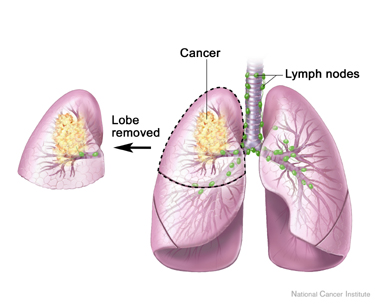
A new method of treatment could mean a dramatic difference in the way we look at and treat lung cancer. Developed over the past decade, a team of researchers at Allegheny General Hospital (AGH) in Pittsburgh has developed a new technique using a mesh of radioactive 'seeds' that is generating significant results.


According to the American Cancer Society (ACS) lung cancer is the leading cause of cancer deaths for both men and women. Deaths from lung cancer exceed those from breast, prostate and colon cancers combined. In 2008 the ACS estimates 162,000 lung cancer deaths in the United States. Currently, after a diagnosis of lung cancer only about 40 percent of people remain alive after the first year.

The U.S. House of Representative’s rejection of the Troubled Assets Relief Program, the proposed $700 billion Wall Street bailout, was a prudent decision, say two University of Arkansas researchers who are closely monitoring the U.S. financial crisis.

“The necessity of passing this particular bill was unclear,” said Tim Yeager, associate professor of finance in the Sam M. Walton College of Business and former economist at the Federal Reserve Bank of St. Louis. “Instead of purchasing mortgages directly at unknown prices, the government would be better off purchasing preferred shares of large financial institutions in crisis. If Wall Street lending truly freezes up over the next several days or months, this bill or another one can be passed by Congress to help alleviate the crisis. So at this point, the rejection of the Wall Street bailout bill is a good thing.”

Researchers at the Max Planck Institute for Developmental Biology in Tuebingen, Germany, have reported the completion of the first genomes of wild strains of the flowering plant Arabidopsis thaliana as part of the 1001 Genomes Project.

The entire genomes of two individuals of this species, one from Ireland, the other from Japan, have now been compared in great detail. They were found to be astonishingly different from each other, as Detlef Weigel and his colleagues write in Genome Research.

This study marks the starting point of the 1001 Genomes Project, in which a total of thousand and one individuals of the same species will be sequenced. The scientists aim at correlating the genetic differences between the different strains with variation in the speed of plant growth and their resistance against infectious germs. These strategies could then also be applied to crop plants or trees.

Economic globalization and liberalization have been blamed for numerous social ills over the last two decades, including a sharp rise in interethnic violence in countries all over the world. Not so, say the results of a study conducted by researchers from McGill University and published in the current issue of International Studies Quarterly.

According to Dr. Stephen Saideman and former student David Steinberg, the more government intervention there is in the local economy, the more likely inter-ethnic violence and rebellion becomes. Conversely, the more economically open a society is, the less likely such violence becomes.

Tourism on Antarctica is increasing and that can form a threat for the vulnerable South Pole area. Research from Maastricht University provides a possible solution: market the visitor rights to the highest bidder.

Tourism in Antarctica has grown dramatically. In 1985, just a few thousand people visited the area but in the season 2007/2008 more than 40,000 did. A number of parties are concerned about the effects of this rapid growth with respect to safety, the environment, the scale of tourism and the lack of financial resources for monitoring and enforcement purposes.

They also have doubts about how this growth can be reconciled with the basic principles of the Antarctic Treaty System ATS.

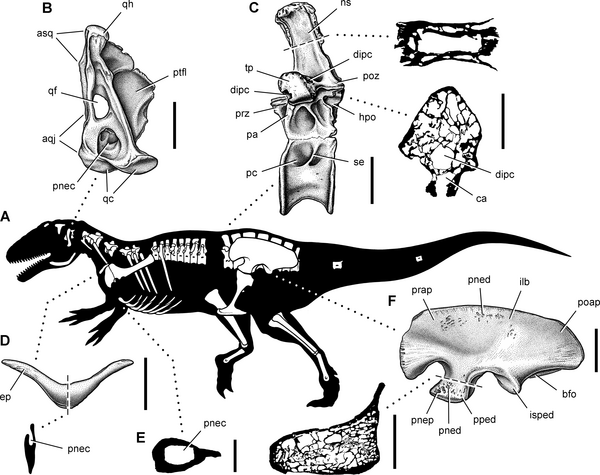
The remains of a 30-foot-long predatory dinosaur discovered along the banks of Argentina's Rio Colorado is helping to unravel how birds evolved their unusual breathing system.

Birds have a breathing system that is unique among land animals. Instead of lungs that expand, birds have a system of bellows, or air sacs, which help pump air through the lungs. This novel feature is the reason birds can fly higher and faster than bats, which, like all mammals, expand their lungs in a less efficient breathing process.

The discovery, announced at a news conference in Mendoza, Argentina, builds on decades of paleontological research indicating that birds evolved from dinosaurs.

