With the Large Hadron Collider gearing up for its first test run this summer, physicists hope to discover the last missing particle predicted by the Electroweak theory, the Higgs boson.  Wrapped up in its own big theory, the Higgs Mechanism or Higgs Field, it supposedly confers mass or absolute weight on some paricles or collections of them like atoms and planets.  The Higgs Field is a must, otherwise the Electroweak theory falls flat, insisting that all particles are massless, that matter doesn't exist.

The LHC has been sold to politicians and the public as the experiment that will find the Higgs, though in fact the LHC, no ordinary atom smasher, aims to produce it with colossal energies applied to protons, lead ions later, collided together in a mini Big Bang.  The disaster scenarios also start here.

Einstein and Spacetime, courtesy NASA 2005 

I haven't contributed a single thing to the platypus genome project, but since my desk sits one floor above where people and robots broke the platypus DNA into chunks, cloned those chunks into bacteria, sequenced the pieces of DNA, and used massive amounts of computing power to assemble the stretches of sequence into a complete genomic whole, I'm going to consider myself somewhat of an authority on the subject and tell you what's wrong with other people's ideas about the platypus.

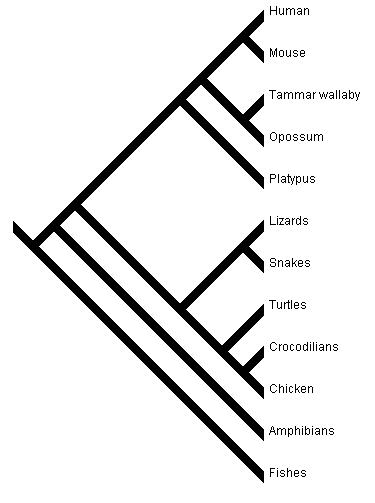
The genome sequence of the platypus was published Thursday in Nature, and from the press headlines, you could be excused for thinking that genomics has in fact confirmed that the platypus is a freak of nature: part bird, part reptile, and part mammal. The animal certainly looks like it - the platypus has the webbed feet and bill of a duck, and venomous spines and rubbery eggs that remind us of reptiles, but it has fur and feeds its young with milk, so it must be a mammal. The confusing press headlines might even lead you to believe that we sequenced the platypus genome just to figure out what this thing is, when the truth is, as we'll see below, that the genome sequence has essentially confirmed what evolutionary biologists have already deduced about the position of the platypus on the tree of life.

Is the platypus part bird, part reptile part mammal, an amalgam of very different groups of animals? Is it a primitive mammal that resembles the early ancestors of all mammals? Can we figure out just what this creature is by gazing at its genome?
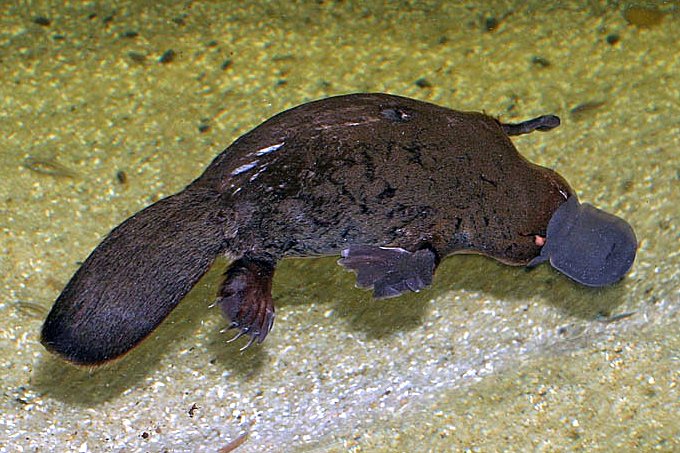

Photo Credit: Stefan Kraft, courtesy of the Wikipedia Commons

President Bush has a bill on his desk, the Genetic Information Nondiscrimination Act (GINA), which will prohibit discrimination on the basis of genetic information with respect to health insurance and employment. He is expected to sign the bill, but is science – and the people – ready?

There has been considerable interest in the publication of the platypus genome, which is good. Unfortunately, much of the reporting has been distorted, which is bad. However, rather than picking on the press, I want to focus on an example from the scientific literature where a misconception about evolutionary relationships seems to creep in and generate confusion. Consider the following line, from a soon to be published paper about platypus sex chromosomes (Veyrunes et al. 2008).

As the most basal mammal group, the egg-laying monotremes are ideal for determining how the therian XY system evolved.

Stem cells, the body's wonder tool, are extremely versatile. They can develop in 220 different ways, transforming themselves into a correspondingly diverse range of specialized body cells.

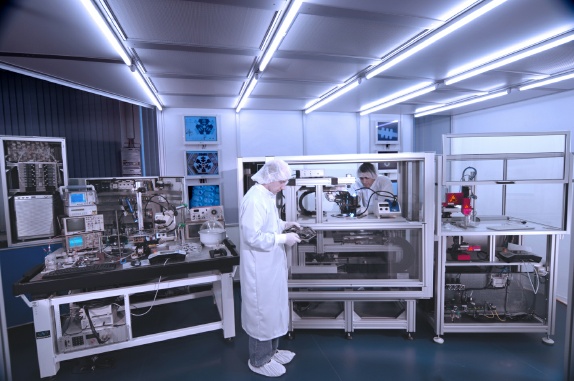
Biologists and medical scientists plan to make use of this differentiation ability to selectively harvest cardiac, skin or nerve cells for the treatment of different diseases. However, the stem cell culture techniques practiced today are not very efficient. What proportion of a mass of stem cells is transformed into which body cells? And in what conditions?

“We need devices that keep doing the same thing and thus deliver statistically reliable data,” says Professor Günter Fuhr, director of the Fraunhofer Institute for Biomedical Engineering IBMT in St. Ingbert.

Being obese can increase the risk of Alzheimer’s Disease by as much as 80 percent, according to a study in the May issue of Obesity Reviews. But it's not just weight gain that poses a risk. People who are underweight also have an elevated risk of dementia, unlike people who are normal weight or overweight.

US researchers carried out a detailed review of 10 international studies published since 1995, covering just over 37,000 people, including 2,534 with various forms of dementia. Subjects were aged between 40 and 80 years when the studies started, with follow-up periods ranging from three to 36 years.

The review, which included studies from the USA, France, Finland, Sweden and Japan, also included a sophisticated meta-analysis of seven of the studies, published between 2003 and 2007 with a follow-up period of at least five years.

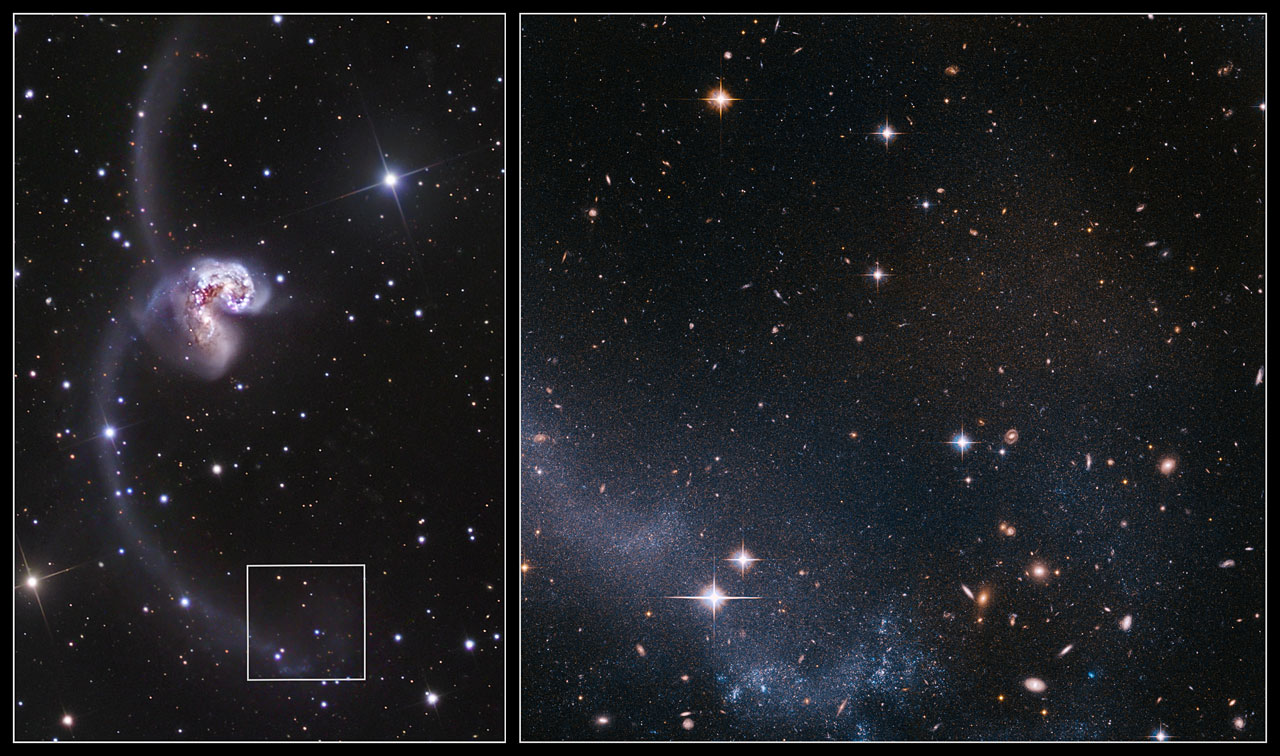
The Antennae Galaxies, located in the constellation of Corvus (the Crow), are among the closest known merging galaxies. The two galaxies, also known as NGC 4038 and NGC 4039, began interacting a few hundred million years ago, creating one of the most impressive sights in the night sky. They are considered by scientists as the archetypal merging galaxy system and are used as a standard against which to validate theories about galaxy evolution.

Scientists using Hubble’s Advanced Camera for Surveys and Wide Field Planetary Camera 2 to observe individual stars spawned by the colossal cosmic collision in the Antennae Galaxies have reached a surprising conclusion - the Antennae are much closer than previously believed, 45 million light-years instead of the previous best estimate of 65 million light-years.

Photosynthesis is of great interest outside biology, specifically in the energy industry. Using photosynthesis, green plants are able to harvest energy from sunlight and convert it to chemical energy at an energy transfer efficiency rate of approximately 97 percent and if scientists can create artificial versions of photosynthesis, the dream of solar power as the ultimate green and renewable source of electrical energy could be realized.

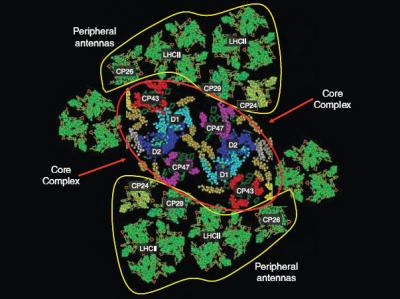
However, a potential pitfall for any sunlight-harvesting system is that if the system becomes overloaded with absorbed solar energy, it most likely will suffer some form of damage. Plants solve this problem on a daily basis with a photo-protective mechanism called energy-quenching. Excess energy, detected by changes in pH levels, is safely dissipated from one molecular system to another, where it can then be routed down relatively harmless chemical reaction pathways.

In a study of the molecular mechanisms by which plants protect themselves from oxidation damage should they absorb too much sunlight during photosynthesis, a team of researchers has discovered a molecular “dimmer switch” that helps control the flow of solar energy moving through the system of light harvesting proteins. This discovery holds important implications for the future design of artificial photosynthesis systems that could provide the world with a sustainable and secure source of energy.

An international study has discovered 10 new genes related to human growth.

This meta-analysis, published in the latest issue of Nature Genetics, is based on data from more than 26,000 study participants. It verifies two already known genes, but also discovered ten new genes. Altogether they explain a difference in body size of about 3.5 centimeters.

The analysis produced some biologically insightful findings. Several of the identified genes are targeted by the microRNA let-7, which affects the regulation of other genes. This connection was completely unknown until now. Several other SNPs may affect the structure of chromatin, the chromosome-surrounding proteins. Moreover, the results could have relevance for patients with inherited growth problems, or with problems in bone development, because some of the newly discovered genes have rare mutations, known to be associated with anomalous skeletal growth. Further functional studies are necessary to completely elucidate the biological mechanisms behind this growing list of genes related to height.

A protein that is indispensable for passing on an accurate copy of the genome from mother to daughter cells can be compared to a cowboy’s lasso, say scientists at the The FIRC Institute of Molecular Oncology Foundation (IFOM).

It 'catches' chromosomes and ties them to a transitory structure assembled during cell division. Once they have been neatly tied up, the chromosomes await the end of replication to be equally distributed between the two daughter cells. But if the lasso doesn’t catch them, chromosomes end up being randomly scattered, with potentially disastrous genetic effects: should cells survive this, they receive the wrong genetic inheritance, with dire consequences.

This study opens up new avenues of research to reduce the toxicity of chemotherapy in the treatment of cancer.