





As you read In Praise Of Consumerism - It Appeals To The Thoreau In You you may have wondered if I hated poor Henry David Thoreau. Not at all. He inspired me at the young and impressionable age of sixteen and has powered my engines ever since. There's a good chance that he did the same for you. But brace yourself for irony. Thoreau is the perfect example of the positive aspects of consumerism.

What is consumerism? It’s the flaunting of surplus. It’s the conspicuous display of surplus time, of surplus energy, and of surplus luxuries.

And what was Thoreau doing at Walden Pond? He was flaunting a small flood of hidden luxuries. He was flaunting the surplus time that the wealth of his father’s pencil factory had given him. He was flaunting his ability to escape the web of commercial trade and the meshwork of human technologies. He was celebrating his ability to ditch the conventions other rich kids followed - the obligatory trip to Europe and a permanent plunge into the newly-quickening madness of city life.

Would you recognize a legislative push for Creationism if you saw one? After decades of failed legal strategies to overtly ban evolution or make equal time for Creationism in public schools, the latest tack used by the opponents of evolution is to have 'academic freedom' bills that encourage school teachers to include supposed evidence against evolution, or the presentation of 'both sides' of a controversial issue in science class. If you support the integrity of science education, you should oppose bills like this, both because they are redundant when it comes to good science (teachers already can teach both scientific sides of a legitimate scientific debate), and because the Creationist legislators pushing them are up to no good. But are we reaching a point where Creationism is defining itself out of existence? Are they creating a legal loophole too small for their anti-evolutionary propaganda to fit through?

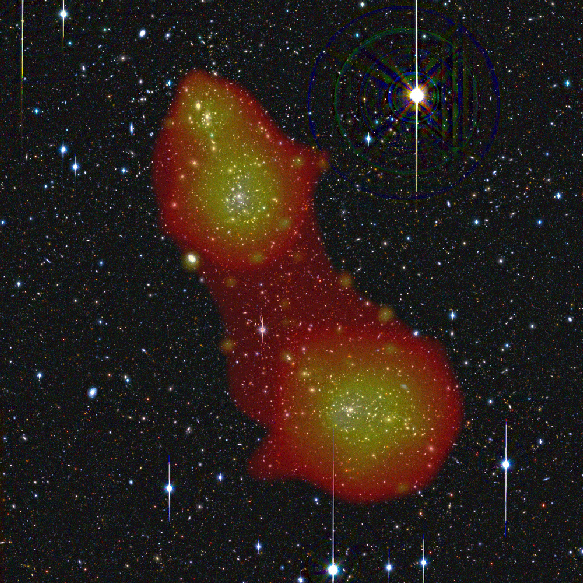
A team of Dutch and German astronomers have discovered part of the missing matter in the Universe using the European X-ray satellite XMM-Newton. They observed a filament of hot gas connecting two clusters of galaxies. This tenuous hot gas could be part of the missing “baryonic” matter.

The existence of this hot gas (with a temperature of 100 000 - 10 000 000 degrees), known as a warm-hot intergalactic medium, was predicted 10 years ago as a possible source for the missing dark matter. Gas at such high temperature and low density is very difficult to detect and many attempts have failed in past years.

The team observed a pair of clusters of galaxies (Abell 222 and Abell 223) using the European X-ray satellite XMM-Newton. Their observations (see Fig. 1) clearly show a bridge connecting both clusters. The gas they observed there is probably the hottest and densest part of the diffuse gas in the cosmic web, which would be part of the missing “baryonic” dark matter.

Scientists used to think that hermaphrodites, due to their low position in the evolutionary scale, did not have sufficiently developed sensory systems to assess the “quality” of their mates.

A new work has shown, however, that earthworms are able to detect the competition by fertilising the eggs that is going to find its sperm, tripling its volume when there is rivalry. This ability is even more refined as they are able to transfer more sperm to more fertile partners.

Hermaphrodites, organisms that have both female and male reproductive organs, such as earthworms, are denied the right to choose their partner. However, a study by researchers at the University of Vigo has shown that worms are capable of telling whether another worm is a virgin or not, and triple the volume of sperm transferred during copulation if they detect a fertilisation competition risk.

The National Geographic Society and the international polling firm GlobeScan today unveiled a new mechanism for measuring and comparing individual consumer behavior as it relates to the environment.

“Greendex™ 2008: Consumer Choice and the Environment — A Worldwide Tracking Survey” looks at environmentally sustainable consumption and behavior among consumers in 14 countries. This first-of-its-kind study reveals surprising differences between consumers in developed and developing countries in terms of environmentally friendly actions.

This year’s results are a baseline against which results of future annual surveys will be compared, in order to monitor improvements or declines in environmentally sustainable consumption at both the global level and within countries.

You wouldn't think that clean air would be bad for the Amazon rainforest but UK and Brazilian climate scientists writing in Nature say just that.

Reduced sulphur dioxide emissions from less burning coal and increased sea surface temperatures in the tropical north Atlantic, are causing a heightened risk of drought in the Amazon rainforest.

A team from the University of Exeter, Centre for Ecology and Hydrology, Met Office Hadley Centre and Brazilian National Institute for Space Studies used the Met Office Hadley Centre climate-carbon model to simulate the impacts of twenty-first century climate change on the Amazon rainforest. They compared the model to data from the 2005 drought, which caused widespread devastation across the Amazon basin.

A new approach to estimating tumor growth based on breast screening results from almost 400,000 women is published today in Breast Cancer Research. This new model can also estimate the proportion of breast cancers which are detected at screening (screen test sensitivity). It provides a new approach to simultaneously estimating the growth rate of breast cancer and the ability of mammography screening to detect tumors.

The results of the study show that tumor growth rates vary considerably among patients, with generally slower growth rates with increasing age at diagnosis. Understanding how tumours grow is important in the planning and evaluation of screening programs, clinical trials, and epidemiological studies. However, studies of tumour growth rates in people have so far been based mainly on small and selected samples.

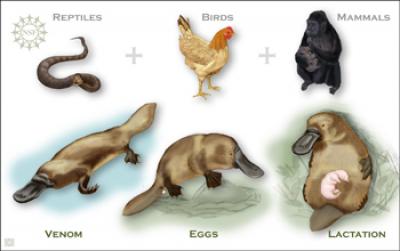
The first genome sequencing project of a mammal that lays eggs is complete and, like the animal itself, the DNA of the platypus is something of a patchwork.

The platypus, found in eastern Australia, including Tasmania, is one of the five species of mammals that lay eggs instead of giving birth to live young. The four species of echidna are the other mamimals that share this distinction.

The curious discovery of the duck-billed, egg-laying, otter-footed, beaver-tailed, venomous platypus in 1798, comfortable on land and in water, convinced British scientists that it must be a hoax. Sketches of its appearance were thought to be impossible.

But new research proves that the oddness of the platypus' looks isn't just skin-deep. Platypus DNA is an equally cobbled-together array of avian, reptilian and mammalian lineages that may hold clues for human disease prevention.

Rensselaer Polytechnic Institute graduating senior Jeffery Martin has put his basic knowledge of sugars to exceptional use by creating a lab-on-a-chip device that builds complex, highly specialized sugar molecules, mimicking one of the most important cellular structures in the human body - the Golgi Apparatus.

Among the most important and complex molecules in the human body, sugars control not just metabolism but also how cells communicate with one another.

Cells build sugars in a cellular organelle known as the Golgi Apparatus. Under a microscope, the Golgi looks similar to a stack of pancakes. The strange-looking organelle finishes the process of protein synthesis by decorating the proteins with highly specialized arrangements of sugars. The final sugar-coated molecule is then sent out into the cell to aid in cell communication and to help determine the cell’s function in the body.

A group of researchers writing in Geophysical Research Letters have a new theory about Mercury’s mysterious magnetic field - iron “snow” inside the planet that forms and falls toward the center, much like snowflakes form in Earth’s atmosphere and fall to the ground.

Mercury is the closest planet to the sun and the only other terrestrial planet that possesses a global magnetic field. Discovered in the 1970s by NASA’s Mariner 10 spacecraft, Mercury’s magnetic field is about 100 times weaker than Earth’s. Most models cannot account for such a weak magnetic field.

Made mostly of iron, Mercury’s core is also thought to contain sulfur, which lowers the melting point of iron and plays an important role in producing the planet’s magnetic field.

