







The "Large Molecule Heimat" is a very dense, hot gas clump within the star forming region Sagittarius B2. In this source of only 0,3 light-year diameter, which is heated by a deeply embedded newly formed star, most of the interstellar molecules known to date have been found, including the most complex ones such as ethyl alcohol, formaldehyde, formic acid, acetic acid, glycol aldehyde (a basic sugar), and ethylene glycol.

Starting from 1965, more than 140 molecular species have been detected in space, in interstellar clouds as well as in circumstellar envelopes. A large fraction of these molecules is organic or carbon-based. A lot of attention is given to the quest for so-called "bio"-molecules, especially interstellar amino acids. Amino acids, the building blocks of proteins and therefore key ingredients for the origin of life, have been found in meteorites on Earth, but not yet in interstellar space.


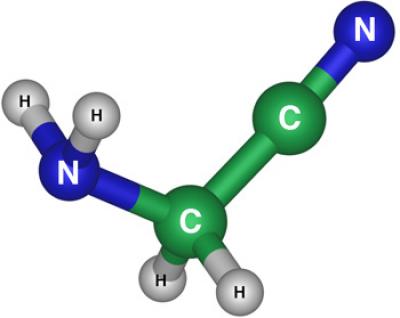
Amino acetonitrile (NH2CH2CN). Credit: Sven Thorwirth, MPIfR

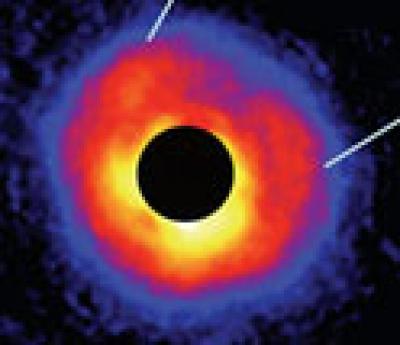
Astrophysicists say may be one step closer to understanding how new planets form. A circumstellar disk with telltale signs of planet formation around the star AB Aurigae could be a new planet in the works.

Ben R. Oppenheimer, assistant curator in the American Museum of Natural History's Department of Astrophysics, and colleagues have used the Lyot Project coronograph attached to a U.S. Air Force telescope on Maui, Hawaii, to construct an image of material that seems to be coalescing into a body from the gas and dust cloud surrounding AB Aurigae, a well-studied star.

The body is either a planet or a brown dwarf - something with mass between a star or a planet. Brown dwarfs have been found orbiting stars since a team that included Oppenheimer first discovered one in 1995.

Scientists have reconstructed changes in Earth’s ancient ocean chemistry from about 2.5 to 0.5 billion years ago and say that a deficiency of oxygen and the heavy metal molybdenum in the ancient deep ocean may have delayed the evolution of animal life on Earth for nearly 2 billion years.

This research was motivated by a review article published in Science in 2002 by Ariel Anbar, one of the authors of the study and an associate professor at Arizona State University with joint appointments in the Department of Chemistry and Biochemistry and Andy Knoll, a colleague at Harvard University. Knoll was perplexed by the fact that eukaryotes didn’t dominate the world until around 0.7 billion years ago, even though they seemed to have evolved before 2.7 billion years ago.

The brain can sense the calories in food, independent of the taste mechanism, researchers have found in studies with mice. Their finding that the brain’s reward system is switched on by this “sixth sense” machinery could have implications for understanding the causes of obesity.

For example, the findings suggest why high-fructose corn syrup, widely used as a sweetener in foods, might contribute to obesity.

In their experiments, Ivan de Araujo and colleagues genetically altered mice to make them “sweet-blind,” lacking a key component of taste receptor cells that enabled them to detect the sweet taste.

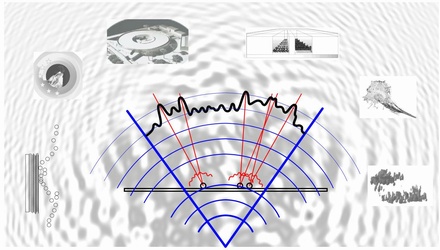
Nearly ten years ago an article published in Science [Lockless SW, Ranganathan R (1999) Science 286:295–299] got a lot of attention. It described a method of demonstrating signal transfer in proteins by comparing their amino acid sequence.

The authors recorded a statistical method of showing how certain parts of proteins change together through evolution, i.e. if a change had taken place in one part a change simultaneously took place in another part of the protein. They found a network of parts that seemed to belong together and, within this network, signal transfer was deemed to take place.

In a new PNAS article, Uppsala researchers present results of experiments they say contradicts that theory.

A new study in the April issue of Psychological Science sought to examine whether individuals are motivated to increase their level of anger when they expect to complete a confrontational task, where anger might enhance performance.

Psychologists Maya Tamir and Christopher Mitchell of Boston College, and James Gross of Stanford University told the study participants that they will either play a computer game that is confrontational (“Soldier of Fortune” – a first person shooter game where killing enemies is your primary goal) or one that is not confrontational (“Diner Dash”—a game in which players guide a waitress serving customers). They were then asked to rate the extent to which they would like to engage in different activities before playing the game.

March 19,2008 marked the brightest ever cosmic explosion observed from Earth ( see Georg von Hippel's article here and the news article here). The outburst denoted as GRB 080319B was probably the death of a massive star leading to the creation of a black hole.

For the first time the birth of a black hole has been filmed. Cameras of the "Pi of the Sky" project recorded this remarkable event with a 4 minutes sequence of 10-second images. In under 20 seconds the object became so bright that it was visible with the naked eye. Then it began fading and in 4 minutes was 100 times fainter. At that time the observation was taken over by larger telescopes.


GRB 080319B brightnes measured by "Pi of the Sky" collaboration

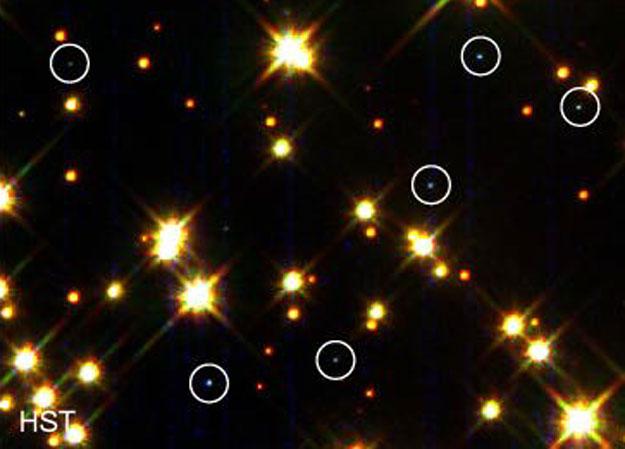
White dwarfs are good timekeepers, and as such, hold clues about the age of the cosmos.

“Once a white dwarf forms, all it does is sit and cool, so we can measure the temperature of a white dwarf, and, using some theoretical understandings, figure out how long it took the star to cool to that temperature, and hence determine how old it is,” says Judi Provencal, assistant professor of physics and astronomy at the University of Delaware, director of the Delaware Asteroseismic Research Center (DARC), and resident astronomer at Mt. Cuba Astronomical Observatory in Greenville, Del.. “The coolest white dwarf we know of is about 2,500 degrees,” she notes. “This corresponds to an age for the galaxy of about 10 billion years.”

Gram-negative bacteria, like E. coli and salmonella, destroy pathogenic bacteria by disabling the mechanism that produces their protective coating. Scientists have discovered two key proteins that guide one of the two groups of bacteria to make their hardy outer shells -- their defense against the world.

The team discovered the proteins through an extended process of elimination. The scientists looked at microbes in the guts of carpenter ants. The bacteria, which have lived there for millions of years -- passed on over many generations -- have lost many of the traits necessary for survival in the outer world. As a result, their collection of genes, known as a genome, is far smaller and simpler than the genome of E. coli.

New research suggests political freedom and geographic factors contribute significantly to causes of terrorism, challenging the common view that terrorism is rooted in poverty.

"There is no significant relationship between a country's wealth and level of terrorism once other factors like the country's level of political freedom are taken into account," says Alberto Abadie, public policy professor at Harvard University's Kennedy School of Government.

Abadie's review of the World Market Research Centre's Global Terrorism Index found no clear correlation between terrorism and poverty. Abadie's research was funded by the National Science Foundation (NSF).

