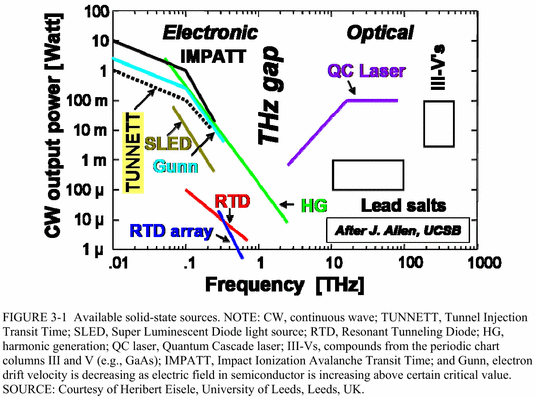







While space science has long been excited about advancements in the millimeter-wavelength/terahertz spectra, its potential in biology has been largely untapped. However, since THz radiation primarily excites vibrational modes present in water, imaging of soft tissues could also show a lot of improvement.

Terahertz systems are currently used to do things like examine hidden layers under old artwork and stop terrorists by seeing through clothes but they could be used in bio-technology to find genetic mutations without using invasive or toxic fluorescent dyes.

An important step toward that is development of handheld terahertz devices that could replace the bulky, expensive systems available now. Researchers at the the Universities of Leeds and Harvard say a quantum cascade laser is the way to go for small and portable terahertz technology.

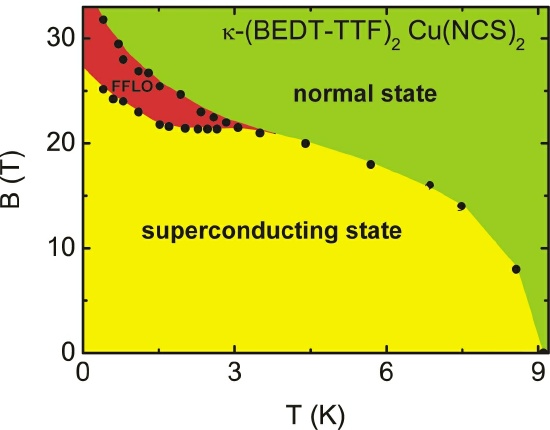
Superconductors are materials that conduct electrical currents without any loss below a certain temperature. Normally, high magnetic fields destroy superconductivity, turning the material into a normal conductor.

Novel experiments on organic superconductors revealed a new superconducting phase between the normal conducting and the superconducting state.

Prof. Peter Fulde from the Max Planck Institute for the Physics of Complex Systems in Dresden and Prof. Richard Ferrell predicted the existence of this special superconducting state in 1964, characterized by a spatial modulation of the superconductivity. At about the same time, two further researchers independently predicted the same phase. Therefore, the state is called Fulde-Ferrell-Larkin-Ovchinnikov (FFLO) state.

On March 26, 2008, surgeons at UC San Diego Medical Center removed an inflamed appendix through a patient’s vagina, a first in the United States.

Following the 50-minute procedure, the patient, Diana Schlamadinger, reported only minor discomfort. Removal of diseased organs through the body’s natural openings offers patients a rapid recovery, minimal pain, and no scarring. Key to these surgical clinical trials is collaboration with medical device companies to develop new minimally-invasive tools.

The procedure, called Natural Orifice Translumenal Endoscopic Surgery (NOTES), involves passing surgical instruments through a natural orifice, such as the mouth or vagina, to remove a diseased organ such as an appendix or gallbladder. Only one incision is made through the belly button for the purpose of inserting a two millimeter camera into the abdominal cavity so the surgeons can safely access the surgical site.

Boxing at the amateur level is less harmful to the brain than previously assumed, says a new study. Obviously the brain is a sensitive instrument so few statements on repeated blows to the head can be truly conclusive and whether or not a professional boxer like Muhammad Ali contracted Parkinson’s disease at age 40 due to injuries sustained in the ring may always remain unclear.

In the Heidelberg Boxing Study(1), high-resolution MRI data were used to search for tiny changes in the brains of amateur boxers and a comparison group of non-boxers. These changes are most likely precursors for later severe brain damage such as Parkinson’s disease or dementia.

In three of the 42 boxers, microhemorrhages were found, while in the comparison group of 37 non-boxers there were no such changes; however the difference was not statistically significant.

When most people think of lightning strikes they picture the kind that go from clouds to ground, but some lightning goes upward, forming blue jets and gigantic jets and, perhaps the most dangerous lightning, appears as "bolts from the blue" – lightning that begins upward, but then moves sideways and then downward to hit the ground as much as three miles from a thunderstorm.

However, about 90 percent of lightning occurs inside clouds and is not visible to the casual observer. A group of researchers wondered if lightning that appears within clouds and the lightning that escapes upward or downward shared the same development mechanisms.

For intracloud lightning, the most common form of lightning, the transfer of charge occurs between the most negatively and most positively charged areas, the middle and upper parts of the cloud, respectively. Lightning that strikes the ground does so because precipitation or the storm's progression creates an excess of net negative charge in the mid-levels of the cloud. This results in either a direct ground strike or a bolt from the blue.

Teenagers insist parents can't understand them and parents think teens' brains are different than smaller children or adults. A new article by Jay N. Giedd, MD, of the National Institute of Mental Health (NIMH) says that second part may actually be true.

Giedd's article reviewed the results from the NIMH Longitudinal Brain Imaging Project, which indicated that gray matter increases in volume until approximately the early teens and then decreases until old age.

The NIMH Longitudinal Brain Imaging Project began in 1989. Participants visit the NIMH at approximately two-year intervals for brain imaging, neuropsychological and behavioral assessment and collection of DNA. As of September 2007, approximately 5000 scans from 2000 subjects have been acquired. Of these, 387 subjects, aged 3 to 27 years, have remained free of any psychopathology and serve as the models for typical brain development.

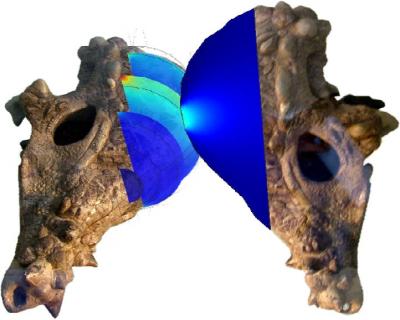
After half a century of debate, a University of Alberta researcher has confirmed that dome-headed dinosaurs called pachycephalosaurs could collide with each other during courtship combat. Eric Snively, an Alberta Ingenuity fellow at the U of A, used computer software to smash the sheep-sized dinosaurs together in a virtual collision and results showed that their bony domes could emerge unscathed.

The computer simulations by Snively and his co-author Andrew Cox of Villanova University offer clues as to how the dinosaurs (between 80 and 65 million years old and native to Canada, the United States and Mongolia), might have survived head-to-head combat like modern marine iguanas and musk oxen.

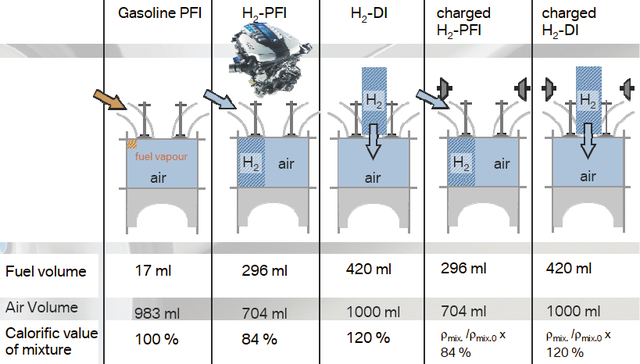
Independent tests conducted by engineers at the U.S. Department of Energy's (DOE) Argonne National Laboratory on a BMW Hydrogen 7 Mono-Fuel demonstration vehicle have found that the car's hydrogen-powered engine surpasses the super-ultra low-emission vehicle (SULEV) level, the most stringent emissions performance standard to date.

"The BMW Hydrogen 7's emissions were only a fraction of SULEV level, making it one of the lowest emitting combustion engine vehicles that have been manufactured," said Thomas Wallner, a mechanical engineer who leads Argonne's hydrogen vehicle testing activities. "Moreover, the car's engine actively cleans the air. Argonne's testing shows that the Hydrogen 7's 12-cylinder engine actually shows emissions levels that, for certain components, are cleaner than the ambient air that comes into the car's engine."

If identical twins eat and exercise equally, will they have the same body weight? Not really, say NIH investigators Carson Chow and Kevin Hall. They analyzed the fundamental equations of body weight change and found that identical twins with identical lifestyles can have different body weights and different amounts of body fat.

The study uses a branch of mathematics called dynamical systems theory to demonstrate that a class of model equations has an infinite number of body weight solutions, even if the food intake and energy expenditure rates are identical. However, the work also shows that another class of models directly refutes this, predicting that food intake and energy expenditure rates uniquely determine body weight.

Existing data are insufficient to tell which is closer to reality, since both models can make the same predictions for a given alteration of food intake or energy expenditure.

A baby is twice as likely to be born bottom first if either or both the parents were themselves breech deliveries, according to a study published ahead of print on bmj.com. The results suggest genes are a contributing factor.

The vast majority of babies are delivered head first. Fewer than one in twenty are delivered the other way round – what is known as a breech delivery. Such deliveries carry significantly greater risks for the baby: they are more likely to die or suffer from health problems.

