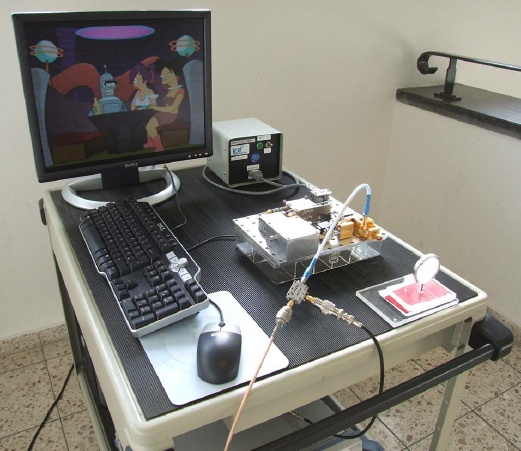










As much as people love wireless technology, current systems such as WLAN or Bluetooth have their limits: They transmit the data with clock rates in the gigahertz range at most, a billion vibrations per second.

In order to increase the quantity of transmitted data, especially for things like high-definition wireless video, clock rates need to become much higher.

Terahertz waves (1000 billion vibrations per second) look like the successor to Bluetooth; for short distances, like within rooms. Transmitting power has been an obtsacle to go beyond that.


And they broadcast Futurama. Excellent choice.

Scientists have developed a new form of stretchable silicon integrated circuit that can wrap around complex shapes such as spheres, body parts and aircraft wings, and can operate during stretching, compressing, folding and other types of extreme mechanical deformations, without a reduction in electrical performance.

“The notion that silicon cannot be used in such applications because it is intrinsically brittle and rigid has been tossed out the window,” said John Rogers, a Founder Professor of Materials Science and Engineering at the University of Illinois.

“Through carefully optimized mechanical layouts and structural configurations, we can use silicon in integrated circuits that are fully foldable and stretchable,” said Rogers.

Garments that can measure a wearer's body temperature or trace their heart activity are on the market but the European project BIOTEX has taken it a step further - they have developed miniaturised biosensors in a textile patch that can analyze body fluids, even a tiny drop of sweat, and provide a much better assessment of health.

A cluster of EU research projects (SFIT Group) is supporting this burgeoning field of smart fabrics, interactive textiles and flexible wearable systems. Jean Luprano, a researcher at the Swiss Centre for Electronics and Microtechnology (CSEM), coordinates the BIOTEX project.

Northwestern University researchers have discovered a new and unexpected mode of self-assembly involving a polymer (hyaluronic acid) and a small molecule (peptide amphiphiles).

When brought together, the two instantly assemble into a flexible but strong sac in which the researchers can grow human stem cells, creating a sort of miniature laboratory. The sacs can survive for weeks in culture, and their membranes are permeable to proteins. The method also can produce thin films whose size and shape can be tailored.

The methodology behind constructing a quantum channel between Space and Earth got a big boost as a research team, led by Paolo Villoresi and Cesare Barbieri from Padova University, have been able to identify individual returning photons after firing and reflecting them off of a space satellite in orbit almost 1,500 kilometres above the earth.

They say their work improves the feasibility of building a completely secure channel for global communication, via satellites in space, using quantum mechanics.

The research team fired photons directly at the Japanese Ajisai Satellite and have been able to prove that the photons received back at the Matera ground-based station, in southern Italy, are the same as those originally emitted.

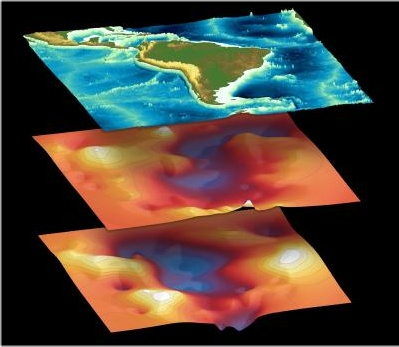
For the first time scientists have mapped the layers of once molten rock that lie beneath the edges of the Atlantic Ocean and measure over eight miles thick in some locations.

The research gives us a better understanding of what may have happened during the break up of continents to form new mid-ocean ridges. The same volcanic activity in the North Atlantic may also have caused the subsequent release of massive volumes of greenhouse gases which led to a spike in global temperatures 55 million years ago.

In Northern Vietnam, neonatal mortality is almost four times higher than the official figure according to a report published today in the open access journal BMC International Health and Human Rights. This under-reporting could mean neonatal healthcare in the country is massively under-funded.

Lars-Ake Persson, Mats Målqvist and colleagues at Uppsala University, along with researchers at Karolinska University Hospital, Stockholm, Sweden, are working with the Uong Bi General Hospital, in Quang Ninh, and the Vietnamese Ministry of Health, in Hanoi, on the question of unreported births and neonatal deaths.

An international collaboration is creating an innovative "freely-accessible, high resolution" digital interactive archive of William Shakespeare's pre-1641 quartos; living artifacts that tell the story of how Shakespeare's Hamlet, Henry V, King Lear, Midsummer Night's Dream, and Romeo and Juliet, to name just a few, first circulated.

The University of Maryland's Institute for Technology in the Humanities (MITH) Director Neil Fraistat says, "The quartos themselves offer crucial evidence about what actually was performed" by Shakespeare's troupe.

Because Shakespeare himself did not authorize a printed edition of his plays, what was published at the time represented what others heard, memorized or took from the marked-up "foul papers" of a particular production.

Of the almost 25,000 human genes science that have been identified, half are believed to be silent at any particular time and activated only when needed.

Perhaps not, says Andre Ptitsyn, of the Center for Bioinfomatics at Colorado State University. He says he has discovered that current tools cannot measure extraordinarily low levels of gene expression signals so genes may not be turned off, but instead have undetected functioning.

"Genes that we have believed to be silent are actually whispering," said Ptitsyn, who a applied a common physics principle to find oscillating patterns of gene expression in genes previously thought to be shut off.

An epidemiological study in Psychotherapy and Psychosomatics by H.U. Wittchen and collaborators at the University of Dresden examined the 10-year natural course of panic attacks (PA), panic disorder (PD) and agoraphobia (AG) in the first three decades of life, their stability and their reciprocal transitions.

DSM-IV syndromes were assessed via Composite International Diagnostic Interview - Munich version in a 10-year prospective-longitudinal community study of 3,021 subjects aged 14-24 years at baseline. At the end of the study, incidence patterns for PA (9.4%), PD (with and without AG: 3.4%) and AG (5.3%) revealed differences in age of onset, incidence risk and gender differentiation.

