





Not all individuals who have epilepsy respond to traditional treatments and these individuals are said to have medically refractory epilepsy.

Strict use of a ketogenic diet high in fats and extremely low in carbohydrates is sometimes used for treatment of refractory epilepsy, and is effective about half of the time. However, the mechanisms whereby ketogenic diets suppress epileptic symptoms have long been a mystery.

New data generated by Kelvin Yamada and colleagues at the Washington University School of Medicine, St. Louis, has revealed that intranasal delivery of leptin, a hormone important in feeding and energy metabolism, delayed the onset of convulsions in a rodent model of seizures.

New research at York has revealed so-called ‘Jekyll and Hyde’ bacteria, suggesting a novel way to control insect pests without using insecticides.

Researchers at the University of York studied the relationship between plant-dwelling insects and the bacteria that live in them – and discovered an unexpected interaction.

Plants are not ‘easy meat’ for insects. In fact, many insects thrive on plant food only because of the presence of a third party: symbiotic bacteria that live in the insects and provide extra nutrients.

Methane, a potent greenhouse gas, is emitted in great quantities as bubbles from seeps on the ocean floor near Santa Barbara. About half of these bubbles dissolve into the ocean, but the fate of this dissolved methane remains uncertain. Researchers at the University of California, Santa Barbara have discovered that only one percent of this dissolved methane escapes into the air -- good news for the Earth's atmosphere.

Coal Oil Point (COP), one of the world's largest and best studied seep regions, is located along the northern margin of the Santa Barbara Channel. Thousands of seep fields exist in the ocean bottom around the world, according to David Valentine, associate professor of Earth Science at UC Santa Barbara.

The climatic event El Niño, literally “the Baby Jesus”, was given its name because it generally occurs at Christmas time along the Peruvian coasts.

This expression of climatic variability, also called El Niño Southern Oscillation (ENSO), results from a series of interactions between the atmosphere and the tropical ocean. It induces drought in areas that normally receive abundant rain and, conversely, heavy rainfall and floods in usually arid desert zones.

Scientists term this phenomenon a “quasi-cyclic” variation because its periodicity, which varies from 2 to 7 years, shows no regular time pattern. Research conducted over the past 25 years, by oceanographers, climatologists and meteorologists has much improved knowledge on the mechanisms generating an El Niño event.

In 2007, researchers were dazzled by the degree to which genomes differ from one human to another and began to understand the role of these variations in disease and personal traits. Science and its publisher, AAAS, the nonprofit science society, recognize “Human Genetic Variation” as the Breakthrough of the Year, and identify nine other of the year’s most significant scientific accomplishments in the 21 December issue.

“For years we've been hearing about how similar people are to one another and even to other apes,” said Robert Coontz, deputy news editor for physical sciences who managed the selection process. “In 2007, advances on several fronts drove home for the first time how much DNA differs from person to person, too.

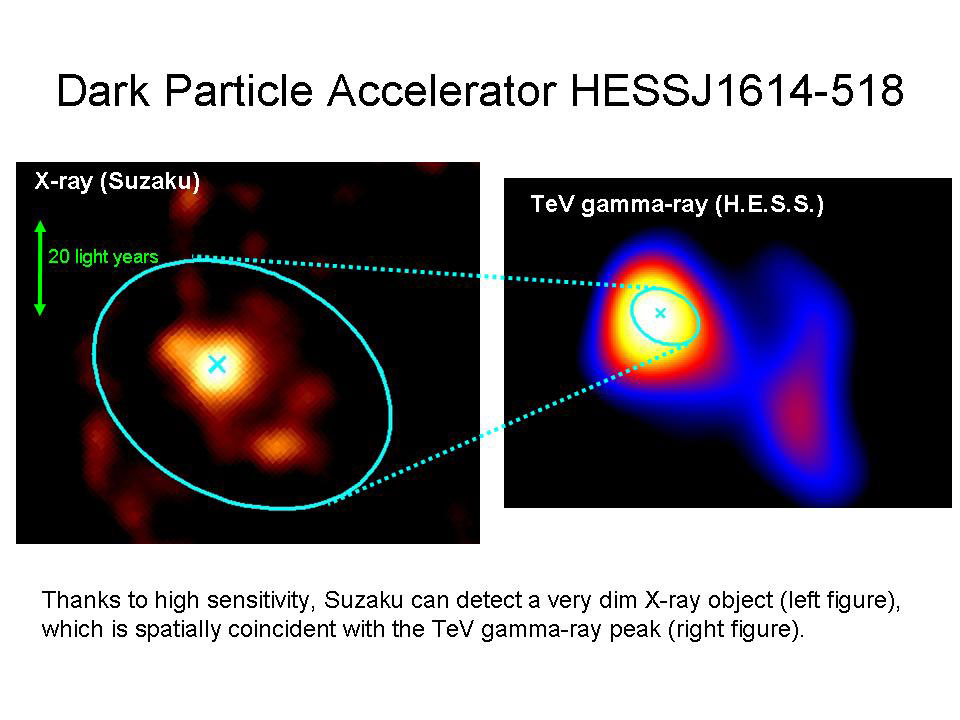
By working in synergy with a ground-based telescope array, the joint Japanese Aerospace Exploration Agency (JAXA)/NASA Suzaku X-ray observatory is shedding new light on some of the most energetic objects in our galaxy, but objects that remain shrouded in mystery.

These cosmic powerhouses pour out vast amounts of energy, and they accelerate particles to almost the speed of light. But very little is known about these sources because they were discovered only recently. "Understanding these objects is one of the most intriguing problems in astrophysics," says Takayasu Anada of the Institute for Space and Astronautical Science in Kanagawa, Japan.

Scientists have found an explanation for runners who struggle to increase their pace, cyclists who can’t pedal any faster and swimmers who can’t speed up their strokes. Researchers from the University of Exeter and Kansas State University have discovered the dramatic changes that occur in our muscles when we push ourselves during exercise.

We all have a sustainable level of exercise intensity, known as the ‘critical power’. This level can increase as we get fitter, but will always involve us working at around 75-80% of our maximal capacity.

Published in the American Journal of Physiology: Regulatory, Integrative and Comparative Physiology, this research shows why, when we go beyond this level, we have to slow down or stop altogether.

Scientists since Darwin have known that whales are mammals whose ancestors walked on land. In the past 15 years, researchers led by Hans Thewissen of the Northeastern Ohio Universities Colleges of Medicine and Pharmacy (NEOUCOM) have identified a series of intermediate fossils documenting whale's dramatic evolutionary transition from land to sea.

But one step was missing: The identity of the land ancestors of whales.

The African Mousedeer (also called Chevrotain), for example, is known to jump in water when in danger and move around at the bottom, but it is not closely related to whales.

Global warming and other human-caused ecological changes are outpacing the ability of species to adapt, resulting in greater threats of disease, reduced diversity in plant and animal communities, and an overall loss of natural heritage, according to research presented in the Jan. 3, 2008, edition of Molecular Ecology.

The Special Issue includes 38 peer-reviewed articles and is dedicated to research presented at the conference – “Evolutionary Change in Human-altered Environments” – sponsored by the UCLA Institute of the Environment.

Tufts University researchers have updated their Food Guide Pyramid for Older Adults to correspond with the USDA food pyramid, now known as MyPyramid. The Tufts version is specifically designed for older adults and has changed in appearance and content.

The Modified MyPyramid for Older Adults continues to emphasize nutrient-dense food choices and the importance of fluid balance, but has added additional guidance about forms of foods that could best meet the unique needs of older adults and about the importance of regular physical activity.

“Adults over the age of 70 have unique dietary needs,” says first author Alice H. Lichtenstein, D.Sc., director of the Cardiovascular Nutrition Laboratory at the Jean Mayer USDA Human Nutrition Research Center on Aging at Tufts (USDA HNRCA).


