






Improved sensing and detection to combat terrorism has brought the need for advanced defense technologies to the forefront and laser-based defense systems are now being designed for this need, including the use of infrared countermeasures to protect aircraft from heat-seeking missiles and highly sensitive chemical detectors for reliable early detection of trace explosives and other toxins at a safe distance for personnel.

Since practical systems must be easily portable by a soldier, aircraft or unmanned vehicle, they must be lightweight, compact and power efficient. In addition, such systems also would need to be widely deployable and available to all soldiers, airplanes and public facilities, which requires a low production and operating cost.

The answer is, of course... it depends. But with gas prices as high as they are these days, it’s good to know when it’s worthwhile to drive a few miles to save five cents a gallon, or when it’s just better to fill up at the station around the corner.

To determine where you should top off your tank, it’s just a matter of running the numbers.

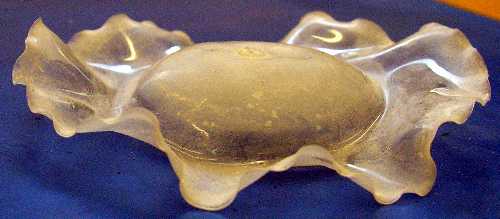
There are many objects in nature, such as flowers, that are “pre-programmed” to develop into delicate, beautiful and intrically shaped forms. But can this pre-determined process be duplicated by man starting with plain, flat surfaces?

Yes, say Dr. Eran Sharon and his co-workers, Yael Klein and Efi Efrati, at the Hebrew University of Jerusalem Racah Institute of Physics, who have succeded for the first time anywhere in programming polymer sheets to bend and wrinkle by themselves into prescribed structures. Their work was described in the journal Science.

They made flat discs of a soft gel that, when warmed gently, curved into domes, saddles and even sombrero shapes.

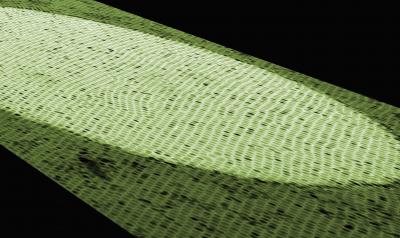
“It’s an amazing little marvel,” said Heinrich Jaeger, Professor in Physics at the University of Chicago. “This is not a very fragile layer, but rather a robust, resilient membrane.”

Even when suspended over a tiny hole and poked with an ultrafine tip, the membrane boasts the equivalent strength of an ultrathin sheet of plexiglass that maintains its structural integrity at relatively high temperatures.

When nicotine binds to a neuron, how does the cell know to send the signal that announces a smoker’s high?

As with other questions involving good sensations, the answer appears to be sugar. A University of Southern California study proposes a role for sugar as the hinge that opens a gate in the cell membrane and brings news of nicotine’s arrival.

Structural biologist Raymond Stevens of The Scripps Research Institute, who was not involved in the study, called it “a landmark accomplishment for the fields of structural biology and neuronal cell signaling.”

The driving forces behind major shifts in recent human evolution and adaptation have been the subject of intense debate for more than 100 years.

Should adolescents with depression be prescribed antidepressants, and if so, should they be given only with a psychological therapy, as advocated by the National Institute for Health and Clinical Excellence (NICE)?

A study published on bmj.com last month found that adding cognitive behaviour therapy (CBT) to selective serotonin reuptake inhibitor (SSRI) treatment is unlikely to improve outcomes for adolescents with moderate to severe depression.

These findings challenge current NICE guidelines that recommend SSRIs be prescribed only in conjunction with psychological therapies.

Simple nucleotide polymorphisms (SNPs), are single variations affecting only one nucleotide or base of the genomic sequence. Despite humans sharing 99.9% of the genome sequence, there are still 3 million genetic variations –which make us different from one another– 90% of which are due to SNPs.

An international collaboration has performed a large-scale study on genetic differences between patients infected by HIV, and is the first study of this kind in the field of infectious disease.

Results point to two gene variants related to the immune system. More precisely, these variations are in a genetic region responsible for the determination of immune response capacity against a number of infectious diseases, including AIDS.

Experiments using pigs genetically engineered for compatibility with the human immune system have raised hopes that cross-species transplantation could soon become an option for patients with diabetes and other currently incurable diseases.

However, scientific hurdles remain before the ultimate goal of inducing long-term tolerance of animal tissues and organs in human recipients, according to Dr. David Cooper of Thomas E. Starzl Transplantation Institute, University of Pittsburgh Medical Center.

"The potential benefits of successful xenotransplantation to large numbers of patients with very differing clinical conditions remain immense, fully warranting the current efforts being made to work towards its clinical introduction," he writes.

A new substance analyzer has been developed by the All-Russian Scientific Research Institute of Technical Physics and Automation in Moscow.

Its functionality is to automatically determine the content of up to 20 chemical elements in the periodic table between calcium and bismuth but in a package small enough to fit in a rucksack.

Basically it runs an X-ray generator over the surface of the core, stimulating all atoms of the specimen within a radius of slightly less than 2 centimeters. It will then independently measure “secondary” fluorescent radiation: the atoms stimulated by X-ray, when coming back to the quiescent state, exude excess energy in the form of radiation and the device records that radiation.

