





It may seem odd to think about using metallic structures for transmitting light because light quickly attenuates on passing through a metal, but light waves travelling only a few centimeters don't lose their energy and that discover could change the face of nanotechnology.

The discovery, known as acoustic plasmon, are surface plasmons formed by the group excitation of electrons but it is produced by the interaction between light and metal surfaces.

The advantage of acoustic plasmons over the long-known surface plasmons is that they are created with a different amount of energy.

There are hundreds of thousands of proteins for which amino acid sequence data are available, but whose structure and function remain unknown.

Now a research team, led by University of Illinois biochemistry professor John A. Gerlt, has devised a method to use a computational approach to accurately predict a protein’s function from its amino acid sequence. Their “in silico” (computer-aided) predictions were validated in the laboratory by means of enzyme assays and X-ray crystallography.

The new approach involved searching databases of known proteins for those with amino acid sequences that had the greatest homology to the unknown proteins.

Suicide Cells

Suicide Cells

Jul 15 2007 | comment(s)

When a cell is seriously stressed, say by a heart attack, stroke or cancer, a protein called Bak just may set it up for suicide, researchers have found.

In a deadly double whammy, Bak helps chop the finger-like filament shape of the cell’s powerhouse, or mitochondrion, into vulnerable little spheres. Another protein Bax then pokes countless holes in those spheres, spilling their pro-death contents into the cell.

“We found out Bak has a distinct function in regulation of the mitochondrial morphology,” says Dr. Zheng Dong, cell biologist at the Medical College of Georgia and the Veterans Affairs Medical Center in Augusta .

By bypassing a well-known gene implicated in almost one-third of all cancers and instead focusing on the protein activated by the gene, Dr. Christopher Counter and colleagues at the Duke University Medical Center have identified IL6 as a new target in the battle against Ras-induced cancers.

The ras gene, known as an oncogene when it is in this mutated state, has been implicated in several different cancers, including those of the pancreas and lungs. To date, efforts at blocking or turning off ras have proven ineffective.

To protect us from disease our immune system employs macrophages, cells that roam our body in search of disease-causing bacteria. With the help of long tentacle-like protrusions, macrophages can catch suspicious particles, pull them towards their cell bodies, internalise and destroy them.

Using a special microscopy technique, researchers from the European Molecular Biology Laboratory (EMBL) now for the first time tracked the dynamic behaviour of these tentacles in three dimensions. In the current online issue of PNAS they describe a molecular mechanism that likely underlies the tentacle movement and that could influence the design of new nanotechnologies.

Contrary to textbook models, many genes that should be 'off' in embryonic stem cells and specialized adult cells remain primed to produce master regulatory proteins, leaving those cells vulnerable to identity changes

Biologists have long thought that a simple on/off switch controls most genes in human cells. Flip the switch and a cell starts or stops producing a particular protein. But new evidence suggests that this model is too simple and that our genes are more ready for action than previously thought.

Scientists in the lab of Whitehead Member Richard Young have discovered that many human genes hover between “on” and “off” in any given cell. According to the study, these genes begin making RNA templates for proteins—a process termed transcription—but fail to finish.

ESA’s Venus Express and NASA’s MESSENGER looked at Venus in tandem for a few hours in June. Here is the first set of images.

The orbital geometry of Venus Express when MESSENGER skimmed past Venus on 5 June meant that the two spacecraft were not at the same location (with respect to the surface of the planet) at the exact same time. So how could they make true joint observations of the same regions and phenomena? Scientists came up with a highly creative solution.


Bye-bye Venus. As NASA’s MESSENGER departed from planet Venus on 5 June 2007 to continue its journey towards Mercury, its Wide Angle Camera captured a sequence of 50 images (480-nm wavelength filter) showing the planet disappearing in the distance.

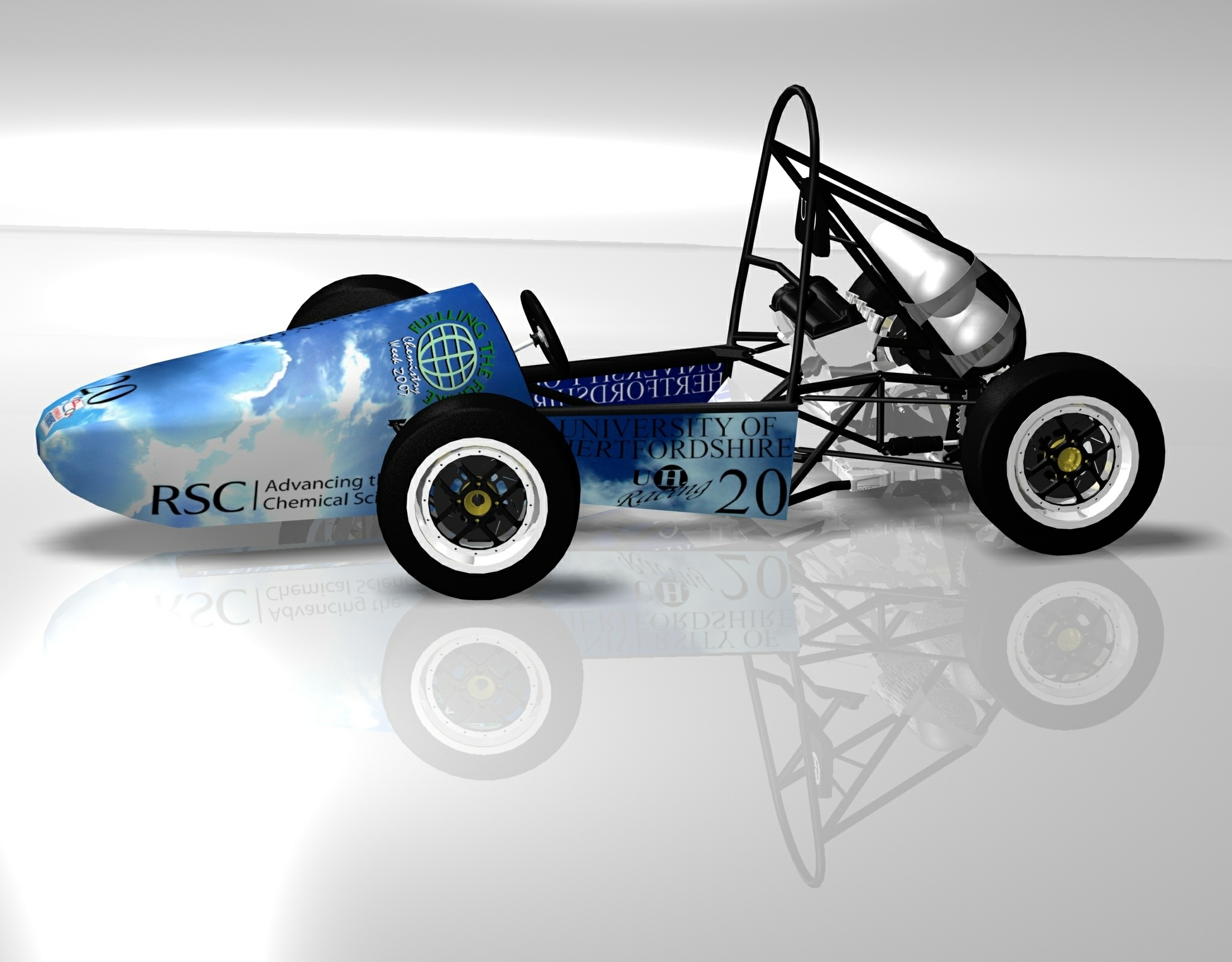
Engineers at the University of Hertfordshire have developed the first hydrogen-powered racing car which they will race this weekend.

A £5,000 grant from the Royal Society of Chemistry has made it possible for John Goddard and James Waters, two PhD students in the University’s new Sustainable Energy Technologies Centre to convert a Formula Student racing car into a hydrogen-powered vehicle.

This is the first time that a hydrogen-powered racing car has been developed anywhere in the world.

Opinions people have about innovations are influenced by the context in which they form their opinion. For example, opinions about a novel energy source like biomass are influenced by thoughts regarding other energy sources.

The less knowledge, interest or time people have, the stronger this effect. Sustainable energy options must therefore be promoted in the right context says Dutch researcher Wouter van den Hoogen.

People frequently form opinions about new technologies, such as novel energy options, despite having a very limited knowledge of the subject concerned. The subject is often complex and people are either not particularly interested or have limited time.

Researchers across the world have been trying to answer the question of how RNAi works for many years. A research group headed by Prof. Renée Schroeder (MFPL) and Dr. Javier Martinez (IMBA) based at the Campus Vienna Biocenter says they have come closer to finding an answer.

RNA interference (RNAi) is a natural cellular defence and regulation mechanism which works by eliminating unwanted RNA molecules. Its potential for use in therapy was officially recognised last year with the presentation of the Nobel Prize in Physiology or Medicine. The first treatments to be based on this mechanism are currently undergoing clinical testing.


