




Increased exposure to common chemicals may impact ovarian development, says Dr. Paul Fowler, of the University of Aberdeen, Scotland. His research showed that exposing a developing female sheep fetus to low doses of chemicals in the modern-day environment can disturb the development of the ovary

“Our ‘real life’ model exposed developing sheep fetuses by pasturing their mothers on fields fertilised with either inorganic fertiliser, the control group, or, in the case of the treatment group, with digested human sewage sludge, before and during pregnancy”, said Dr. Fowler.

A generator that is 10 times more powerful than any other similar devices has been developed by engineers at the University of Southampton.

Dr Steve Beeby and his team at the University's School of Electronics & Computer Science (ECS) have developed a kinetic energy generator which generates electrical energy from the vibrations and movements present within its environment.

A team of international researchers has collected the oldest ever recovered DNA samples and used them to show that Greenland was much warmer at some point during the last Ice Age than most people have believed. Their findings also confirm that the whole ice sheet will not melt and bring about the tremendous sea-level rises which have been the subject of so much discussion.

The ancient DNA was discovered at the bottom of a two kilometer thick ice sheet and came from the trees, plants and insects of a boreal forest estimated to be between 450,000 and 900,000 years-old.

Refuting the popular stereotype that females talk more than men, researchers at The University of Texas at Austin have found women and men both use an average of 16,000 words each day.

The psychology researchers have published their findings in “Are Women Really More Talkative Than Men"” in the July issue of Science.

For more than a decade, researchers have claimed that women use far more words each day than men. One set of numbers that is commonly tossed around is that women use 20,000 words per day compared to only 7,000 for men.

Blood vessels that have been tissue-engineered from bone marrow adult stem cells may in the future serve as a patient's own source of new blood vessels following a coronary bypass or other procedures that require vessel replacement, according to new research from the University at Buffalo Department of Chemical and Biological Engineering.

“Our results show that bone marrow is an excellent source of adult stem cells containing smooth muscle and endothelial cells, and that these stem cells can be used in regenerative medicine for cardiovascular applications,” said Stelios T. Andreadis, Ph.D., associate professor in the UB Department of Chemical and Biological Engineering in the School of Engineering and Applied Sciences.

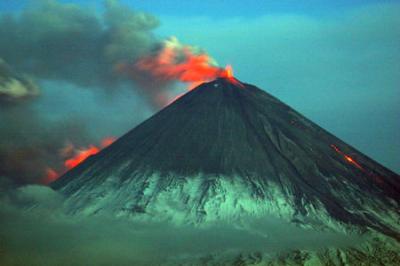
Klyuchevskoy (pronounced Kloo-shef-skoy), a stratovolcano located in the north central region of the Kamchatka Peninsula, is blasting ash up to 32,000 feet in the air, and has diverted air traffic headed toward the Far East.

This is the largest eruption to occur in the North Pacific in a decade, and is providing students at the University of Alaska Fairbanks a unique opportunity to collaborate with scientists, as well as state and federal agencies.

Klyuchevskoy’s been erupting since January, but the largest explosions in the eruption began June 28, 2007.

These explosions created a 1,360-mile-long band of ash, stretching from the Sea of Okhotsk to the Aleutian Islands, clogging well-used air routes with volcanic ash that prove deadly for aircraft.

An international working group under the direction of Wolfgang und Roswitha Wiltschko of Frankfurt University has now succeeded in demonstrating the presence of a magnetic sense of direction in domestic chickens.

40 years ago, Prof. Dr. Wolfgang Wiltschko was the first to prove that migrating robins use the Earth’s magnetic field to direct themselves during migration.

Their magnetic sensor showed them the course of the field lines of the Earth’s magnetic field. This produces an inclination compass that reacts to the inclination of the Earth’s magnetic field to the surface of the Earth, thus distinguishing between “pole-wards” (the side on which the field lines incline downwards) and “equator-wards” (the side on which they incline upwards).

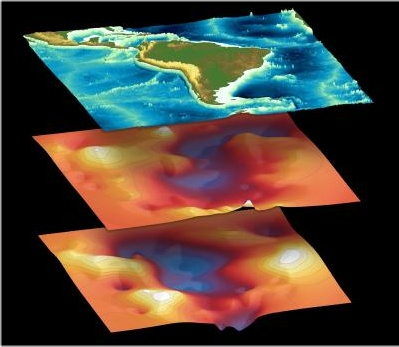
Geodesists from the University of Bonn have remeasured the size of the Earth in a long lasting international cooperation project.

The blue planet is accordingly some millimeters smaller than up to now assumed. The results are important, for example, to be able to demonstrate a climate contingent rise in sea level.

From the deepest seafloor to the highest mountain, from the hottest region to the cold Antarctic plateau, environments labelled as extreme are numerous on Earth and they present a wide variety of features and characteristics. Investigating life processes in extreme environments not only can provide hints on how life first appeared and survived on Earth (as early earth was an extreme environment) but it can also give indication for the search for life on other planets.

Insects make up more than half of the known animal species on our planet and they can be found in all kinds of habitat and feed on all kinds of nutrients. They can even be used in evidence in court cases. So we are talking about forensic entomology.

The work of the Forensic Entomology Service in the Department of Zoology and Animal Cell Biology at the University of the Basque Country (UPV-EHU) involves drawing up a census of insect species of forensic interest.

These are basically necrophagous diptera, i.e. flies that live on dead tissue, cadavers. Such flies detect a dead body in a question of minutes and at times at a distance of several kilometres. They colonise the cadaver and lay their eggs there.

