






Artificially replicating the male genome could help men with very low sperm counts become fathers, a scientist told the 23rd annual conference of the European Society of Human Reproduction and Embryology (Tuesday 3 July). Professor Takumi Takeuchi, of Weill Medical College, Cornell University, New York, USA, said that mouse experiments by his team, led by Professor Gianpiero D. Palermo, had shown that offspring born as a result of such replication had shown a level of abnormalities consistent with that shown in cloned animals.

Hundreds of thousands of vibrant blue and red stars are visible in this new image of galaxy NGC 4449 taken by the NASA/ESA Hubble Space Telescope. Hot bluish white clusters of massive stars are scattered throughout the galaxy, interspersed with numerous dustier reddish regions of current star formation. Massive dark clouds of gas and dust are silhouetted against the flaming starlight.

NGC 4449 has been forming stars since several billion years ago, but currently it is experiencing a star formation event at a much higher rate than in the past. This unusual explosive and intense star formation activity qualifies as a starburst.

A Cardiff University research collaboration is working to recycle precious metals from road dusts and vehicle exhausts to create greener energy.

The innovative research by scientists from the School of Earth, Ocean and Planetary Science working with the University of Birmingham is to be featured at the Royal Society Summer Science Exhibition (2-5 July).

Catalytic converters which keep exhaust pollutants from vehicles down to an acceptable level all use platinum, however over the years the platinum is slowly lost through exhaust pipes. Dr Hazel Prichard, School of Earth Ocean and Planetary Science estimates that many kilogrammes of platinum is being sprayed onto streets and roads every year.

Forget expensive moisturisers and cosmetic surgery, a compound found in the humble elderberry could give a natural boost to skin.

In the first study of its kind, a team of researchers led by Prof Aedin Cassidy at the University of East Anglia and Dr Paul Kroon at the Institute of Food Research, will explore whether the skin’s condition is improved by a compound which gives berries their vibrant colour (called ‘anthocyanin’).

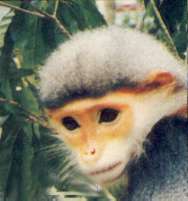
A team of scientists from WWF and Conservation International (CI) has discovered the world’s largest known population of grey-shanked doucs (Pygathrix cinerea), increasing chances that the endangered monkey can be saved from extinction.

The grey-shanked douc is one of the world’s 25 most endangered primates and has only been recorded in the five central Vietnamese provinces of Quang Nam, Kon Tum, Quang Ngai, Binh Dinh, and Gia Lai. Fewer than 1,000 individuals are believed to still exist, and until now, only one other population with more than 100 animals was known.

African societies, including those of the Bwaba of Burkina Faso and the Bassar of northern Togo, consider certain natural sites located on their territory as sacred. With each of these places these communities associate supernatural beings, kinds of spirits, that they have to come to terms with.

Maintenance of relations with these spirits requires strict preservation of the sites that they occupy. This is the case notably for the sacred groves, where wood cutting and all forms of removal of materials or organisms are strictly forbidden.

A just-published article in the American Journal of Epidemiology reports a very clear negative correlation between colorectal cancer and omega-3 consumption. It describes the results of a case-control study done in Scotland from 1999 to 2006. The investigators hoped to recruit all cases of colorectal cancer coming for surgery in Scotland; they managed to recruit about half of them and ended up with about 1500 “cases.” Each case was paired with a healthy control matched for age, sex, and residence. Then they compared the diets of the two groups. This is the approach that first linked smoking and lung cancer.


Cornell researchers have answered a fundamental question about how two strands of DNA, known as a double helix, separate to start a process called replication, in which genes copy themselves.

The research, published in the current issue of the journal Cell, examined the role of an enzyme called a helicase, which plays a major role in separating DNA strands so that replication of a single strand can occur.

Scientists have known that helicases bind to the area of a double helix where the two strands fork away from each other, like the free ends of two pieces of thread wound around each other. The forked area opens and closes very rapidly.

High Arctic ponds -- the most common source of surface water in many polar regions -- are now beginning to evaporate due to recent climate warming, say two of Canada’s leading environmental scientists.

John Smol (Professor of Biology at Queen’s University and holder of the Canada Research Chair in Environmental Change) and Marianne Douglas (Professor of Earth and Atmospheric Sciences and Director of the Canadian Circumpolar Institute at the University of Alberta) will publish their startling conclusions next week in the Proceedings of the National Academy of Sciences (PNAS).

“The final ecological threshold for an aquatic ecosystem is loss of water,” says Dr. Smol. “These sites have now crossed that threshold.”

A new study by researchers at the Massachusetts General Hospital’s (MGH) Center for Mental Health and Media dispels some myths and uncovers some surprises about young teens and violent video and computer games.

The study, published in the July issue of Journal of Adolescent Health, is the first to ask middle-school youth in detail about the video and computer games they play and to analyze how many of those titles are rated M (Mature – meant for ages 17 and up). It is also the first to ask children why they play video games. Some of the more striking findings include:

- Almost all young teens play video games. Just six percent of the sample had not played any electronic games in the previous six months.


