



Sometimes different is good.  You may not want a strange cup of coffee when you go to Starbucks and you would like for your car to work the way cars should, but in science the peculiar can teach us a lot.
 
This was the idea behind Halton Arp’s catalogue of Peculiar Galaxies that appeared in the 1960s. One of the oddballs listed there is Arp 261, which has now been imaged in more detail than ever before using the FORS2 instrument on ESO’s Very Large Telescope.
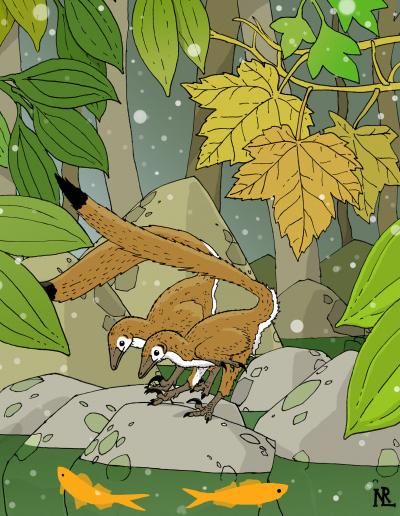
Massive predators like Albertosaurus and Tyrannosaurus rex may have been at the top of the food chain, but they were not the only meat-eating dinosaurs to roam North America, according to Canadian researchers who have discovered the smallest dinosaur species on the continent to date. Their work is also helping re-draw the picture of North America's ecosystem at the height of the dinosaur age 75 million years ago.

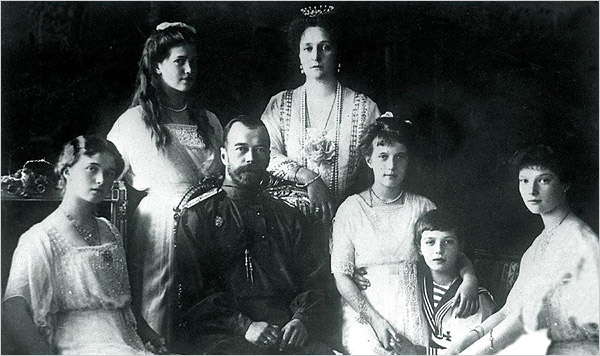
Czar Nicholas II, eldest son of Tsar Alexander III, succeeded hs father in 1894 and, while he wasn't the most incompetent leader in the history of Russia, much less all of Europe, he was without question a disaster, losing a war to Japan and ordering the army to shoot at citizens who protested the poor conditions they lived under.  It's no surprise anyone wanted him gone.    A crazy shrew of a wife under the spell of Rasputin didn't help his decision-making prowess.
 
That guy who gets in the elevator reeking of Drakkar Noir is nothing new - the Ancient Egyptians cherished their fragrant scents, too.   In a new part of its permanent exhibition, Bonn University's Egyptian Museum has on display a particularly well preserved example of that.

Screening this 3,500-year-old flacon with a computer tomograph, scientists at the university detected the desiccated residues of a fluid, which they now want to submit to further analysis. They might even succeed in reconstructing this scent.
Letter S

ince the beginnings of humanity, the task of counting was always very important. The development of human society had always been based on counts. 

In the beginning, the simple Arithmetic was enough: counts of people, food, game, stones, days... 

There were many symbols to represent the counts. The Roman Numerical System was one of them, but it wasn't practical. The set of mathematical symbols that we use today was originated with the Hindus, was improved by Arabs, and it's a Decimal System just because we have 10 fingers! 


AUSTIN, Texas, March 14 /PRNewswire/ --

- Who Has The Biggest Brain? Enables Friends to Play Together Through Facebook Connect Anytime, Anywhere

Playfish, one of the largest and fastest growing social games companies, today announced its popular title, Who Has The Biggest Brain?, is available now on iPhone(TM) and iPod(R) touch. Who Has The Biggest Brain? features Facebook(R) Connect and enables friends to play together anytime, anywhere.

You may recognize the title most recently as a humorous jab at people who want to teach religion in science classes and, failing that, at least teach why they think there is a controversy.    Of course there isn't any controversy at all.    Biology is as imperfect as every science in existence and explaining the world we live in according to natural laws is tough because there are always new things to learn.

The only place where rock solid 'proof' exists is in mathematics, which some people think is science.    Yet even in mathematics there are disputes and one of them has long been Pi - or π, if you prefer.   That's right, someone once may have insisted we teach the controversy about Pi, which is a delightful sort of irony.
In the early parts of the decade, German and British intelligence said that Iraq had acquired weapons of mass destruction and were on their way to nuclear capability.    The American CIA agreed.    Saddam Hussein, in maybe the stupidest bluff of this century (there's still a long way to go), refused to let UN inspectors investigate thoroughly, perhaps thinking if the world believed he had nuclear capability, they would lift sanctions.    His mistakes cost him a wealthy dictatorship (though gold painted fixtures remain a puzzle to anyone who visits his many palaces) and, eventually, his life.
Sharks are among the most popular animals featured in television and cinema. And today among sharks, the undisputed king is the great white, a giant predator that can exceed 20 feet in length. Despite the popularity of great whites, relatively little is known about their biology, and even less is known about their evolutionary origins. A new 4-million-year-old fossil from Peru described in the Journal of Vertebrate Paleontology provides important evidence suggesting the shark’s origins may be more humble than previously believed.

