


DELFT, The Netherlands, January 29 /PRNewswire/ -- TASS-safe (http://www.tass-safe.com), a leading provider in advanced software solutions to enhance human safety, announced today the addition of the MADYMO software suite to the Altair (http://www.altair.com) HyperWorks Enabled Community (HWEC). MADYMO is the worldwide standard software for vehicle safety analyses and design optimization.

LONDON, January 29 /PRNewswire/ --

- User Analytics Study Reveals That 84% of Consumers Prefer the HD Image Quality of AmberFin's iCR Software When Compared to a Leading Competitor

In a recent study by independent research house User Analytics, 84% of consumers surveyed stated that the HD image quality of files transcoded by AmberFin's iCR software tools were far superior to that of a leading competitor. The study took a selection of SD source material and up-converted it to HD content using iCR and a leading competitor's solution. Results of the up-conversion were compared based on consumer perception of the image quality.

GENEVA, Switzerland, January 29 /PRNewswire/ -- Based in Geneva, AIM was established in cooperation with corporate and civil society partners to enable the private sector to act directly and effectively on the major economic, social and humanitarian challenges of human mobility.

Manpower Inc. and WISeKey, two of AIM's founding partners, have played a lead role in the Labour Mobility Index to be launched at the 2009 World Economic Forum in Davos.

CHARENTON-LE-PONT, France, January 29 /PRNewswire/ --

- A New Year of Growth in 2008

- Revenue Up 9.7% Excluding the Currency Effect

- Higher Earnings Expected

Essilor International, the world leader in ophthalmic optics, today announced consolidated revenue of EUR3,074.5 million for the year ended December 31, 2008, representing a reported 5.7% increase on the previous year. Excluding the currency effect, growth for the year was a strong 9.7%.

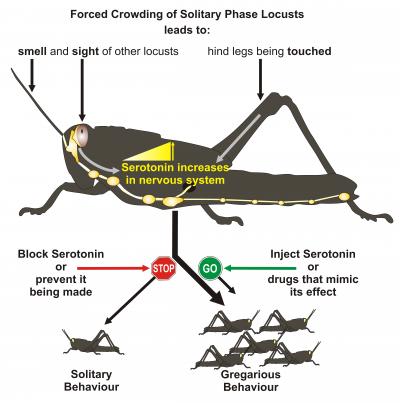
Desert locusts are harmless, solitary creatures until they get a certain chemical - and it isn't firewater, catnip or anything that comes from Colombia.   It's serotonin, a common brain chemical, but in the right amount they turn into hordes of hungry ... well ... locusts.

With desert locusts, the expression of this swarming characteristic generally means serious trouble for nearby farmer.   Locusts are known to sometimes swarm by the billions, and they often devastate crop yields.  Dr. Stephen Rogers from the University of Cambridge and the University of Oxford in the UK says about 20 percent of the world is affected by desert locusts.

Researchers from Northwestern University's Feinberg School of Medicine appear to have reversed the neurological dysfunction of early-stage multiple sclerosis patients by transplanting their own immune stem cells into their bodies and thereby "resetting" their immune systems. 

The patients in the small phase I/II trial continued to improve for up to 24 months after the transplantation procedure and then stabilized. They experienced improvements in areas in which they had been affected by multiple sclerosis including walking, ataxia, limb strength, vision and incontinence. The study will be published online January 30 and in the March issue of The Lancet Neurology

MS is the result of damage to myelin - the protective sheath surrounding nerve fibres of the central nervous system - which interferes with messages between the brain and the body. For some people, MS is characterised by periods of relapse and remission while for others it has a progressive pattern.  Symptoms range from loss of sight and mobility, fatigue, depression and cognitive problems.

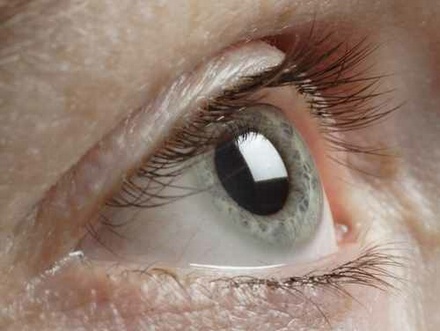
Scientists have known for more than 200 years that vision begins with a series of chemical reactions when light strikes the retina, but the specific chemical processes have largely been a mystery. A team of researchers from the United States and Switzerland say they have shed new light on this process by "capturing" this chemical communication for future study and say it may lead to the development of new treatments for some forms of blindness and vision disorders. 
Researchers at the University of British Columbia have discovered a mimic of one of "nature's antibiotics" that can be used to coat medical devices to prevent infection and rejection.   The study, released today in the journal Chemistry and Biology, found that a synthetic form, short tethered cationic antimicrobial peptides (cationic peptide), can protect surfaces, like those of medical devices, killing bacteria and fungi that come into contact with them. Peptides are small proteins.
A study of college freshmen in the United States and in China found that Chinese students know more science facts than their American counterparts but both groups are nearly identical when it comes to their ability to do scientific reasoning - unfortunately neither group  was very good at it.

The lesson is that educators must go beyond teaching science facts if we hope to produce voters, policy makers and scientists who can make reasoned choices.


