



Viticulture, the growing of grapes Vitis vinifera, chiefly to make wine, is an ancient form of agriculture, dating as far back as the Neolithic and Early Bronze Ages.

We have a detailed understanding of how nurture affects the qualities of a grape harvest leading to the concept of terroir (the range of local influences that carry over into a wine). The nature of the grapes themselves has been less well understood but the publication of a high quality draft genome sequence of a Pinot Noir grape by an Italian-based multinational consortium may change that.

In the world of commercial materials, lighter and cheaper is better - especially when coupled with superior strength and special properties such as a material's ability to remember its original shape after it's been deformed by a physical or magnetic force.

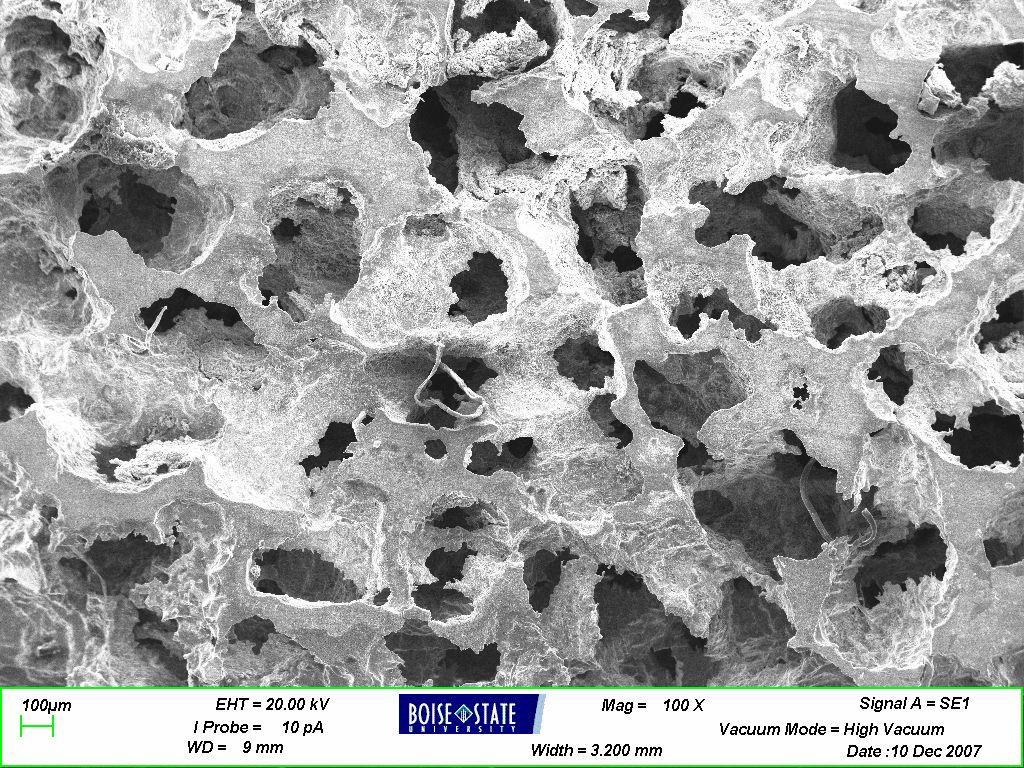
A new class of materials known as "magnetic shape-memory foams" has been developed by two research teams headed by Peter Müllner at Boise State University and David Dunand at Northwestern University.

The foam consists of a nickel-manganese-gallium alloy whose structure resembles a piece of Swiss cheese with small voids of space between thin, curvy "struts" of material. The struts have a bamboo-like grain structure that can lengthen, or strain, up to 10 percent when a magnetic field is applied.

Do polls reflect who people will vote for or who they would like to be perceived as voting for? A new national study of voters who say they might vote in Democratic primaries (participants were not a representative sample of Democrats but were self-selected volunteers who took an experimental test over the Web) and caucuses shows a striking disconnect between their explicit and implicit preferences, according to Bethany Albertson, a University of Washington assistant political science professor and Anthony Greenwald, a UW psychology professor and inventor of the Implicit Association Test.

When asked who they would vote for, Sen. Barack Obama held a 42 percent to 34 percent margin over Sen. Hilary Clinton. Former senator John Edwards was in third place with 12 percent.

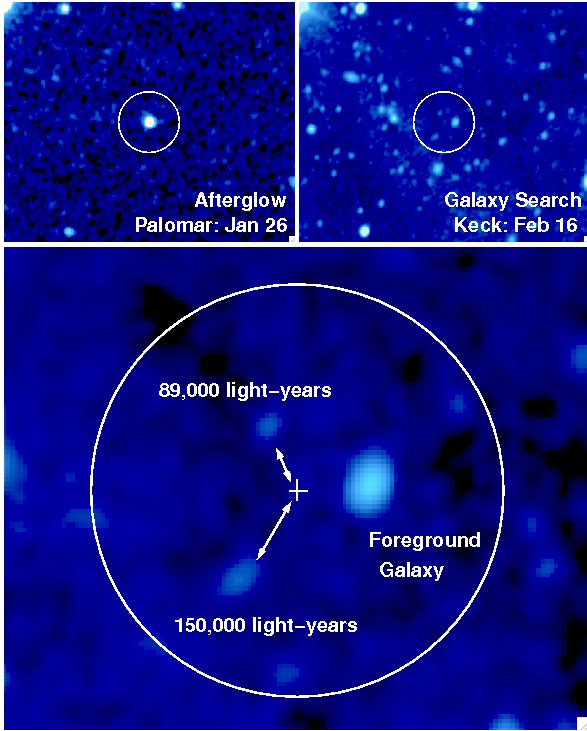
A cosmic explosion that seems to have occurred thousands of light-years from the nearest galaxy-sized collection of stars, gas, and dust has puzzled astronomers. This "shot in the dark" is surprising because the type of explosion, a long-duration gamma-ray burst (GRB), is thought to be powered by the death of a massive star.

"Here we have this very bright burst, yet it's surrounded by darkness on all sides," says Brad Cenko of the California Institute of Technology, Pasadena, Calif., lead author of the team’s paper, which has been accepted for publication in The Astrophysical Journal.

No human can survive longer than a few minutes underwater, and even a well-trained Olympic swimmer needs frequent gulps of air. Our brains need a constant supply of oxygen, particularly during exercise.

Contrast that with Weddell seals, animals that dive and hunt under the Antarctic sea ice. They hold their breath for as long as 90 minutes, and remain active and mentally alert the whole time. The seals aren't fazed at all by low levels of oxygen that would cause humans to black out.

WASHINGTON, December 18 /PRNewswire/ --

Microloans to the poor around the world soared to 133 million last year, up from 13 million just nine years ago, according to a report released today by the Microcredit Summit Campaign, an initiative of RESULTS Educational Fund. The dramatic progress was also evident in the Campaign's focus on loans to the very poor, those living on less than a US$1 a day, which reached 93 million families in 2006, just shy of the Campaign's goal of reaching 100 million poorest. "We know that by today the 100 million poorest will have been reached," Microcredit Summit Campaign Director Sam Daley-Harris said, "but we won't be able to report those results until the 2007 data is collected, verified, and released at the end of 2008."

LONDON, December 18 /PRNewswire/ --

- " CT Screening has Value for Predicting Cardiovascular Risk and Colon Cancer"

Lifescan - the UK's largest provider of private, organ targeted CT screening - welcomes the statement published in the latest Report from COMARE that with reference to radiation exposure "cancer risk has not been demonstrated by epidemiological studies at doses below 100 mSv". The maximum radiation exposure when screening lung, colon and heart using the Lifescan low-dose MDCT protocols is less than 10mSv. This is also significantly under the maximum annual occupational dose of 20 mSv.

In other words this report suggests that low dosage CT scanning is not considered to carry significant risk.

Lifescan does not offer full body screening.

LONDON and NEW YORK, December 18 /PRNewswire/ --

Ecofin Ltd., a multi-billion dollar asset management firm, which invests in global utilities and infrastructure sectors, has gone live with the Execta(TM) Portfolio Management and Execution Management System ("EMS") from Tethys Technology, Inc. Ecofin has implemented Execta simultaneously in London and New York and plans to implement TotalTCA(TM), the pre-trade, real-time and post-trade transaction cost analysis offering from Tethys, in the near future.

People suffering from chronic mental or physical disabilities should not resort to a dolphin "healing" experience, warn two researchers from Emory University. Lori Marino, senior lecturer in the Neuroscience and Behavioral Biology Program, has teamed with Scott Lilienfeld, professor in the Department of Psychology, to launch an educational campaign countering claims made by purveyors of what is known as dolphin-assisted therapy (DAT).

"Dolphin-assisted therapy is not a valid treatment for any disorder," says Marino, a leading dolphin and whale researcher.

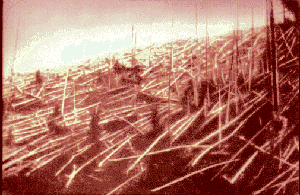
On June 30, 1908 a stunning explosion rocked the forest near the Tunguska river in Siberia. Estimates were that an asteroid exploded in the air a few kilometers above the earth's surface with a force 1,000 times that of the Hiroshima atomic bomb.

A new Sandia supercomputer simulations suggests that the asteroid that caused such a blast was much smaller than previously thought, bringing new concerns; there are more small asteroids than large ones.

“The asteroid that caused the extensive damage was much smaller than we had thought,” says Sandia principal investigator Mark Boslough of the impact that occurred June 30, 1908. “That such a small object can do this kind of destruction suggests that smaller asteroids are something to consider.

