






Mothers who reported sleeping five hours or less per day when their babies were six months old had a threefold higher risk for substantial weight retention (11 pounds or more) at their baby’s first birthday than moms who slept seven hours per day, according to a new study by Kaiser Permanente and Harvard Medical School / Harvard Pilgrim Health Care.

The study, published in the November issue of the American Journal of Epidemiology, is the first to look at the impact of sleep deprivation on postpartum weight retention. Previous studies have looked at the effect of early postpartum sleep deprivation on mothers’ cognitive and emotional health but never associated weight gain.

New research published in Quaternary Science Reviews says the collapse of the North American (Laurentide) Ice Sheet caused the flood believed to be behind the "Noah's Ark" story 8000 years ago that kick-started modern European agriculture.

The results indicate a catastrophic rise in global sea level led to the flooding of the Black Sea and drove dramatic social change across Europe. The research team argues that, in the face of rising sea levels driven by contemporary climate change, we can learn important lessons from the past.

The collapse of the Laurentide Ice Sheet released a deluge of water that increased global sea levels by up to 1.4 meters and caused the largest North Atlantic freshwater pulse of the last 100,000 years.

A multinational team of researchers writing in Nature has shown for the first time that the immune system can stop the growth of a cancerous tumor without actually killing it.

Scientists have been working for years to use the immune system to eradicate cancers, a technique known as immunotherapy. The new findings prove an alternate to this approach exists: When the cancer can't be killed with immune attacks, it may be possible to find ways to use the immune system to contain it.

The 3-way catalysator of a car apparently works differently from the way chemists had expected. The conversion of carbon monoxide into carbon dioxide takes place not in one single step, but in at least two different steps. To date, the second reaction path was completely unknown, but it seems to work much more efficiently than the first, more familiar process.

This discovery has been made by surface physicist Marcelo Ackermann from Leiden University. His findings call into question the chemistry of catalysators.

Catalysator performance now understood

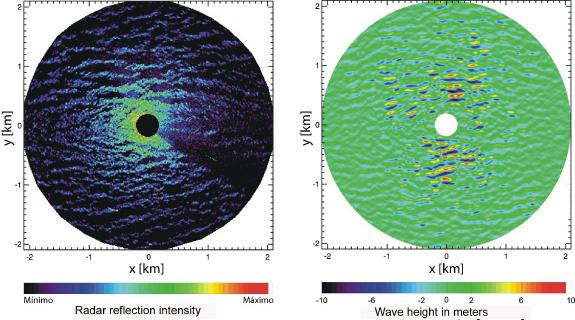
Giant waves, also known as monster waves, have been talked about by sailors for centuries, often related to unexplained disappearances at sea, but no one quite believed them.

They have been considered merely a myth until recently, when new studies using technological developments like buoys, radars and satellites have scientifically proven the existence of rogue waves, and that they exist in much higher numbers than it was ever expected.

These rogue waves could be the cause of tragic accidents at sea, not only because of their immense power and heights that reach over 30 meters, but it is their unpredictable nature that poses a bigger threat; they emerge as unexpected mighty walls of water towering from calm seas.

MIT scientists have devised remotely controlled nanoparticles that, when pulsed with an electromagnetic field, release drugs to attack tumors. The innovation, reported in the Nov. 15 online issue of Advanced Materials, could lead to the improved diagnosis and targeted treatment of cancer.

In earlier work the team, led by Sangeeta Bhatia, M.D.,Ph.D., an associate professor in the Harvard-MIT Division of Health Sciences & Technology (HST) and in MIT's Department of Electrical Engineering and Computer Science, developed injectable multi-functional nanoparticles designed to flow through the bloodstream, home to tumors and clump together. Clumped particles help clinicians visualize tumors through magnetic resonance imaging (MRI).

It’s well known that the body’s energy levels cycle on a 24-hour, or circadian, schedule, and that this metabolic process is fueled by oxygen. Now, researchers at the University of Pennsylvania School of Medicine have found that a protein called Rev-erb coordinates the daily cycles of oxygen-carrying heme molecules to maintain the body’s correct metabolism.

Many studies, including this one, point to a link between the human internal clock and such metabolic disorders as obesity and diabetes. Proteins such as Rev-erb are the gears of the clock and understanding their role is important for fighting these diseases.

As the U.S. continues to fall behind countries such as China and India in producing high-level scientists, one immediate and obvious solution would be to take advantage of the many women who have obtained doctoral degrees in science but have been passed over in their attempts to rise to the position of tenured professor, according to an editorial in DNA and Cell Biology.

Co-authors Jo Handelsman, PhD, Howard Hughes Medical Institute Professor at the University of Wisconsin-Madison, Editor-in-Chief of DNA and Cell Biology, and President of the Rosalind Franklin Society, and Robert Birgeneau, PhD, Chancellor of the University of California, Berkeley, contend that “a few significant changes in the academic system” in the U.S.

University of Wisconsin-Madison researchers are taking a leadership role in the quest for one of Einstein’s greatest predictions – gravitational waves.

“Galileo was the first person to use the telescope to view the cosmos,” says Patrick Brady, a UWM professor of physics. “His observations with the new technology led to the discovery of moons orbiting Jupiter and lent support to the heliocentric model of the solar system.”

New research shows that women suffering from Persistent Genital Arousal Disorder (PGAD), a condition marked by unprovoked, intrusive and persistent sensations of genital arousal that are unrelieved by one or several orgasms, are likely to experience a variety of associated psychological conditions.

Women who have this rare and often distressing condition often experience related depression, anxiety, panic attacks and frequently show a past history of sexual victimization. The condition is accompanied by frustration, guilt, anxiety and distress for the sufferer. The first-ever study on PGAD appears in the current issue of The Journal of Sexual Medicine.


