





Previous studies have shown that when a drug study was funded by the company that made that drug, the results might be biased in favor of that drug. New research published in the British Medical Journal shows that, at least for blood pressure drugs, studies are now much less likely to have biased results but still tend to have overly positive conclusions favoring the company's products.

The authors call on editors and peer reviewers to scrutinize the conclusions of these studies to ensure that they contain an unbiased interpretation of the results.

The technology that makes a cell phone vibrate is the same technology that provides more natural movements to prosthetic limbs. A University of Houston research team is working on recreating and enhancing this technological effect, which, if successful, could result in better prosthetic movements and also provide instant electrical power for soldiers and others through the simple act of walking.

Pradeep Sharma, a UH mechanical engineering professor, is leading the team to create a “piezoelectric on steroids.” Piezoelectricity is the ability of some materials to generate an electric charge when placed under stress. This pioneering technology already is more useful than many people realize.

Research announced this week by a team of U.S. and Japanese geoscientists may help explain why part of the seafloor near the southwest coast of Japan is particularly good at generating devastating tsunamis, such as the 1944 Tonankai event, which killed at least 1,200 people. The findings will help scientists assess the risk of giant tsunamis in other regions of the world.

Geoscientists from The University of Texas at Austin and colleagues used a commercial ship to collect three-dimensional seismic data that reveals the structure of Earth’s crust below a region of the Pacific seafloor known as the Nankai Trough. The resulting images are akin to ultrasounds of the human body.

University of Essex scientists Dr John Woods and Steve Fitz have been awarded funding to create an intelligent plug which can monitor electricity use.

The two scientists, of the Department of Computing and Electronic Systems, have been awarded £90,000 by Carbon Connections to create a device indistinguishable from current plugs, which details individual power use and can be connected to a central, controlling system within the home.

Inside each plug will be a power meter, a microcontroller and a wireless transceiver which will relay information back to the central point.

Sea Launch has resumed its countdown for the launch of the Thuraya-3 mobile communications satellite, with liftoff now planned for Sunday, Nov. 18, at 7:37 am PST (15:37 GMT).

The Sea Launch Commander is positioned alongside the Odyssey Launch
Platform, at the launch site at 154 degrees West Longitude, on the equator. A day before liftoff, the launch team will erect the Zenit-3SL rocket on the launch pad and perform final tests on the launch system and the spacecraft before starting the terminal countdown.

During final preparations for liftoff, the platform will be evacuated, with all personnel safely positioned on the ship, four miles from the platform.

RDX is a common military explosive, and it’s dangerous not just because it explodes - it’s also toxic. Places where RDX is used, produced, or stored often present a serious hazardous waste problem, such at the Massachusetts Military Reservation on Cape Cod, where the local aquifer has been contaminated with RDX. A group of researchers from the University of York in the UK and Canada’s Biotechnology Research Institute have shown how it might be possible to clean up RDX with explosives-eating transgenic plants.

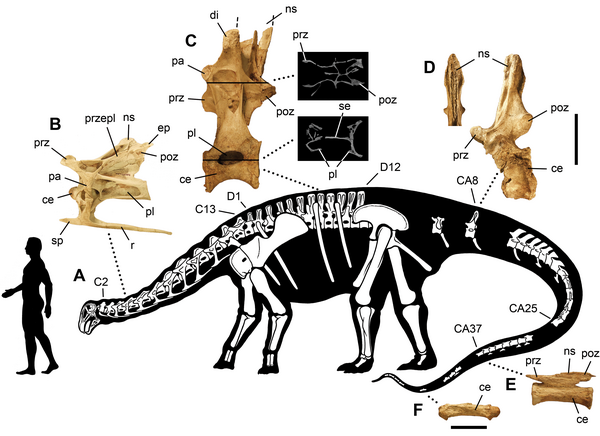
A 110 million-year-old dinosaur that had a mouth that worked like a vacuum cleaner, hundreds of tiny teeth and nearly translucent skull bones will be unveiled Thursday, Nov. 15, at the National Geographic Society.

Found in the Sahara by National Geographic Explorer-in-Residence Paul Sereno, paleontologist and professor at the University of Chicago, the dinosaur is a plant eater known as Nigersaurus taqueti. Originally named by Sereno and his team in 1999 with only a few of its distinctive bones in hand, Nigersaurus has emerged as an anatomically bizarre dinosaur.


Skeleton of Nigersaurus taqueti. Skeletal reconstruction is based mainly on four specimens (MNN GAD513, GAD 515-518).

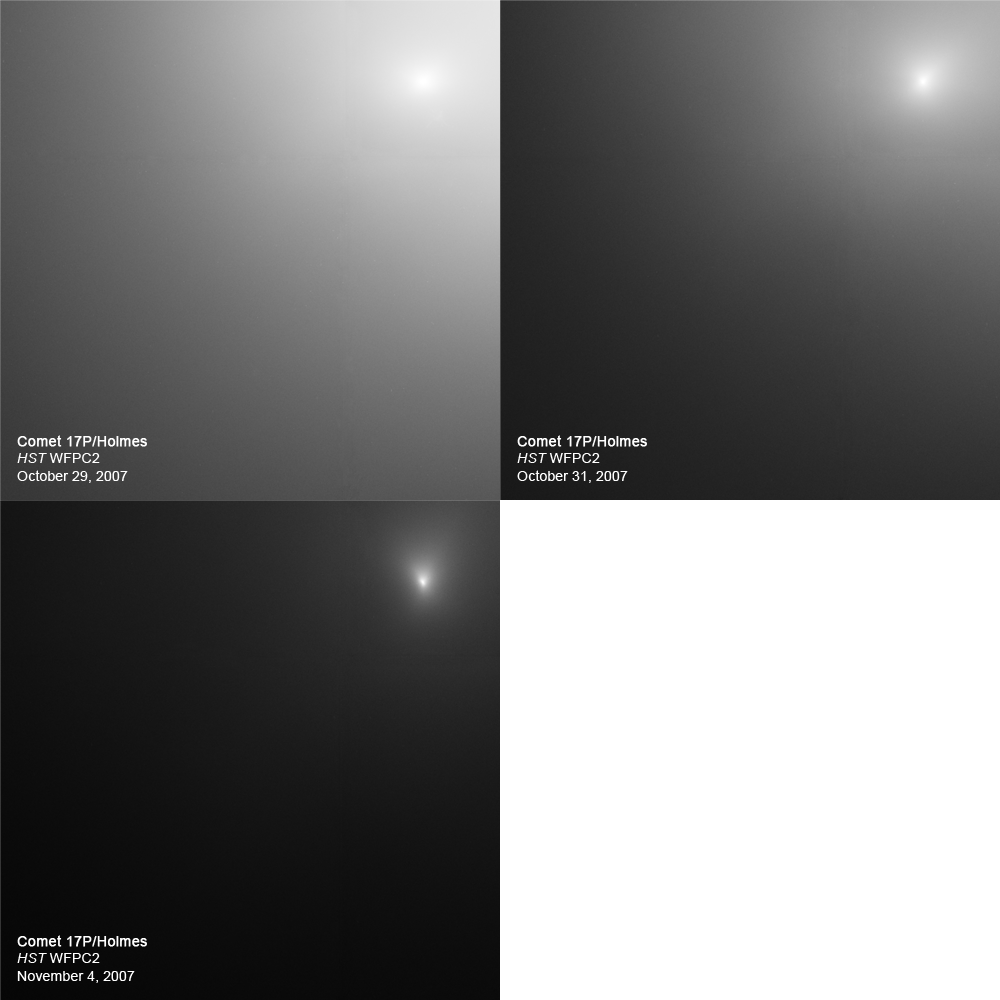
NASA's Hubble Space Telescope has probed the bright core of Comet 17P/Holmes, which, to the delight of sky watchers, mysteriously brightened by nearly a millionfold in a 24-hour period beginning Oct. 23, 2007.

Comet 17P/Holmes is a periodic comet in our solar system.
On November 4, 2007, Comet 17P/Holmes was 1.62 Astronomical Units from the Earth, and 2.48 Astronomical Units from the Sun. Constellation: Perseus

Astronomers used Hubble's powerful resolution to study Comet Holmes' core for clues about how the comet brightened. The orbiting observatory's Wide Field Planetary Camera 2 (WFPC2) monitored the comet for several days, snapping images on Oct. 29, Oct. 31, and Nov. 4.

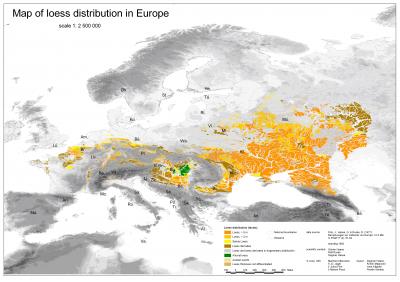
Loess sediments and their soils cover around one-tenth of the earth. In Europe, loess is a powdery product of glaciations during the Ice Age. During those cold periods, this very fine, light material was swept from bare regions on the edges of the glaciers and deposited in regions with denser vegetation.

Loess consists largely of quartz grains and lime. The very fine grains ensure good aeration, water storage and mineral levels. This means that soils derived from loess are very fertile, like the black earth of the Börde plains, but are also particularly susceptible to erosion. It is therefore important to know where exactly these fertile soils so worthy of protection are to be found.

The November 2007 Special Issue of Frontiers in Ecology and the Environment focuses on paleoecology, which uses fossilized remains and soil and sediment cores to reconstruct past ecosystems.

Some scientists argue that the pre-Columbian Amazon was pristine, with indigenous people living in harmony with nature. Others suggest that the Amazon is a “manufactured” landscape, altered by and disturbed by human activities even before the arrival of Europeans. In “Amazonian exploitation revisited: ecological asymmetry and the policy pendulum,” Mark Bush (Florida Institute of Technology) and Miles Silman (Wake Forest University) discuss this debate.

Bush and Silman present paleodata from fossil pollen and charcoal in soil cores that support both perspectives.


