




Folding is very important in human brain development because some of the worst neurological problems such as schizophrenia, autism and lissenchephaly (smoothness of the cortex, found with severe retardation) are associated with abnormal brain folding.

On the other hand, Albert Einstein's abnormally folded brain made him a genius

Larry A.Taber, Ph.D., the Dennis and Barbara Kessler Professor of Biomedical Engineering, and Phillip Bayly, Ph.D., Hughes Professor of Mechanical Engineering, are examining mechanical and developmental processes that occur in the folding of the brain's surface, or cortex, which gives the higher mammalian brain more surface area (and hence more intellectual capacity) than a brain of comparable volume with a smooth surface.

File sharing is taking its worst toll on smaller albums, “devastating” lower ranked titles on the Billboard Top 100, according to the Management Insights feature in the current issue of Management Science.

The authors completed rigorous empirical analysis, using data on the performance of music albums on the Billboard Top 100 charts together with data on peer-to-peer file sharing. The analysis indicates that average survival time on the chart has decreased by 42%. The lower debut ranked albums bore the brunt of decreased survival times, with file sharing as a major contributing factor.

Tufts University researchers are developing techniques that could allow computers to respond to users’ thoughts of frustration — too much work — or boredom—too little work. Applying non-invasive and easily portable imaging technology in new ways, they hope to gain real-time insight into the brain’s more subtle emotional cues and help provide a more efficient way to get work done.

“New evaluation techniques that monitor user experiences while working with computers are increasingly necessary,” said Robert Jacob, computer science professor and researcher. “One moment a user may be bored, and the next moment, the same user may be overwhelmed.

Researchers in California are reporting development of a fast, inexpensive test suitable for home use that could help millions of people avoid those ‘out of the blue’ headaches that may follow consumption of certain red wines, cheese, chocolate, and other aged or fermented foods.

The test is designed to detect the presence of so-called biogenic amines, naturally occurring toxins that can trigger a wide range of symptoms in sensitive individuals —from nasty headaches to life-threatening episodes of high-blood pressure.

Existing tests for biogenic amines can take several hours, are cumbersome and require large, expensive instruments found only in laboratories, the researchers say. The new test, based on lab-on-a-chip technology, could produce results within five minutes, they state.

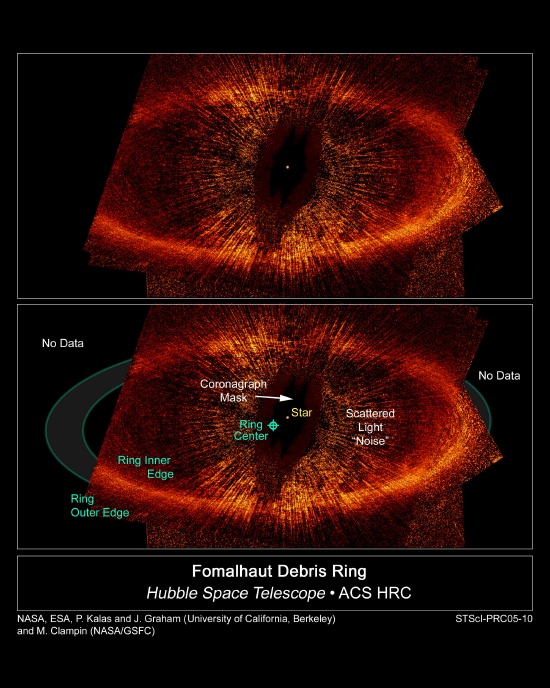
Astronomers at the University of Rochester are pointing to three nearby stars they say may hold "embryonic planets"—a missing link in planet-formation theories.

As scientists try to piece together how our own planet came to be, they look to the forming planets of other star systems for clues.

Based on the theory that stress related to prejudice would increase risk for mental disorders, researchers typically expect that black lesbians, gay men, and bisexuals face prejudice related to both racism and homophobia and therefore would have more disorders than their white counterparts.

Contrary to this expectation, a study conducted at Columbia University’s Mailman School of Public Health found that black lesbians, gay men, and bisexuals had significantly fewer disorders than white individuals. Latinos had a prevalence of disorders similar to whites. The findings will be reported in the November 2007 American Journal of Public Health.

When the Antarctic Geological Drilling Program begins its second drilling campaign this month, scientists will be looking for a "Rosetta Stone" in their sediment cores that will tie together decades of paleoclimate research in Antarctica and the rest of the world to get a more complete picture of how the Antarctic ice sheets responded to past times of global warmth.

The Rosetta Stone, of course, is the tablet found in northern Egypt in 1799 that provided the key to deciphering ancient Egyptian hieroglyphics. The "Rosetta Stone" target for ANDRILL scientists in this fall's Southern McMurdo Sound Project is the warmest part of the middle Miocene, a time between 14 million and 15 million years ago when the Earth was much warmer than today, and for an extended period.

In 2007, Arctic summer sea ice reached its lowest extent on record - nearly 25% less than the previous low set in 2005. At the end of each summer, the sea ice cover reaches its minimum extent and what is left is what is called the perennial ice cover which consists mainly of thick multi-year ice floes.

The area of the perennial ice has been steadily decreasing since the satellite record began in 1979, at a rate of about 10% per decade. But the 2007 minimum, reached on September 14, is far below the previous record made in 2005 and is about 38% lower than the climatological average. Such a dramatic loss has implications for ecology, climate and industry as new shipping lanes open.

This visualization shows the annual Arctic sea ice minimum from 1979 to 2007.

The discovery of a relationship between two cell enzymes and their role in keeping the cell’s energy generating machinery working smoothly could provide a new target for development of therapies for Parkinson’s disease (PD).

Research led by Dr L.Miguel Martins of the MRC Toxicology Unit at the University of Leicester and Dr Julian Downward of the Cancer Research UK London Research Institute has shown that the products of two genes called HtrA2 and PINK1 co-operate in preventing breakdown of cell function that could otherwise lead to Parkinson’s symptoms. The research is published online in Nature Cell Biology.

Dr Martins explained: ‘‘It is already known that mutations in genes linked to the mitochondria, the powerhouse of the cell, can make a person susceptible to PD.

Daily television viewing for two or more hours in early childhood can lead to behavioral problems and poor social skills, according to a study of children 2.5 to 5.5 years of age conducted by researchers at the Johns Hopkins Bloomberg School of Public Health.

The Hopkins researchers found that the impact of TV viewing on a child’s behavior and social skills varied by the age at which the viewing occurred. More importantly, heavy television viewing that decreased over time was not associated with behavior or social problems. The American Academy of Pediatrics recommends that children under age 2 watch no television while children age 2 and older are limited to no more than two hours of daily viewing. The study is published in the October 2007 issue of Pediatrics.


