



Determining the genetic profile of a particular lung tumor can help clinicians make the crucial decision about which chemotherapy treatment to try first.

A new study led by researchers from the Duke University Comprehensive Cancer Center and the Duke Institute for Genome Sciences & Policy (IGSP) found distinct differences in the susceptibility different tumors have to widely used chemotherapy drugs.

“We were able to predict which tumors would be most likely to respond to standard first-line therapy and which would respond better to what has traditionally been a second-line therapy, based on gene expression profiling,” said David Hsu, M.D., Ph.D. an oncologist at Duke and lead author on the publication. “This represents a big step in the move toward individualized medicine.

Materials researchers at the National Institute of Standards and Technology (NIST), together with colleagues from IBM and the Massachusetts Institute of Technology, have pushed the measurement of thin films to the edge—literally—to produce the first data on how the edges of metallic thin films contribute to their magnetic properties. Their results may impact the design of future nanoscale electronics.

Ferromagnetic thin films of metallic materials—ranging in thickness from fractions of a nanometer to several micrometers—are layered in patterns on a substrate (such as silicon) during the manufacture of many microelectronic devices that use magnetic properties, such as computer hard drives.

Researchers have long debated whether or not language and music depend on common processes in the mind. Now, researchers at Georgetown University Medical Center have found evidence that the processing of music and language do indeed depend on some of the same brain systems.

Their findings are the first to suggest that two different aspects of both music and language depend on the same two memory systems in the brain. One brain system, based in the temporal lobes, helps humans memorize information in both language and music— for example, words and meanings in language and familiar melodies in music.

The latest common wisdom on carbohydrates claims that eating so-called “bad” carbohydrates will make you fat, but University of Virginia professor Glenn Gaesser says, “that’s just nonsense.” Eating sandwiches with white bread, or an occasional doughnut, isn't going to kill you, or necessarily even lead to obesity, he said.

In an article in the October issue of the Journal of the American Dietetic Association, Gaesser analyzes peer-reviewed, scientific research on carbohydrate consumption, glycemic index and body weight and gives the first detailed review of the literature on the correlation between them. His findings run counter to the current consensus on the effects of “good” and “bad” carbohydrates.

As they root for the home team from the bleachers this fall, high school gridiron fans in the small Illinois town of Tolono don’t necessarily see anything out of the ordinary down on the field.

But just out of sight, tucked inside many of the maroon helmets worn by the Unity High School Rockets, a revolution of sorts is taking place.

This is a conceptual animation showing how polar ice reflects light from the sun. As this ice begins to melt, less sunlight gets reflected into space. It is instead absorbed into the oceans and land, raising the overall temperature, and fueling further melting.


NASA/Goddard Space Flight Center Conceptual Image Lab

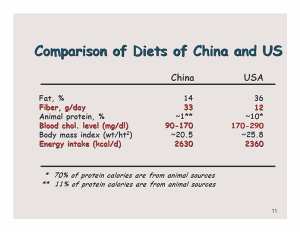
During the past two decades, China has been rapidly changing from a mostly agrarian environment of food production and consumption to a more urban environment typically found in Western industrialized societies.

This means transitioning from a simple diet mainly comprised of a few locally-produced plant-based foods to a diet comprised of significantly more animal-based foods. Such a poor-to-rich transition leads to more food variety, more food availability (i.e., more calories), more total and animal-based protein and more total fat.

As policy makers debate what levels of ozone in the air are safe for humans to breathe, studies in mice are revealing that the inhaled pollutant impairs the body’s first line of defense, making it more susceptible to subsequent foreign invaders, such as bacteria.

While it has long been known that exposure to ozone, a major component of urban air pollution, is associated with increased cardiovascular and pulmonary hospitalizations and deaths, the actual mechanisms involved remain unclear. New studies by Duke University Medical Center pulmonary researchers on the effects of ozone on the innate immune system, the body’s “tripwire” for foreign invaders, may provide part of the answer.

The work of a Kansas State University professor is challenging the assumption that genetically engineered plants are the great scientific and technological revolution in agriculture and the only efficient and cheap way to feed a growing population.

Jianming Yu, an assistant professor of agronomy, is teaming with Rex Bernardo, a professor of agronomy and plant genetics at the University of Minnesota, on research with marker-assisted selection. This agricultural technology offers a sophisticated method to greatly accelerate classical breeding through genetic analysis and selection of existing natural diversity in various crops without having to resort to alien species.

Women have multiple options for preventing pregnancy but men have only two - vasectomy, which is usually permanent, and condoms, which can become tiresome in long-term relationships. For decades, pundits have predicted new contraceptives for men within the next 5 to 10 years but new technology at the second "Future of Male Contraception" conference says new solutions may finally be close:

a) Researchers from the University of Washington used testosterone gel, which is marketed for men with low testosterone, plus a progestin shot used as a female contraceptive under the name "DepoProvera." The men got a shot once every 3 months and rubbed on a gel every day, and it worked well at knocking out sperm in 90% of them.


