





We deal with ice every day. Yet we don't all there is to know about it. Now Dr Angelos Michaelides and Professor Karina Morgenstern say they have made a breakthrough in understanding how ice works.

Dr Michaelides said, “We are all familiar with the freezing of water. It features prominently in our daily lives, from fridge freezers to winter snow. Despite all this, the question of how individual water molecules come together and give birth to ice crystals remains mysterious.”

Understanding the process of ice nucleation at a molecular level also takes us a step closer to understanding the mysterious process through which ice forms around microscopic dust particles in the upper atmosphere.

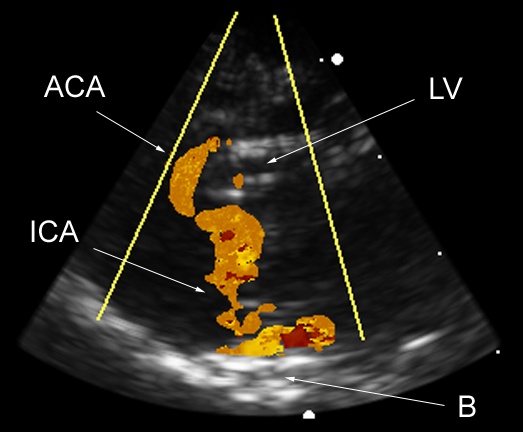
Biomedical engineers at Duke's Pratt School of Engineering have adapted a three-dimensional ultrasound scanner that might guide minimally invasive brain surgeries and provide better detection of a brain tumor’s location.

The “brain scope,” which is inserted into a dime-sized hole in the skull, may be particularly useful for the bedside evaluation of critically ill patients when computed tomography (CT) and magnetic resonance imaging (MRI) equipment is unavailable, the researchers said.

Brain surgeons now rely primarily on two-dimensional images produced by MRI or ultrasound, said Edward Light, a research and development engineer in the biomedical engineering department at Duke. "The problem is that without 3-D, you could miss something," he said.

Following up on my initial comments, my first two posts in Nature Precedings have appeared. Most people have been posting Powerpoint presentations so I started there with a recent presentation at the American Chemical Society about Open Notebook Science. Open Notebook Science Using Blogs and Wikis (doi:10.1038/npre.2007.39.1) Next, I posted an update on the CombiUgi project by basically combining two blog posts (one and

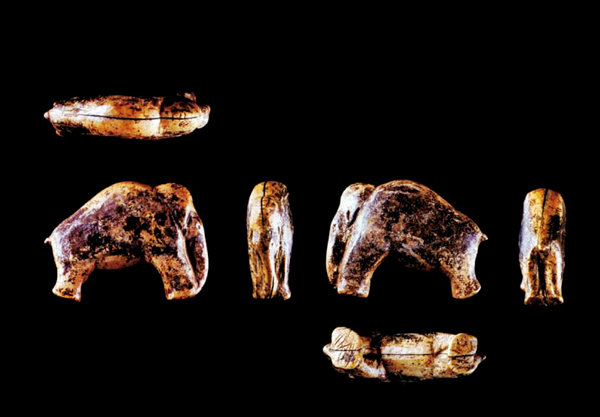
Archaeologists from Tübingen report they have found parts of five figurines from the Ice Age at Vogelherd Cave in southwestern Germany. The figurines were carved from ivory and are of woolly mammoths, date to 35,000 years ago and count among the oldest and most impressive examples of figurative artworks from the Ice Age.

A particularly spectacular find is the first entirely complete figurine from the Swabian Jura depicting a finely carved mammoth. The figurines also include well preserved remains of a lion, a fragment of an additional mammoth and two as yet unidentified representations.


CLICK IMAGE FOR LARGER SIZE.

Researchers at Sandia National Laboratories in California have emerged as key players in a state-of-the-art program for the U.S. Army that focuses on the design and manufacturing of a lightweight, high-caliber, self-propelled cannon system.

The weapon system, known as the Non-Line-of-Sight Cannon (NLOS Cannon) is fully automated and can fire at a sustained rate of six rounds per minute. The vehicle, once completed, must be light and agile enough to fit three vehicles comfortably onto a C-17 cargo aircraft.

According to Sandia researcher Nipun Bhutani, who serves as project manager for the lab’s NLOS Cannon work, Sandia’s primary contribution to date has been a critical adjustment to a laser ignition system that serves as the heart of the NLOS Cannon vehicle.

The programming language Fortran celebrates its 50th anniversary this year. To mark this occasion, a special issue of Scientific Programming on the role of Fortran is dedicated to Fortran creator John Backus and Ken Kennedy, pioneer of Fortran compiler optimization and parallelization. Both highly esteemed scientists died this year.

The language was designed by John Backus and his colleagues at IBM with the goal to reduce the cost of programming scientific applications by providing an ‘automatic programming system’ to replace assembly language with a notation closer to the scientific programming domain.

The sea-squirt derived drug trabectedin (ecteinascidinin-743) shows anti-tumour activity in more than half of patients with a specific type of cancer, conclude authors of an Article published early Online and in the July edition of The Lancet Oncology.

Dr Federica Grosso, Sarcoma Unit, Instituto Nazionale Tumori, Milan, Italy, and colleagues in sarcoma centres in Boston, London, Lyon and Paris, did a retrospective study of the effect of trabectedin (derived from Ecteinascidia Turbinata) on patients with advanced pre-treated myxoid liposarcomas, a subtype of the liposarcoma group of cancers associated with specific chromosomal mutations.

Drinking your coffee black or decaffeinated to keep cholesterol in check? Think again.

Cafestol, a compound found in coffee, elevates cholesterol by hijacking a receptor in an intestinal pathway critical to its regulation, said researchers from Baylor College of Medicine in a report that appears in the July issue of the journal Molecular Endocrinology.

In fact, cafestol is the most potent dietary cholesterol-elevating agent known, said Dr. David Moore, professor of molecular and cellular biology at BCM, and Dr. Marie-Louise Ricketts, a postdoctoral student and first author of the report. Cafetiere, or French press coffee, boiled Scandinavian brew and espresso contain the highest levels of the compound, which is removed by paper filters used in most other brewing processes.

A report from the UN Environment Programme says government subsidies, fears about global warming and high oil prices have led to an investment boom in the green energy and energy efficiency businesses.

The report says investment capital flowing into renewable energy climbed from $80 billion in 2005 to a record $100 billion in 2006. As well, the renewable energy sector’s growth “although still volatile ... is showing no sign of abating.”

The report offers a host of reasons behind and insights into the world’s newest gold rush, which saw investors pour $71 billion into companies and new sector opportunities in 2006, a 43% jump from 2005 (and up 158% over the last two years. The trend continues in 2007 with experts predicting investments of $85 billion this year).

Omega-3 supplements can, in certain cases, help combat the depression and agitation symptoms associated with Alzheimer’s disease, according to a clinical study conducted at the Swedish medical university Karolinska Institutet.

A number of epidemiological studies have shown that eating fatty fish provides a certain degree of protection against Alzheimer’s and other dementia diseases—an effect often thought attributable to the omega-3 fatty acids it contains. Some studies also suggest that omega-3 can have a therapeutic effect on some psychiatric conditions.

Researchers at Karolinska Institutet and Uppsala University have now examined whether omega-3 supplementation has any effect on the psychiatric symptoms associated with Alzheimer’s disease.
