








Women who get most of their daily calcium from food have healthier bones than women whose calcium comes mainly from supplemental tablets, say researchers at Washington University School of Medicine in St. Louis. Surprisingly, this is true even though the supplement takers have higher average calcium intake.

Adequate calcium is important to prevent osteoporosis, which affects an estimated 8 million American women and 2 million American men. Another 34 million Americans have low bone mass, placing them at increased risk for osteoporosis. Calcium consumption can help maintain bone density by preventing the body from stealing the calcium it needs from the bones.

The researchers' conclusions about calcium intake came from a study of 183 postmenopausal women.

Neanderthal man was not as stupid as has been made out says a new study published by a University of Leicester archaeologist.

In fact Neanderthals were far removed from their stereotypical image and were innovators, says Dr Terry Hopkinson of the School of Archaeology and Ancient History in a paper published in Antiquity.

Neanderthals were the sister species of Homo sapiens, our own species, and inhabited Europe in the Middle Palaeolithic period which began some 300,000 years ago. This period has widely been thought to have been unremarkable and undramatic in cultural or evolutionary terms.

Ancient records always referred to a vast powerful "Kingdom of Kush." Robert E. Howard had his barbarian hero, Conan, run into 'Kushites' a number of times. The New Testament referred to all of Nubia as Kush, because Kush was the name of one of the sons of Ham who settled northeast Africa.

As it turns out, not only has there been more evidence discovered about those ancient people in Sudan, there's even enough gold to make a Cimmerian warrior take notice.

At sites like Kerma, evidence of a sophisticated culture still exists. This Nubian land, long dominated by Egypt, is being discovered still today.


Conan The Barbarian. Copyright: Robert E. Howard Estate.

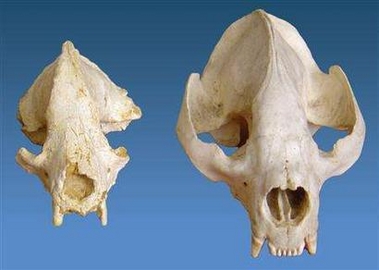
Although it may sound like an oxymoron, a University of Iowa anthropologist and his colleagues report the first discovery of a skull from a "pygmy-sized" giant panda -- the earliest-known ancestor of the giant panda -- that lived in south China some two million years ago.

The ancestor of today's giant panda really was a pygmy giant panda, says Russell Ciochon, UI professor of anthropology. Previous discoveries of teeth and other remains made between 1985 and 2002 had failed to establish the animal's size.

Ciochon says that the ancient panda (formally known as Ailuropoda microta, or "pygmy giant panda") was probably about three feet in length, compared to the modern giant panda, which averages in excess of five feet in length.

Embryos that are selected out as abnormal can still undergo chromosomal modifications, says Ms Tsvia Frumkin from the Racine IVF unit at Tel Aviv Sourasky Medical Centre in Israel.

These findings mean that the results of preimplantation genetic screening (PGS) for chromosomal abnormalities were not always reliable and should be interpreted with caution.

PGS is offered to women with recurrent IVF failures as well as repeated miscarriages. It is based on the concept that the entire chromosomal constitution of an embryo can be represented by a single cell, which is removed from the embryo.

University of Tennessee professor Alan Solomon, director of the Human Immunology and Cancer/Alzheimer’s Disease and Amyloid-Related Disorders Research Program, led a team that discovered a link between foie gras prepared from goose or duck liver and the type of amyloid found in rheumatoid arthritis or tuberculosis.

Their experimental data has provided the first evidence that a food product can hasten amyloid development.

Amyloidosis is a disease process involving the deposit of normal or mutated proteins that have become misfolded. In this unstable state, such proteins form hair-like fibers, or fibrils, that are deposited into vital organs like the heart, kidneys, liver, pancreas and brain. This process leads to organ failure and, eventually, death.

25 million people are living with schizophrenia in low and middle income countries and over two-thirds of them are not receiving any treatment.

Dr Vikram Patel discusses the crucial role that community health workers can play. Dr Saaed Farooq argues that the huge burden of untreated schizophrenia could be tackled by providing free antipsychotic medications and supervising patients while they take their treatment (akin to the way in which patients with TB are supervised when they take their antituberculous medications). Dr R Thara discusses the crucial importance of tackling the stigma of schizophrenia by offering proven therapies.

In the first large-scale epidemiological study evaluating elevator-related injuries in children throughout the United States, researchers report that children up to two years of age had the greatest percentage (28.6%) of elevator-related injuries.

“What really surprised us was the number of infants with head injuries in our study. As the elevator doors closed mothers may not realize the vulnerability of babies in strollers or in their arms,” said Joseph O’Neil, M.D., M.P.H., assistant professor of clinical pediatrics at the Indiana University School of Medicine and lead author of the study.

A University College London researcher says stereotypes can be a good thing for autistic kids. Autistic children are unable to understand individuals and why they do things but are better with understanding groups. Stereotyping was able to help them learn, for example, if a woman were used as an example of someone who likes to bake/

Professor Uta Frith of the UCL Institute of Cognitive Neuroscience said: “One of the main problems experienced by autistic children is that they are unable to understand why others are doing certain things: what motivates them or what they are thinking and feeling. Most of us have this ability, known as ‘Theory of Mind’.

In California, you can't smoke a cigar in Morton's Of Chicago after a great steak any more. It's too dangerous to the health of the waitresses and waiters. Legislators have recently tried to institute carseats practically until children are teenagers because of concerns about their safety.

Yet some adult film performers are put at risk of HIV and other sexually transmitted diseases because their employers prohibit the use of condoms.

If employers won't protect them, is it time to regulate the porn industry?

The San Fernando Valley in California generates about $1 billion annually in revenue. Nationwide, porn revenues are in the neighborhood of $12 billion.

