
The present day habitability of Mars is an area of research that has exploded hugely in the last decade, to the extent that it's often hard to keep track of everything that's going on. This is by way of background material for my other articles on habitability of Mars.

Researchers have identified individual stem cells that can regenerate tissue, cartilage and bone.

The stem cells are mixed within human bone marrow stromal cells (MSCs) but are similar in appearance and previously, scientists had difficulty in distinguishing between them. The researchers isolated individual MSCs and analyzed their different properties.

This allowed researchers to identify those stem cells which are capable of repairing damaged cartilage or joint tissue opening the way for improved treatment for arthritis.


Non-invasive prenatal testing for Down syndrome is feasible, acceptable to parents, and could be introduced into the National Health Service (NHS), researchers in the United Kingdom say. 

The results of a National Institute for Health Research (NIHR) study carried out by the first NHS laboratory to provide  non-invasive prenatal testing  testing were reported to the annual conference of the European Society of Human Genetics Saturday. 

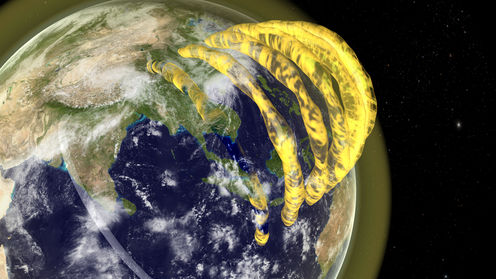
 If you want to blame something for an overcast day, it's safe to go with the tropics. Water vapor originating from the Earth's tropics is transported to mid-latitudes on long filaments of flowing air that intermittently travel across the world's oceans.

When these airy tendrils make landfall, they can cause severe floods and other extreme weather events. Yet despite the importance of these "atmospheric rivers" for the global water and heat cycles, the mechanism behind their formation is still a mystery.

Physicists around the world (myself included) are hoping that this week will mark the beginning of a new era of discovery. And not, as some fear, the end of particle physics as we know it.

After 27 months of shutdown and re-commissioning, the Large Hadron Collider has begun its much-anticipated “Season 2”. Deep beneath the Franco-Swiss border, the first physics data is now being collected in CERN’s freshly upgraded detector-temples at the record-breaking collision energy of 13 teraelectonvolts (TeV).

A lot of problems, associated with the mixing of the liquid in the microchannels, could be solved via proper organization of the inhomogeneous slip on the walls of these channels, according to a joint group of Russian and German scientists lead by Olga Vinogradova, professor at the M.V. Lomonosov Moscow State University. 

Scientists are beginning to unwrap the biology behind why some people are more prone to major depression and other psychiatric disorders than others when experiencing stressful life events.

The researchers found that cellular activity in response to stress hormone receptor activation differs from individual to individual.

The study, led by Janine Arloth, Ryan Bogdan, and Elisabeth Binder at the Max Planck Institute of Psychiatry in Germany, also shows that the genetic variations underlying this difference in stress response correlate with dysfunction in the amygdala, a brain region that is an important part of the stress hormone response.

 Researchers have used satellite data to detect deposits of glass within impact craters on Mars. Though formed in the searing heat of a violent impact, the glasses just might provide a delicate window into the possibility of past life on the Red Planet.

Over the last few years, several research groups have shown that, here on Earth, ancient biosignatures can be preserved in impact glass. One of those studies, led by Brown geologist Peter Schultz and published last year, found organic molecules and even plant matter entombed in glass formed by an impact that occurred millions of years ago in Argentina. Schultz suggested that similar processes might preserve signs of life on Mars, if indeed they were present at the time of an impact.
Amateur cook-offs like the hugely popular MasterChef series now in its seventh season in Australia have been part of our TV diet for almost two decades.

These shows celebrate the remarkable lengths we humans will go to to whet the appetite, stimulate the senses, fire our neural reward systems and sustain the body.

Yet, few of us pause to reflect on the hugely important role diet plays in the ecology and evolutionary history of all species, including our own.

NASA has released data showing how temperature and rainfall patterns worldwide may change through the year 2100 because of growing concentrations of greenhouse gases in Earth's atmosphere.

The dataset shows projected changes worldwide on a regional level in response to different scenarios of increasing carbon dioxide simulated by 21 climate models. The high-resolution data, which can be viewed on a daily timescale at the scale of individual cities and towns, will help scientists and planners conduct climate risk assessments to better understand local and global effects of hazards, such as severe drought, floods, heat waves and losses in agriculture productivity.