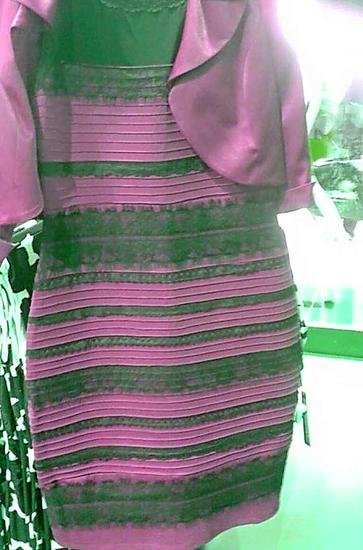
A few months ago, a snapshot of a lace-decorated dress puzzled social networks worldwide. Some people saw a blue and black dress while others saw the same dress as white and gold

The reason behind the confusion, it is now known, is the photograph's overall bluish and yellowish coloring. A team of psychologists set out to experimentally test how it happened.
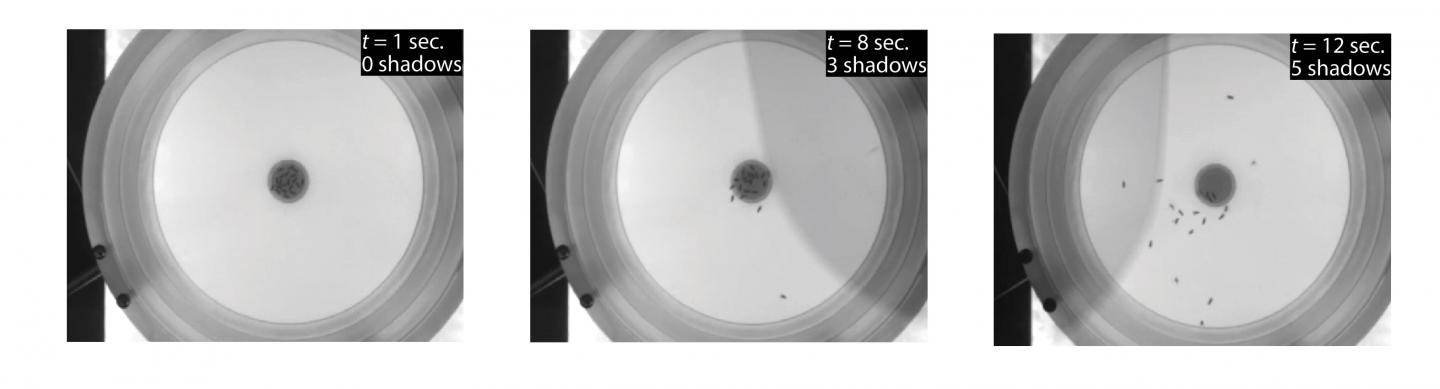
When fruit flies respond to the threat of an overhead shadow, is that fear?

The response to visual threats includes many essential elements of what we humans call fear and David J. Anderson of the Howard Hughes Medical Institute and the California Institute of Technology and colleagues write in a new paper that their work on fear in flies are a step toward dissecting the fundamental neurochemistry, neuropeptides, and neural circuitry underlying fear and other emotion states.
Dogs who suffer with separation anxiety become more optimistic when taking the animal equivalent of Prozac during behavioral treatment, according to a paper in which the authors say they revealed how the animals feel during the clinical treatment of behaviors associated with negative emotions.


The prospect of death, and the impact of mortality, is a lot less daunting when there is belief in the afterlife, say psychologists.

Dr. Arnaud Wisman and Dr. Nathan Heflick, of the University of Kent School of Psychology set out to establish in four separate studies whether people lose hope when thinking about death - known as Terror Management Theory - under a range of different conditions. The research was based on the premise that self-awareness among humans has been shown to create the potential for hope - or the general expectation and feeling that future desired outcomes will occur.

When certified, digital signatures - mechanisms for authenticating the validity or authorship of a certain digital message - have the same legal power as traditional signatures. Introduced by Diffie and Hellman in 1976, they are in all ways digital counterparts to real (analog) signatures. 

Between the ages of 40 and 80, an estimated 30 to 50 percent of muscle mass is lost, resulting in lower strength and less ability to carry out everyday tasks. This process is known as sarcopenia and it is common and clearly linked to frailty and poorer health in older people.

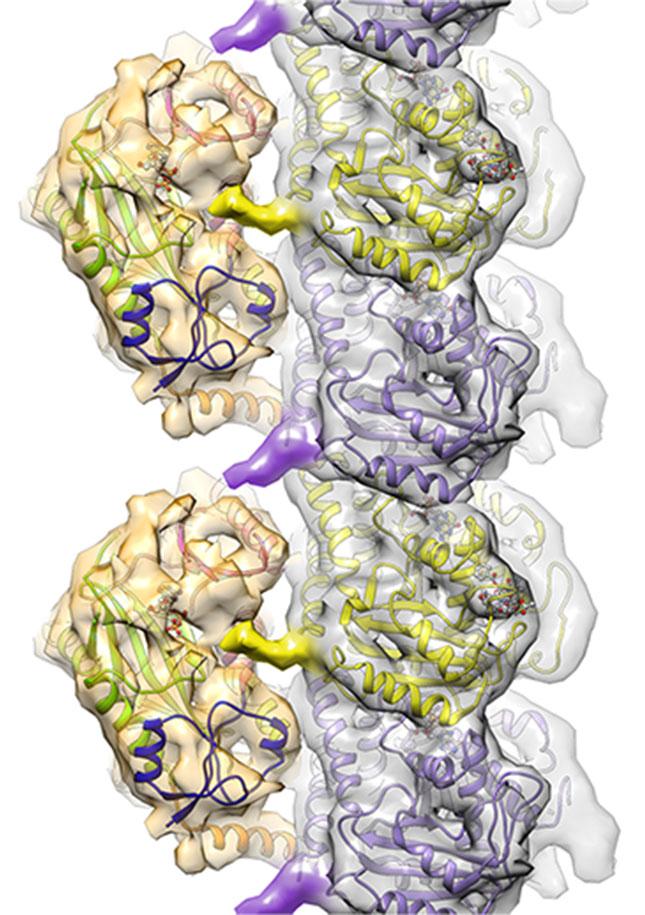
Cellular structures called microtubules are tagged with a variety of chemical markers that can influence cell functions and the pattern of these markers makes up the "tubulin code". One of the main writers of this code is tubulin tyrosine ligase-7 (TTLL7), according to a new paper. 

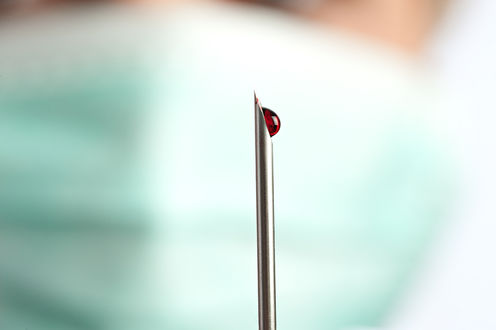
A number of recent studies have reported on the use of biomarkers, particularly blood-based ones, that offer the potential for screening diseases such as cancer and HIV.

A biomarker can be a gene, a gene mutation, protein, other molecule or clinical measurement that indicates a given disease state.

Biomarkers can be diagnostics (telling us of the presence of a given disease), prognostic (telling us of the outcome for a patient with a particular disease) and predictive (telling us of the response of an individual to a given therapy). The latter has led to the rise of so-called personalised or precision medicine.

Southern Indiana is an oasis free from Lyme disease, the condition most associated with the arachnids that are the second most common parasitic disease vector on Earth.

But there are signs that this low-risk environment is changing, both in Indiana and in other regions of the U.S, says Indiana University biology professor Keith Clay.  Lyme disease has been detected just a few hours north of the region around Tippecanoe River State Park and Lake Michigan's Indiana Dunes, and Clay said the signs are there that new tick species, and possibly the pathogens they carry, are entering the area. 

So, you think you know what a planet looks like? A sphere, perhaps flattened at the poles? But if you've been following recent discoveries of dwarf planets, you may know that rapidly spinning dwarf planets like Haumea typically are rugby ball shaped (triaxial spheroids), rather surprisingly perhaps. So, what other shapes can a planet have? Theory, and experiment with droplets in simulated zero g suggest several exotic possibilities.