






If you got a recent promotion, or a new car on Facebook, that's good news, and in the idealized vision of social media it should be shared.

That is just social media marketing talking. In reality, you have probably become convinced that your hard work and success elicits positive emotions and you are probably wrong. 

Irene Scopelliti, George Loewenstein and Joachim Vosgerau wanted to find out why so many try to increase the favorability of the opinion others have of them by engaging in more positive self-promotion, which has the opposite of the intended effect. 

For the last decade, engineers have deployed increasingly capable underwater robots to map and monitor pockets of the ocean to track the health of fisheries, and survey marine habitats and species. When deploying such autonomous underwater vehicles (AUVs), much of an engineer's time is spent writing scripts, or low-level commands, in order to direct a robot to carry out a mission plan but new programming approach developed by MIT engineers gives robots more "cognitive" capabilities, enabling humans to specify high-level goals, while the robot performs high-level decision-making to figure out how to achieve these goals. 

Photosynthesis, the process by which plants utilize the sun's energy to create their own, leaves behind a unique calling card in the form of a chemical signature that is spelled out with stable oxygen isotopes.

Photosynthesis by microscopic plants forms the base of the oceanic food chain, but it is difficult to measure how productive these plants are in natural settings. This research will make it easier to do so.

Most oxygen atoms contain eight protons and eight neutrons and are represented by the symbol O-16. More than 99.9 percent of Earth's oxygen is O-16, but two heavier oxygen isotopes exist in trace amounts: O-17, with one extra neutron, and O-18, with two.

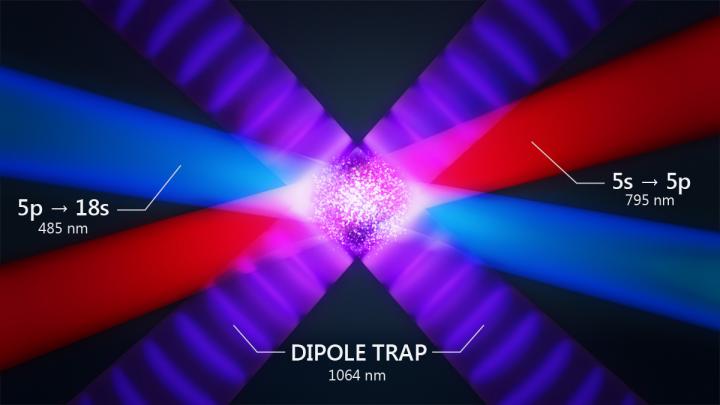
Rydberg atoms, atoms whose outermost electrons are highly excited but not ionized, might be just the thing for processing quantum information. These outsized atoms can be sustained for a long time in a quantum superposition condition (a good thing for creating qubits) and they can interact strongly with other such atoms, making them useful for devising the kind of logic gates needed to process information. 

As scientists, my colleagues and I are often told we need to engage the general public and decision makers, to use our expertise to inform public discourse and debates and to reach a far wider audience than just our professional colleagues.

I very much believe in the importance of doing this. This is, for instance, my 25th article for The Conversation. I’ve also written scores of articles for other popular venues such as New Scientist, Natural History, Yale Environment 360, Australian Geographic, the Chronicle of Higher Education and the New York Times, among others.

A new study shows that the microbial communities we carry in and on our bodies, the human microbiome, contain the potential to uniquely identify individuals, much like fingerprints.

Researchers and demonstrated that personal microbiomes contain enough distinguishing features to identify an individual over time from among a research study population of hundreds of people. The study, the first to rigorously show that identifying people from microbiome data is feasible, suggests that we have surprisingly unique microbial inhabitants, but could raise potential privacy concerns for subjects enrolled in human microbiome research projects.

The new 9-valent human papillomavirus vaccine, can potentially prevent 80 percent of cervical cancers in the United States if given to all 11- or 12-year-old children before they are exposed to the virus, according to a seven-center study published in the Journal of the National Cancer Institute

A survey of more than 1,000 U.S. adults has found misperceptions about miscarriage and its causes are widespread. Results of the survey show that feelings of guilt and shame are common after a miscarriage and that most people erroneously believe that miscarriages are rare.

Nearly one million miscarriages occur in the U.S. each year. Miscarriages end one in every four pregnancies and are by far the most common of all pregnancy complications. Yet 55 percent of respondents to the Einstein/Montefiore survey believed that miscarriages are "uncommon" (defined in the survey as less than six percent of all pregnancies).

Researchers  have demonstrated the functionality of a simple artificial neural circuit - a circuit of about 100 artificial synapses was proved to perform a simple version of a typical human task: image classification.

The brain has 1015 (one quadrillion) synaptic connections so this will need some time to come close, but it is a step.

For all its errors and potential for faultiness, the human brain remains a model of computational power and efficiency. That's because the brain can accomplish certain functions in a fraction of a second what computers would require far more time and energy to perform.

Women's magazines influence decisions to have a more 'natural' childbirth or not, with most stories in favor of epidural or potentially a Cesarean section.

Scholars writing in Women&Health decided to assess the effect of communicating the benefits of more natural birth. Kate Young, lead author from Monash University's School of Public Health and Preventive Medicine, said popular media was biased towards things like epidurals even in low risk births, though the authors say it leads to preventable maternal and infant morbidity.

"We wanted to look at how women's decisions might be influenced by communicating the alternative benefits of non-medicalized birth," Young said.


