
In a music buying industry now dominated by iTunes and music streaming sites such as Spotify, Napster, Pandora and Jay-Z’s recently released Tidal, the CD and physical music store are reportedly in sharp (and potentially terminal) decline. But a curious development in music consumption has seen vinyl, the format ostensibly rendered extinct by the compact disc with its “perfect” digital sound, make an unlikely, but significant cultural and commercial comeback.

In 2013, Typhoon Haiyan killed more than 6,000 people and destroying nearly $3 billion worth of property in the Philippines. While the country is still recovering from the storm, researchers have found that an aquifer on the island of Samar inundated with salt water by the storm surge could remain undrinkable for up to 10 years - a second aquifer on the island that was also inundated has recovered much more quickly.

Geology and infrastructure play key roles in determining whether aquifers that provide drinking water are inundated with seawater during a typhoon or hurricane and how long the contamination lasts.

Karin Heineman, Inside Science TV –  Beer! Most Americans choose it over all other alcoholic beverages.

It's also one of the world's oldest beverages. In fact the first evidence of beer production dates back to Ancient Egypt and Mesopotamia in the fifth millennium BC. People have been brewing beer for a very long time, even before anyone really understood what turns its ingredients into alcohol.

Genetic modification of maize over the last century has led to desirable shoot characteristics and increased yield - and that likely contributed to the evolution of root systems that are more efficient in acquiring nutrients, such as nitrogen, from the soil, according to a new study. 

About half of the yield gains in commercial corn in the last 100 years has come from improved plant genetics, explained Larry York, a postdoctoral research fellow at the University of Nottingham. The other half came largely from agronomic practices, such as fertilizer use and higher planting densities. 
If you just watched the Master's Tournament in Augusta, Georgia, you saw the second-youngest player ever to win. That is a pretty good way for a young man to spend the next year.



But for most golfers, like most young baseball players, the reality is much different. 

An EPGA tour player for 12 years commented to Dr. John Fry of Myerscough College on the life: "The word that jumps in my head is lonely".
Recommended antibiotic courses are often arbitrary.

Most people believe – and have been told by health professionals – that it’s essential to finish a course of antibiotics to prevent antibiotic resistance.

But this advice is not only wrong, it could actually be harmful.

A newly discovered protein plays a central role in promoting immunity to viruses and cancer, according to experiments in mice and human cells.

 The hitherto unknown protein, which the researchers named lymphocyte expansion molecule, or LEM, modulates the proliferation of human T cells as well as in mice, by promoting the proliferation of cytotoxic T cells, which kill cancer cells and cells infected with viruses.

The discovery was unexpected because the new protein had no known function and doesn't resemble any other protein. Researchers from Imperial College London who led the study are now developing a gene therapy designed to boost the infection-fighting cells, and hope to begin human trials in three years. 
In 2014, there were almost 200 health awareness days, weeks or months on the 2014 U.S. Department of Health and Human Services' National Health Observances calendar.  

Since there are only 250 days in a working year, that means one day each week was not given over to some kind of health awareness effort. H.H.S. says their mission is to advocate for "evidence-based" interventions for health problems, so what evidence did they use that 200 health "awareness" campaigns were making a difference? Are they really helping anyone, or is it just less-successful attempts to get people to dump water on their own heads?

A research team has created a prototype video camera that is fully self-powered.

Solar panels and digital cameras obviously have different purposes - one converts light to power while the other simply measures it - but both are constructed from essentially the same components. At the heart of any digital camera is an image sensor, a chip with millions of pixels. The key enabling device in a pixel is the photodiode, which produces an electric current when exposed to light. This mechanism enables each pixel to measure the intensity of light falling on it. The same photodiode is also used in solar panels to convert incident light to electric power. 

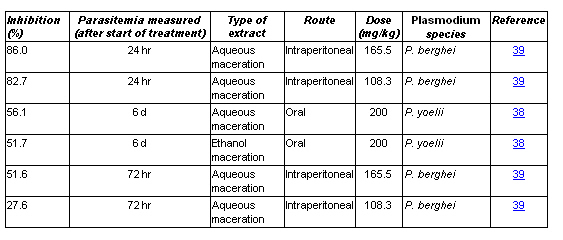
Malaria is a critical health problem in West Africa, 11 percent of deaths are related to it, but for a variety of reasons they have more confidence in alternative medicine than they do modern health care practices. 

However, some herbal medicines work and an analysis of the pharmacological properties of an herbal medication derived from Cochlospermum planchonii (a shrubby weed known as N'Dribala), Phyllanthus amarus and Cassia alata shows that it may be the case with SAYE, which means “jaundice” in the Dioula language.