



By identifying and comparing the sequences of more than 400 receptors in the genomes of two fruit flies and three mosquito species, entomologists have unlocked one of the hormonal mechanisms that allow mosquitoes to produce eggs. They identified a single gene for a receptor with an unknown function within the species distribution.  

The one common element in recent American weather has been its diversity. The West Coast has been drier than usual while the East Coast has had more snow. Fish are swimming into new waters and so hungry seals that don't follow them aare washing up on California beaches. 

A long-lived patch of warm water off the West Coast, about 1 to 4 degrees Celsius (2 to 7 degrees Fahrenheit) above normal, is part of what's wreaking much of this mayhem, according to two papers Geophysical Research Letters. No, that warm blob was not caused by climate change, though it has many of the same effects for West Coast weather. 

On one side of the political spectrum in America and across a broader swath of Europe, science is controversial - especially genetic engineering. But genetic engineering has been done since humans first deduced they could shape the natural world, if anything it has gotten precise in a way that was never possible before.

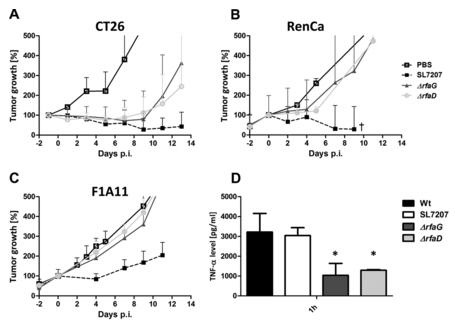
Now it mean even help fight against cancer - and it may do so using Salmonella, more famous as a bacteria that lives in intestines.

This week Hilary Clinton and Marco Rubio announced their candidacies for President of the United States. This puts them alongside Jeb Bush, Scott Walker and I’m not sure who else.

One thing all these candidates have in common is that not one of them has mentioned antibiotics – at least as far as I know. Do any of you know anything different?

So here we are. Antibiotic resistance is killing a minimum of 23,000 Americans every year according to the CDC. (I think that is a gross underestimate of reality.) The FDA just published a study showing large increase in antibiotic use on US farms – but they don’t know how or why the antibiotics are used.

The cost of batteries is one of the major hurdles standing in the way of widespread use of electric cars and household solar batteries. By storing surplus energy, batteries allow households to reduce power bought from the electricity grid. Unfortunately, batteries have so far been prohibitively expensive.

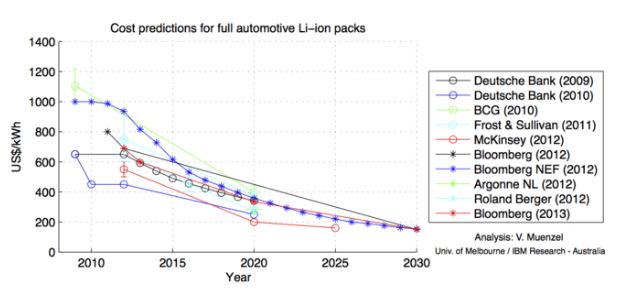
But research published recently in Nature Climate Change Letters shows battery pack costs may in some cases be as low as US$300 per kilowatt-hour today, and could reach US$200 by 2020. This cost development is notably cheaper and faster decreasing than I and many others expected.

It is galaxy season in the northern hemisphere, with Ursa Mayor at the zenith during the night and the Virgo cluster as high as it gets. And if you have ever put your eye on the eyepiece of a large telescope aimed at a far galaxy, you will agree it is quite an experience: you get to see light that traveled for tens or even hundreds of millions of years before reaching your pupil, crossing sizable portions of the universe to make a quite improbable rendez-vous with your photoreceptors. 

Titan, Saturn's largest moon, is one of the most Earthlike places in the solar system. 

It has a thick, hazy atmosphere and surface rivers, mountains, lakes and dunes, which is why the Cassini-Huygens is studying it. But sometimes new data bring new mysteries, such as the seemingly wind-created sand dunes spotted by Cassini near the moon's equator, and the contrary winds just above.

It's become a popular idea among endurance athletes that salt consumption during competition will help, but a new study finds no evidence that is true.

A small kernel of truth is involved in the belief, the authors write in the the Journal of Sports Science and Medicine - that there are sodium losses due to sweat during exercise and our bodies function on a principle of thermoregulation - but then some endurance athletes have taken that to believe they should consume large quantities of salt or other electrolyte supplements containing sodium during training and competition to improve performance. 
When you look at a primate or neanderthal skull and compare it to modern humans, it is immediately noticeable that we have a feature they are missing.

In fact, it's missing from all other species: A chin.

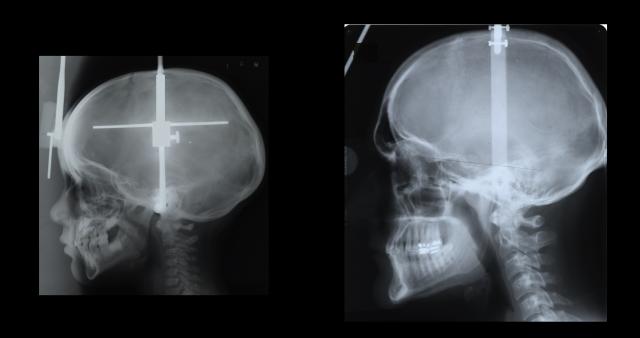
Why do we? A new study finds that our chins didn't come from mechanical forces such as chewing, but instead results from an evolutionary adaptation involving face size and shape, possibly linked to changes in hormone levels as we became more societally domesticated. If true, it would settle a debate that's gone on for more than a century, and anthropology would have solved it rather than biology.
Skin is remarkably resistant to tearing and a team of researchers from the University of California, San Diego and the Lawrence Berkeley National Laboratory now have shown why.

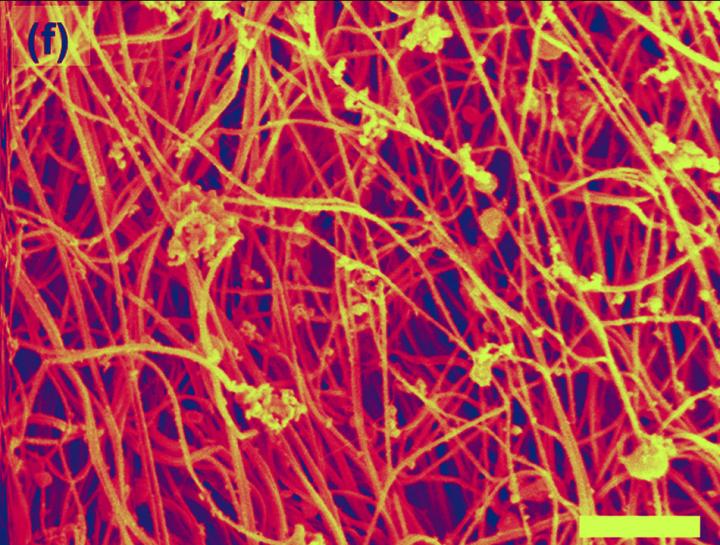
Using powerful X-ray beams and electron microscopy, researchers made the first direct observations of the micro-scale mechanisms that allow skin to resist tearing. They identified four specific mechanisms in collagen, the main structural protein in skin tissue, that act together to diminish the effects of stress: rotation, straightening, stretching, and sliding. Researchers say they hope to replicate these mechanisms in synthetic materials to provide increased strength and in better resistance to tearing.


