Banner
Here's Where Your Backyard Was 300 Million Years Ago

We may use terms like "grounded" and terra firma to mean stability and consistency but geology...

Convergent Evolution Cheat Sheet Now 120 Million Years Old

One tenet of natural selection is a random walk of genes but nature may be more predictable than...

Synchrotron Could Shed Light On Exotic Dark Photons

There are many hypothetical particles proposed to explain dark matter and one idea to explore how...

The Pain Scale Is Broken But This May Fix It

Chronic pain is reported by over 20 percent of the global population but there is no scientific...

User picture.
News StaffRSS Feed of this column.

News Releases From All Over The World, Right To You... Read More »

Blogroll
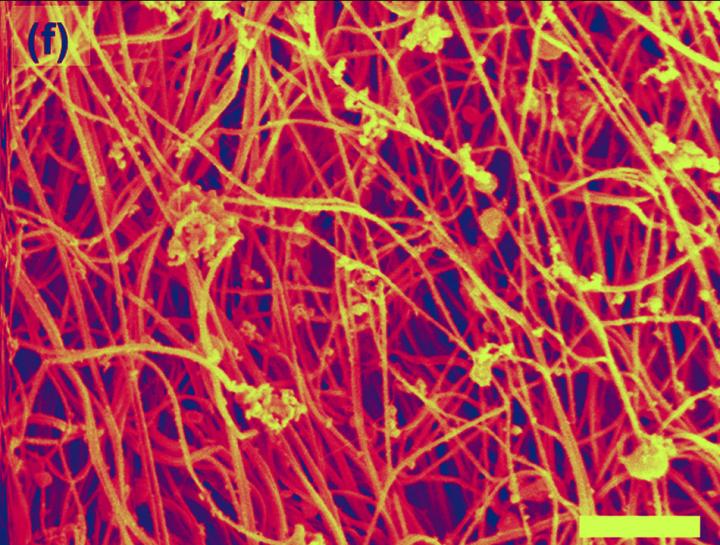
Skin is remarkably resistant to tearing and a team of researchers from the University of California, San Diego and the Lawrence Berkeley National Laboratory now have shown why.

Using powerful X-ray beams and electron microscopy, researchers made the first direct observations of the micro-scale mechanisms that allow skin to resist tearing. They identified four specific mechanisms in collagen, the main structural protein in skin tissue, that act together to diminish the effects of stress: rotation, straightening, stretching, and sliding. Researchers say they hope to replicate these mechanisms in synthetic materials to provide increased strength and in better resistance to tearing.
Bacteria have an immune system to fight off invasive viruses called phages, and like any immune system, from single-celled to human, the first challenge of the bacterial immune system is to detect the difference between “foreign” and “self.”

Since all living things are made of DNA and proteins, how do viruses and bacteria recognize their own? 

“In most environments, phages are around ten times more abundant than bacteria. And, like all viruses, phages use the host cell’s replication machinery to make copies of themselves,” says Prof. Rotem Sorek of the Weizmann Institute’s Department of Molecular Genetics. “And they are constantly evolving new ways to do this. So bacteria need a very active immune system to survive.”

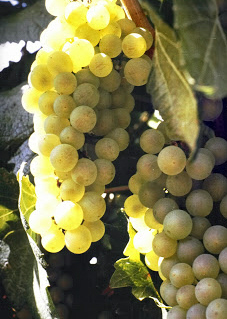
While mandatory labels for organic or genetically modified foods have been regarded by the public as unnecessary bureaucracy, a group of analysts are calling for just that when it comes to wine.

Production methods and added chemicals can affect the color and taste and should be noted, the authors of a new study write. Dr. Heli Sirén and colleagues from the University of Helsinki analyzed the chemical profiles of eight Pinot Noir wines from different regions in the USA, France, New Zealand and Chile and they found that each wine had a different profile, affected by the processes used to make it.
Methane is a greenhouse gas with more warming impact than carbon dioxide but also fortunately a much shorter life in the atmosphere.

Due to the popularity of much cleaner natural gas, which has caused CO2 emissions to drop, there are concerns about methane but the big source is nature herself - decomposition of organic material, a complex process involving bacteria and microbes, is a big culprit.
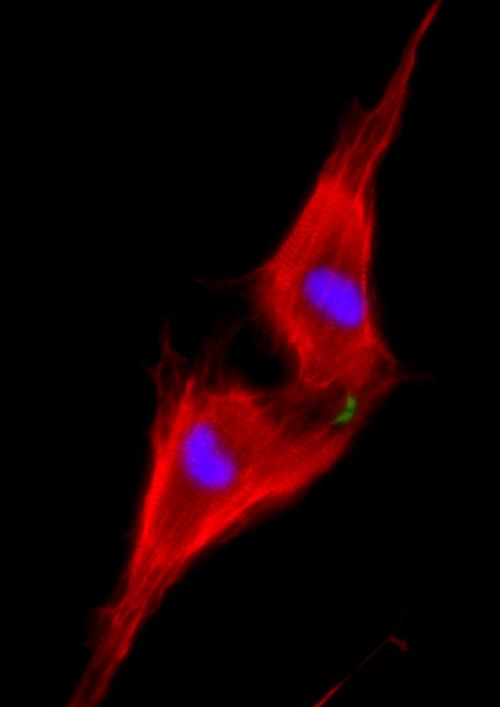
When a heart attack strikes, the effects are lingering: heart muscle cells die and scar tissue forms, which makes future heart failure more likely.
Since we have been hearing about quantum computing for decades with no real applied breakthroughs, it may be necessary to use technology available now to edge close to computers that act like brains.

A team wants to create the functionality of a network of neurons using  memory resistors - memristors - which are resistors in a circuit that "remember" how much current has flowed through them.