Banner
Here's Where Your Backyard Was 300 Million Years Ago

We may use terms like "grounded" and terra firma to mean stability and consistency but geology...

Convergent Evolution Cheat Sheet Now 120 Million Years Old

One tenet of natural selection is a random walk of genes but nature may be more predictable than...

Synchrotron Could Shed Light On Exotic Dark Photons

There are many hypothetical particles proposed to explain dark matter and one idea to explore how...

The Pain Scale Is Broken But This May Fix It

Chronic pain is reported by over 20 percent of the global population but there is no scientific...

User picture.
News StaffRSS Feed of this column.

News Releases From All Over The World, Right To You... Read More »

Blogroll

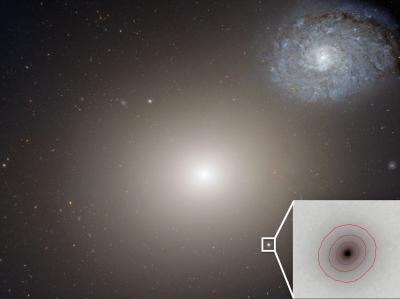
An ultracompact dwarf galaxy known as M60-UCD1 harbors a supermassive black hole – the smallest galaxy known to contain such a massive light-sucking object.

The astronomers used the Gemini North 8-meter optical-and-infrared telescope on Hawaii's Mauna Kea and photos taken by the Hubble Space Telescope to discover that M60-UCD1 has a black hole with a mass equal to 21 million suns. Their finding suggests plenty of other ultracompact dwarf galaxies likely also contain supermassive black holes – and those dwarfs may be the stripped remnants of larger galaxies that were torn apart during collisions with yet other galaxies.

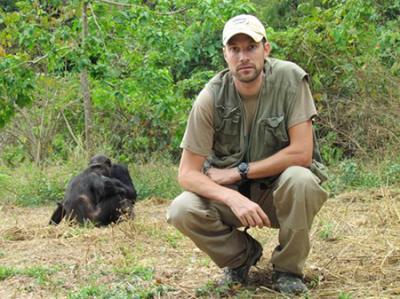
Is chimpanzee intergroup aggression like primitive warfare, an adaptive strategy that gives the perpetrators an edge, or is it the consequence of human activities, such as provisioning - artificial feeding - by researchers or habitat destruction?

A new study of the pattern of intergroup aggression in chimpanzees and pygmy chimpanzees (bonobos), their close relatives, finds that human impact isn't the culprit.   

The research project compiled data collected over five decades from 18 chimpanzee (Pan troglodytes) and four bonobo (Pan paniscus) communities.

Ian Gilby. Credit: Ian Gilby

The United States is one of few wealthy nations without national or socialized health care and, as a result, the Hippocratic Oath has always been paramount. Even when it hasn't been efficient, doctors have tried to save and extend lives.

As a result, the US health care system is not culturally prepared to deal with patients nearing the end of life and their families.

A 21-member
Institute of Medicine

Northwestern Medicine researchers say they have developed the first blood test to diagnose major depression in adults, by measuring the levels of nine RNA blood markers.

RNA molecules are the messengers that interpret the DNA genetic code and carry out its instructions. 

Humans may think we are eating paleo - like ancient ancestors - or organic - like before the advent of modern fertilizers and pesticides in the early 1800s - but nothing could be further from the truth. The microbiome of today shares little in common with people of even 100 years ago and if epigenetic claims about diet are true, our genome is different as well.

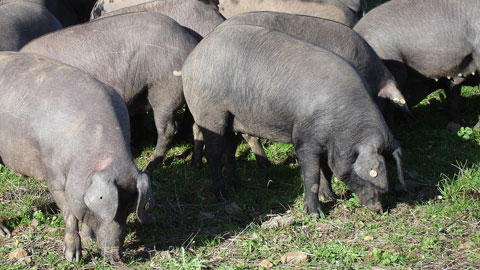
And nothing should be changed like pigs, which are commonly now descended from Asian and European mixes. But a team of Spanish researchers have obtained the first partial genome sequence of an ancient pig, sequences from remains found at the site of the Montsoriu Castle in Girona.

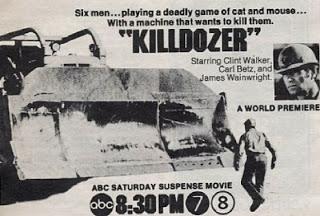
An older, mechanical car is a closed system - the only way to hack it is to be physically present. But as automobiles become increasingly chip-oriented, any way to update software remotely means the potential to be hacked.  You won't be carjacked, you'll be carhacked
The car of the future will be safer, smarter and offer greater high-tech gadgets, but be warned without improved security the risk of car hacking is real, according to a QUT road safety expert.