Banner
Here's Where Your Backyard Was 300 Million Years Ago

We may use terms like "grounded" and terra firma to mean stability and consistency but geology...

Convergent Evolution Cheat Sheet Now 120 Million Years Old

One tenet of natural selection is a random walk of genes but nature may be more predictable than...

Synchrotron Could Shed Light On Exotic Dark Photons

There are many hypothetical particles proposed to explain dark matter and one idea to explore how...

The Pain Scale Is Broken But This May Fix It

Chronic pain is reported by over 20 percent of the global population but there is no scientific...

User picture.
News StaffRSS Feed of this column.

News Releases From All Over The World, Right To You... Read More »

Blogroll

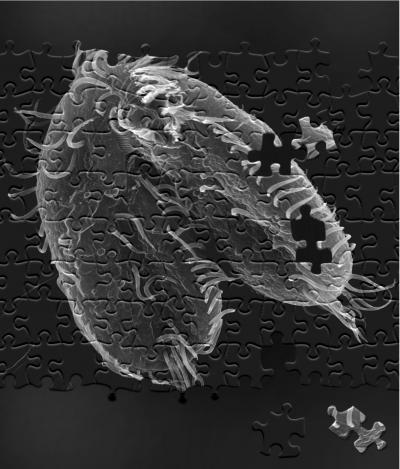
A new study has found that the pond-dwelling, single-celled organism Oxytricha trifallax has the remarkable ability to break its own DNA into nearly a quarter-million pieces and will then rapidly reassemble those pieces when it's time to mate.

Why? No one knows, sometimes nature gets drunk and creates things that make no sense. The organism internally stores its genome as thousands of scrambled, encrypted gene pieces. Upon mating with another of its kind, the organism rummages through these jumbled genes and DNA segments to piece together more than 225,000 tiny strands of DNA. This all happens in about 60 hours.

Immunotoxins are targeted antibodies that go after deadly toxins like ricin.

In the quest to find targeted therapies for cancer - that kill cancer but spare the surrounding tissue, immunotoxins make perfect sense. But they have not succeeded in part because cancer cells share many molecules with normal cells and because it can be challenging to unlock the deadly chemical only after the antibody has homed to the diseased tissue.

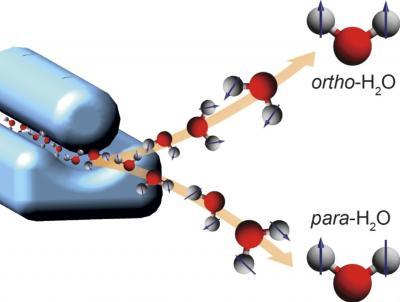
At first glance, water seems to be a simple molecule because a single oxygen atom is bound to two hydrogen atoms - but it is more complex when taking into account hydrogen's nuclear spin, a property reminiscent of a rotation of its nucleus about its own axis. 

The spin of a single hydrogen can assume two different orientations, symbolized as up and down. So, the spins of water's two hydrogen atoms can either add up, called ortho water, or cancel out, called para water. Ortho and para states are also said to be symmetric and antisymmetric, respectively.

In 2014, there will be an estimated 22,240 new cases of ovarian cancer in the United States and over 40,000 new cases in the European Union. Ovarian cancer is one of the most lethal gynecologic cancers. Women with recurrent or persistent ovarian cancer recur within 6-12 months of completion with a platinum-containing regimen and there remains a high unmet need for improved treatment options.

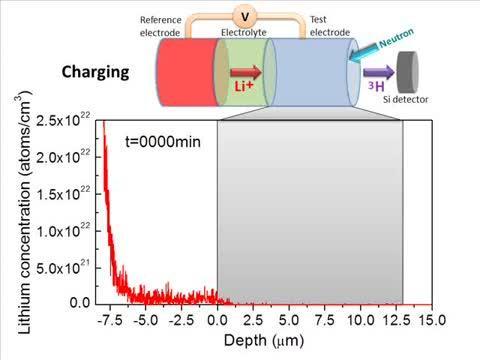
Using a neutron beam, researchers at The Ohio State University have able to track the flow of lithium atoms into and out of an electrode in real time as a battery charged and discharged, providing a kind of window into the inner workings of a lithium-ion battery for the first time.

They believe that neutron depth profiling (NDP) could one day help explain why rechargeable batteries lose capacity over time, or sometimes even catch fire.

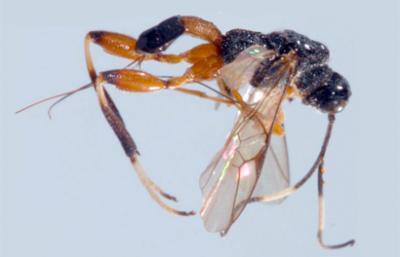
Wasps in the genus Spasskia (family: Braconidae) have been found for the first time in China, including a species in that genus which is totally new to science.   

The new species, Spasskia brevicarinata, is very small — male and female adults are less than one centimeter long. It is similar to a previously described species called Spasskia indica, but the ridges on some of its body segments are different.

The species epithet brevicarinata reflects a short ridge on its first tergite, as "brevi" is Latin for short and "carinata" is Latin for ridge.