Maybe you have an 85-year-old grandfather who still whips through the newspaper crossword puzzle every morning or a 94-year-old aunt who never forgets a name or a face. They don't seem to suffer the ravages of memory that beset most people as they age. Researchers at Northwestern University's Feinberg School of Medicine wondered if the brains of the elderly with still laser sharp memory -- called "super aged" -- were somehow different than everyone else's.
So instead of the usual approach in which scientists explore what goes wrong in a brain when older people lose their memory they investigated what goes right in an aging brain that stays nimble.
Here's the preliminary answer:
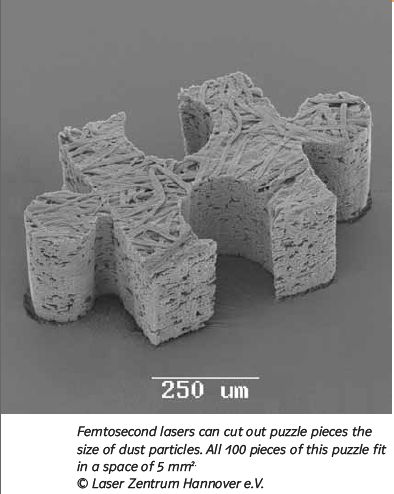
The name has been around for four decades, but only now is a recognizable photonics community emerging in Europe. A European study has documented a fast-growing sector of more than 2100 companies and 700 research laboratories.
In 2005, Europe’s photonics sector earned €43.5 billion and was growing at 12% a year. It employed 246,000 people, accounted for 19% of world production and was already bigger than the semiconductor sector. Yet, at the same time, the industry was hardly recognized in Europe.
A doctoral thesis carried out at the University of Granada has proved that patients with serious anxiety disorders (panic disorder with and without agoraphobia, social anxiety disorder or generalized anxiety disorder) think they suffer more physiological (palpitations, sweating, irregular breathing, shaking of the hands and muscular tension …) than they really have. In other words, although many patients with anxiety disorders have orally reported very intense physiological symptoms in surveys and questionaires, they are hyporeactive when real measures of such symptoms are taken through physiological tests.
A new study by sociologists at the University of Maryland concludes that unhappy people watch more TV, while people who describe themselves as very happy spend more time reading and socializing. The study appears in the December issue of the journal “Social Indicators Research.”
Analyzing 30-years worth of national data from time-use studies and a continuing series of social attitude surveys, the Maryland researchers report that spending time watching television may contribute to viewers’ happiness in the moment, with less positive effects in the long run.
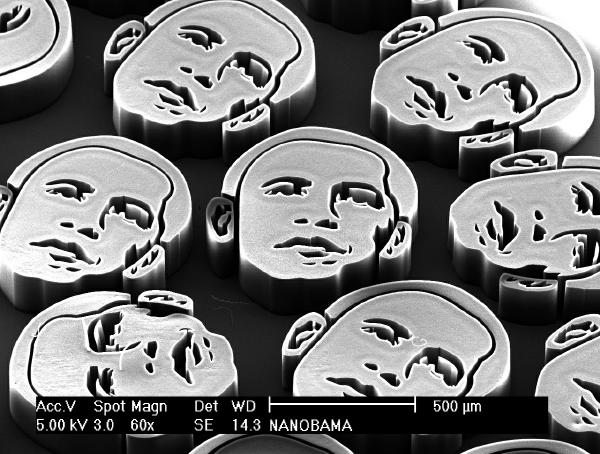
A University of Michigan professor has created 3-D portraits of the president-elect that are smaller than a grain of salt. He calls them "nanobamas."
John Hart, an assistant professor in the Department of Mechanical Engineering, made the mini-Barack Obama 'Nanobama' likenesses with his colleagues to raise awareness of nanotechnology and science. Plus, Obama flowed much nicer with 'nano' than McCain would have. And Hart voted for Obama, not that you didn't think so already.
Each one contains about 150 million carbon nanotubes stacked vertically like trees in a forest. A carbon nanotube is an extraordinarily strong hollow cylinder about 1/50,000th the width of a human hair.
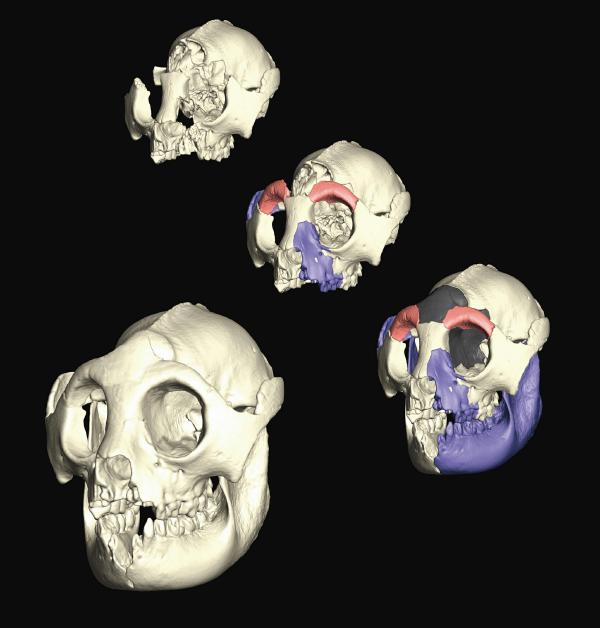
Scientists in Madagascar, at the American Museum of Natural History in New York and the Vienna Natural History Museum and at the University of Massachusetts Amherst now have a nearly complete skeleton of a rare species of extinct lemur to study thanks to a century-long discovery and reconstruction effort. Laurie R. Godfrey, professor of anthropology at UMass Amherst and lemur expert, played a key role in the process in which contemporary researchers were able to match newly found bones with those discovered in a cave in Madagascar in 1899 to construct much of the skeleton of a rare species of extinct lemur.
“It’s remarkable that we were able to reunite bits of the original skeleton,” Godfrey says. “This is a very big gift to science from many people.”


 Pilot Study: Fibromyalgia Fatigue Improved By TENS Therapy
 High Meat Consumption Linked To Lower Dementia Risk
 Long Before The Inca Colonized Peru, Natives Had A Thriving Trade Network
 Mesolithic People Had Meals With More Tradition Than You Thought