Banner
Pilot Study: Fibromyalgia Fatigue Improved By TENS Therapy

Fibromyalgia is the term for a poorly-understood condition where people experience pain and fatigue...

High Meat Consumption Linked To Lower Dementia Risk

Older people who eat large amounts of meat have a lower risk of dementia and cognitive decline...

Long Before The Inca Colonized Peru, Natives Had A Thriving Trade Network

A new DNA analysis reveals that long before the Incan Empire took over Peru, animals were...

Mesolithic People Had Meals With More Tradition Than You Thought

The common imagery of prehistoric people is either rooting through dirt for grubs and picking berries...

User picture.
News StaffRSS Feed of this column.

News Releases From All Over The World, Right To You... Read More »

Blogroll

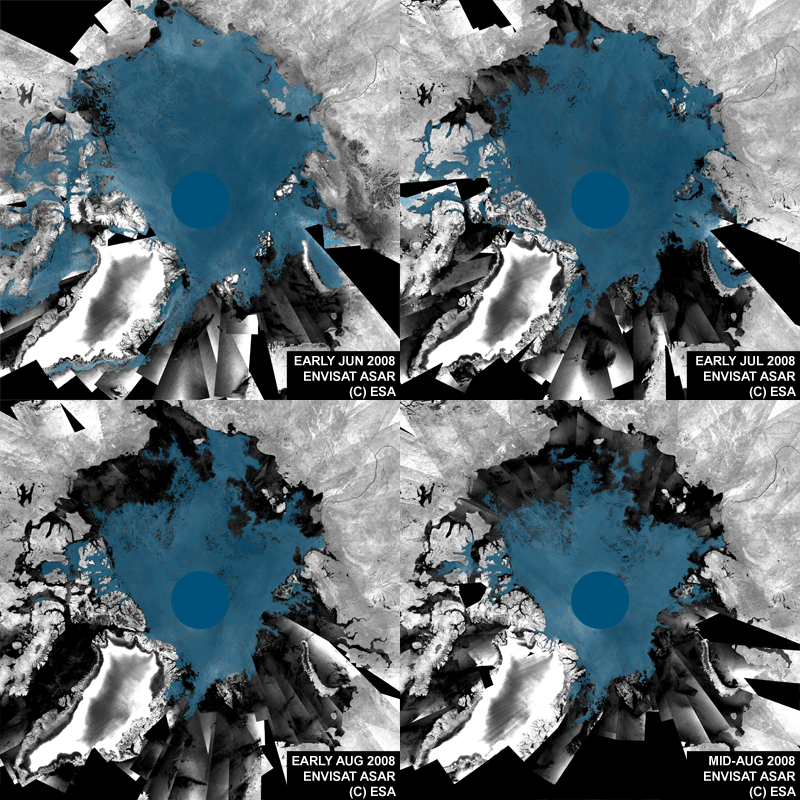
Observations of ice coverage in the Arctic from space began 30 years ago so it's inflammatory to talk about record lows in such a short period of time but two consecutive years near this 'record' still merit some concern.

Because the extent of ice cover is usually at its lowest about mid-September, this year's minimum could still fall and set another record low.

Envisat observations from mid-August depict that a new record of low sea-ice coverage could be reached in a matter of weeks. The animation above is a series of mosaics of the Arctic Ocean created from images acquired between early June and mid-August 2008 from the Advanced Synthetic Aperture Radar (ASAR) instrument aboard Envisat. The dark grey colour represents ice-free areas while blue represents areas covered with sea ice.

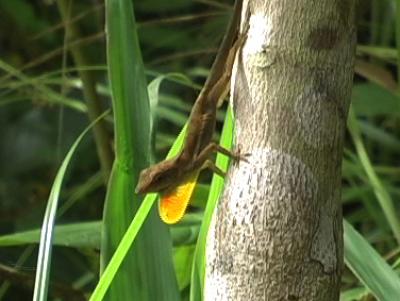
Are male Jamaican anole lizards masking some deep insecurity? Overcompensating for small body parts?

Nothing quite that dramatic, though the reason they begin and end the day with displays of reptilian strength, like push-ups, head bobs and extensions of a colorful neck flap, or dewlap, was unknown until recently.

The answer? Nothing more than wanting to defend their territory, according to a new study.

"Anoles are highly visual species, so in that sense it is not surprising that they would use visual displays to mark territory," said Terry J. Ord, a postdoctoral researcher at UC Davis and at Harvard University's Museum of Comparative Zoology. The lizards are the first animals known to mark dawn and dusk through visual displays, rather than the much better known chirping, tweeting, and other sounding off by birds, frogs, geckos and primates.

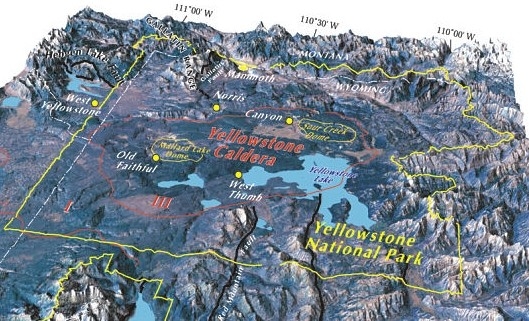
The geysers of Yellowstone National Park owe their existence to the "Yellowstone hotspot", a region of molten rock buried deep beneath Yellowstone, geologists have found, but how hot is this "hotspot," and what's causing it?

In an effort to find out, Derek Schutt of Colorado State University and Ken Dueker of the University of Wyoming took the hotspot's temperature. They published results in the August, 2008, issue of the journal Geology.

"Yellowstone is located atop of one of the few large volcanic hotspots on Earth," said Schutt. "But though the hot material is a volcanic plume, it's cooler than others of its kind, such as one in Hawaii."

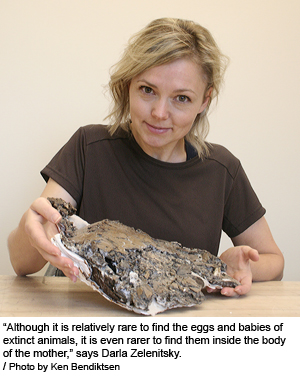
A 75-million-year-old fossil of a pregnant turtle and a nest of fossilized eggs that were discovered in the badlands of southeastern Alberta by scientists and staff from the University of Calgary and the Royal Tyrrell Museum of Palaeontology are yielding new ideas on the evolution of egg-laying and reproduction in turtles and tortoises.

It is the first time the fossil of a pregnant turtle has been found and the description of this discovery was published today in the British journal Biology Letters.

The mother carrying the eggs was found in 1999 by Tyrrell staff while the nest of eggs was discovered in 2005 by U of C scientist Darla Zelenitsky, the lead author of the article and an expert on fossil nest sites, and her field assistant. Both were found about 85 km south of Medicine Hat in the Manyberries area.

New research suggests that preventative agents, such as those found in concentrated black raspberries, may more effectively inhibit cancer development than single agents aimed at shutting down a particular gene.

Researchers at the Ohio State University Comprehensive Cancer Center examined the effect of freeze-dried black raspberries on genes altered by a chemical carcinogen in an animal model of esophageal cancer.

The carcinogen affected the activity of some 2,200 genes in the animals' esophagus in only one week, but 460 of those genes were restored to normal activity in animals that consumed freeze-dried black raspberry powder as part of their diet during the exposure.

A powerful collision of galaxy clusters has been captured with NASA's Chandra X-ray Observatory and Hubble Space Telescope. Like its famous cousin, the so-called Bullet Cluster, this clash of clusters provides striking evidence for dark matter and insight into its properties.

Like the Bullet Cluster, this newly studied cluster, officially known as MACSJ0025.4-1222, shows a clear separation between dark and ordinary matter. This helps answer a crucial question about whether dark matter interacts with itself in ways other than via gravitational forces.